


Are Immune-Boosting Snacks for Picky Eaters Worth Trying?
Last Updated: October 30, 2026
Quick Summary
Immune-boosting snacks for picky eaters are worth trying only when your child will actually eat them, so the strategy matters as much as the food. No single snack strengthens a child's immune system on its own; variety and consistency beat any one superfood. Build snacks around vitamin C, protein, fiber and colorful fruits and vegetables.
- The CDC recommends modeling enjoyment of a food and keeping fruits and vegetables visible as reminders.
- Each of the eight snack ideas takes under five minutes to assemble.
- Offer one to two tablespoons of a new protein and expect eight to fifteen offers before it becomes familiar.
- Roasted chickpeas keep about three days in an airtight container at room temperature.
- Cut grapes lengthwise into quarters and spread nut butter thinly to reduce choking risk.
Table of Contents
- Why Immune-Boosting Snacks for Picky Eaters Need a Different Approach
- Immune-Supporting Foods for Kids: What Actually Matters on the Plate
- Healthy Snacks for Picky Eaters: 8 Ideas Kids Actually Try
- High-Protein Snacks for Kids Who Turn Their Nose Up at Meat
- After-School Snacks for Kids: Practical, Make-Ahead Ideas
- Choking Safety, Allergies, and Age-Appropriate Prep
- What Immune-Boosting Claims Get Wrong (and What to Say Instead)
- Building a Snack Shelf Your Picky Eater Will Actually Use
- Frequently Asked Questions
Why Immune-Boosting Snacks for Picky Eaters Need a Different Approach
The CDC recommends modeling enjoyment of a food and keeping fruits and vegetables visible as reminders for healthy snacks, per CDC guidance on picky eating. Notice what that advice does not say: it does not say hide the vegetables in a brownie and hope for the best. For the broader picture of natural ways to boost child immunity, see our full guide.
Immune-Supporting Foods for Kids: What Actually Matters on the Plate
No single snack strengthens a child's immune system on its own. A 2021 review indexed by PubMed Central found that dietary omega-3 fatty acids, prebiotics, and micronutrients benefit the immune system, while noting a complex relationship between diet and the microbiome (pubmed.ncbi.nlm.nih.gov). In practice, that means variety and consistency beat any one "superfood." Parents of toddlers can find age-specific guidance on immune-supporting foods in our toddler guide.
The nutrients worth building snacks around:
- Vitamin C from oranges, peppers, and strawberries
- Protein from yogurt, cheese, beans, and nut butters
- Fiber and whole grains from crackers, oats, and popcorn
Healthy Snacks for Picky Eaters: 8 Ideas Kids Actually Try
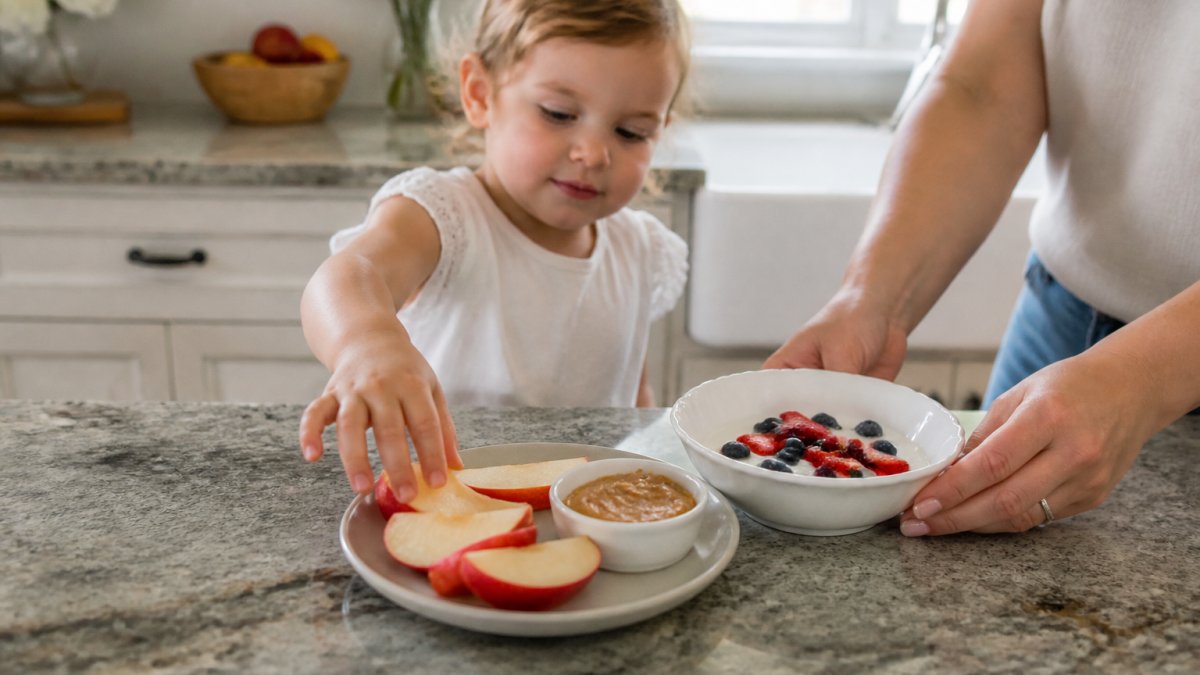
These eight options pair familiar textures with immune-supporting nutrients, and each one takes under five minutes to assemble.
Fruit and Yogurt Pairings
- Yogurt with berries. Plain yogurt delivers protein and probiotics; berries add color and vitamin C.
- Apple slices with nut butter. A classic for a reason. Choose a smooth butter if texture is the sticking point.
- Frozen fruit smoothie. Blend fruit with yogurt and serve in a small cup. A straw often wins over a spoon.
- Fruit popsicles. Puree fruit and yogurt, freeze in molds. When preparing fresh produce, use Rebel Green Fruit And Veggie Clean to wash it safely first. Kids treat it as dessert; you treat it as a snack.
Veggie and Dip Combos
- Carrot sticks with hummus. The dip does the heavy lifting. Try roasted carrots if raw texture gets refused.
- Sweet potato rounds. Roast until soft, serve warm. Sweetness lands better than bitterness with most picky eaters.
Crunchy and Dippable Options
- Whole-grain crackers with hummus or cheese. Crunch plus dip is a reliable formula.
- Roasted chickpeas. Crunchy, protein-rich, and easy to season mildly.
High-Protein Snacks for Kids Who Turn Their Nose Up at Meat
Protein is often the first nutrient to slip when a child rejects meat, and it is one of the most important for growing bodies. The fix is not persuasion. It is offering protein in forms that do not resemble dinner, in textures the child already accepts, and in portions small enough that a refusal costs nothing.
Protein forms that do not look like dinner
- Dairy: plain yogurt, cottage cheese, cheese sticks, and milk. A half-cup of plain yogurt or a one-ounce cheese stick is a realistic toddler portion; offer one, not a full adult serving.
- Beans and legumes: hummus, white bean dip, mashed black beans on a tortilla, and edamame (serve edamame mashed or cut for toddlers, whole beans are a choking hazard).
- Eggs: hard-cooked egg slices, egg salad on small crackers, or a folded omelet cut into strips.
Sensory-friendly swaps by texture
Picky eating is often texture-driven, so match the protein to what the child already eats rather than to what the plate "should" look like.
- Refuses slimy or wet: offer dry cottage cheese pressed in a strainer, hard-cooked egg whites, or roasted chickpeas instead of hummus.
- Refuses mixed textures: keep components separate, plain yogurt in one compartment, berries in another, rather than a parfait.
- Refuses chewy meat: shift to soft beans, mashed edamame, or dairy for a week and reintroduce meat later.
Allergy-safe substitutions
Swap deliberately so more families can use these ideas:
- Peanut allergy: sunflower seed butter or soy butter in place of peanut butter.
- Tree nut allergy: seed butters and roasted sunflower seeds instead of almond or cashew butter.
- Dairy allergy: fortified soy or pea-protein yogurt and dairy-free cheese in place of dairy versions; check that they are fortified with calcium and vitamin D.
Introduce any new allergen one at a time, in a small amount, so a reaction is easy to trace. Ask your pediatrician about timing for highly allergenic foods if your child has eczema or a known allergy.
Portions and repeated exposure
A common mistake is offering a large portion of a new protein once and giving up when it is refused. A 2018 review indexed by PubMed Central describes repeated exposure to unfamiliar foods as a core strategy for reducing picky eating, so small portions offered again and again do more than any single well-planned meal. A practical rule most practitioners suggest: offer one to two tablespoons of a new protein alongside a food the child already accepts, and expect to offer it eight to fifteen times before it becomes familiar.
After-School Snacks for Kids: Practical, Make-Ahead Ideas
The after-school window is when good intentions collapse. Kids arrive hungry, adults are busy, and the easiest option wins. Prepare for that moment instead of fighting it. The goal is a shelf and a fridge drawer that a hungry child can open without asking, stocked with options that hold up for several days.
A Sunday prep routine that actually survives the week
- Portion yogurt and berries into small containers. Use half-cup containers for toddlers and one-cup containers for older kids. Store berries separately from yogurt so the yogurt does not turn pink and watery; combine at serving time.
- Pre-cut carrots and peppers and store them in water in the fridge. Change the water every two days. Cut carrots into sticks no thicker than a pencil for older kids, and cook them until soft for toddlers.
- Keep a bin of approved crackers, popcorn, and roasted chickpeas at kid height. Popcorn is a choking hazard for children under four; keep it on a higher shelf until then.
Storage and food-safety limits
- Cut fruit: refrigerate and use within three to four days for melon and berries, and within two days for apples once sliced (toss with a little lemon juice to slow browning).
- Yogurt: keep refrigerated at 40 degrees Fahrenheit or below; check the date on the container and use within two hours of packing for a lunchbox.
- Hummus and bean dips: refrigerate and use within three to four days of opening.
Lunchbox and school-friendly versions
School rules often limit nut products and require shelf-stable options, so build a parallel list:
- Nut-free: sunflower seed butter on whole-grain crackers, cheese sticks, yogurt tubes (freeze overnight so they are thawed by lunch), roasted chickpeas, and fruit pouches.
- No refrigeration: whole-grain crackers, popcorn (for kids over four), roasted chickpeas, and shelf-stable fruit cups packed in juice rather than syrup.
- Portable produce: apple slices tossed with lemon juice, orange segments, and grapes cut lengthwise into quarters for young children.
A warm drink to round out the routine
A caffeine-free herbal tea served warm or iced can round out the routine. Our Immunity Blend (Organic) at $6.75 per 1 oz, roughly 15 cups, combines rooibos, echinacea, elderberries, peppermint, and hibiscus, and is caffeine free. Serve it warm on cold afternoons or iced in a small cup with a straw.

Choking Safety, Allergies, and Age-Appropriate Prep
Safety rules come before nutrition rules. Whole nuts, large dollops of nut butter, whole grapes, and hard raw carrot rounds are choking hazards for young children. Cut grapes lengthwise into quarters, spread nut butter thinly, and cook carrots until soft for toddlers.
For allergies, swap deliberately: seed butter for peanut butter, dairy-free yogurt for yogurt, and sunflower seeds for tree nuts. The CDC's guidance on early nutrition notes that fresh, frozen, or canned fruits and vegetables all count, which gives you flexibility when fresh produce is refused.
What Immune-Boosting Claims Get Wrong (and What to Say Instead)
Here's the part most snack lists get wrong. The research does not establish that any single snack boosts a child's immunity independently. The PubMed Central review describes a complex interplay among diet, the microbiome, and immune function. Talk about nutrient-rich foods, not illness prevention.
Instead of "this snack boosts immunity," say "this snack adds vitamin C and protein." Instead of promising fewer colds, describe the habit: colorful food, consistent meals, enough sleep. If you want a concrete immune-support product to keep on hand, our Immune Boost fits that role without overclaiming.
Building a Snack Shelf Your Picky Eater Will Actually Use
A snack shelf works when a child can reach it, see it, and choose from it without asking. Sleep is another routine worth building; learn how sleep quality affects child immunity.
| Snack | Prep Time | Best For | Make-Ahead |
|---|---|---|---|
| Yogurt with berries | 2 min | Protein and vitamin C | Portion Sunday |
| Apple slices with nut butter | 3 min | Crunchy, filling | Cut fresh |
| Roasted chickpeas | 25 min | Protein, crunch | Store 3 days |
| Fruit popsicles | 10 min | Dessert swap | Freeze ahead |
Picky eating is a marathon, not a week of clever snacks, and the pressure to "fix" it usually backfires. Explore the Immunity Blend (Organic) for a caffeine-free herbal option, or browse our full collection of natural family wellness products.
Frequently Asked Questions
What foods can help boost my child's immunity?
No single food boosts immunity on its own. The CDC and a 2021 review in PubMed Central point to nutrient-rich foods that support normal immune function: colorful fruits and vegetables for vitamin C, protein foods like yogurt, beans, and nut butters, whole grains for fiber, and healthy fats. The practical move is offering immune-boosting snacks for picky eaters that combine two or three of these groups at once, like apple slices with nut butter or yogurt with berries, rather than chasing one miracle ingredient.
Which snacks are easiest for picky eaters to try?
Start with foods that match textures your child already accepts. Crackers with hummus, cheese sticks, smoothies, and fruit paired with yogurt are common entry points because they are dippable, familiar in shape, and low-pressure. The CDC recommends repeated exposure and modeling: eat the snack yourself, keep fruits and vegetables visible on the counter, and offer the same food several times without pushing. A 2018 review in PubMed Central supports repeated exposure and parental modeling as the strategies most likely to reduce picky eating over time.
How can I add fruits and vegetables to snacks for a picky eater?
Pair them with something your child already likes rather than serving them alone. Apple slices with nut butter, carrots with hummus, and berries folded into yogurt all work because the familiar food carries the new one. Smoothies and homemade popsicles let you blend fruit and even mild vegetables like sweet potato into a texture kids accept. Keep cut fruit and vegetables visible where children can see them, which the CDC names as a reminder strategy for healthy snacking.
Are smoothies a good option for picky eaters?
Smoothies work well as a vehicle for nutrients because the texture is uniform and kids can drink them without confronting an unfamiliar shape. Blend yogurt, fruit, and a small amount of mild vegetable like sweet potato or carrot. Keep portions modest so the smoothie does not replace a meal, and serve it with a straw or spoon. They also make a practical make-ahead after-school snack: portion into small jars the night before so the snack is ready when kids walk in.
Do immune-boosting snacks actually prevent illness?
Be cautious with that framing. A 2021 review in PubMed Central describes a complex relationship among diet, the microbiome, and immune function, and the available research supports nutrient-rich eating, not a promise that any snack prevents sickness. Omega-3 fatty acids, prebiotics, and micronutrients are described as beneficial to the immune system, but no single snack strengthens immunity alone. Treat immune-boosting snacks for picky eaters as one part of an overall diet, not a shield against colds.


Leave a comment