


How to Soothe Itchy Dry Skin: Natural Relief That Works
Table of Contents
- Why Your Skin Itches: Causes Beyond Simple Dryness
- Step 1: Rebuild Your Skin Barrier With a Gentle Cleansing Routine
- Step 2: Apply Moisturizer the Right Way to Soothe Itchy Dry Skin
- Step 3: Best Essential Oils for Itchy Skin and How to Use Them
- Step 4: Natural Remedies for Dry Skin You Can Try Tonight
- Step 5: How to Prevent Dry Skin in Winter and All Year Long
- When to See a Dermatologist for Persistent Itching
- Conclusion: Build Your Daily Anti-Itch Routine
- Frequently Asked Questions
Last Updated: September 5, 2026
Itchy dry skin is a frustrating cycle: the drier your skin gets, the more it itches, and the more you scratch, the more damage you do to your skin barrier. In this guide from Wellaroma, we break down a step-by-step method to soothe itchy dry skin using gentle cleansing, proper moisturizing techniques, and targeted natural remedies.
Most people assume dry skin is simply a lack of oil, but the real culprit is often transepidermal water loss, where moisture evaporates too quickly from the skin's outer layer. Below, we'll show you exactly how to layer your routine for lasting relief.
Why Your Skin Itches: Causes Beyond Simple Dryness
Dryness is the trigger, but the itch itself is a complex sensory experience known as pruritus. When your skin lacks sufficient lipids and ceramides, the protective outer layer becomes compromised, allowing irritants and allergens to penetrate more easily and triggering a mild inflammatory response that sends itch signals to your brain.
Environmental factors often accelerate this process. Low humidity, harsh soaps, and hot showers strip away the skin's natural oils, while indoor heating in winter reduces ambient moisture levels.
Step 1: Rebuild Your Skin Barrier With a Gentle Cleansing Routine
Your cleansing habits either support or sabotage your skin barrier. Many conventional body washes contain sulfates and synthetic fragrances that strip away natural lipids, leaving skin feeling tight and itchy within minutes of stepping out of the shower. The fix is to switch to a gentle cleanser that cleans without disrupting the skin's pH balance.
The key is a technique called "wet moisturizing," where you apply moisture while your skin is still damp. A shower oil is ideal here because it cleanses and delivers emollient oils simultaneously without the need for harsh detergents. At Wellaroma, our shower oils are formulated to be used in place of traditional soap, locking in hydration before you even towel off. Look for products with plant-based oils like jojoba or sunflower seed oil, which closely mimic the skin's own sebum. Avoid anything labeled "anti-bacterial" for daily use, as these often contain triclosan or alcohol, which exacerbate dryness and irritation.

Step 2: Apply Moisturizer the Right Way to Soothe Itchy Dry Skin
The timing of your moisturizer matters as much as the product itself. To soothe itchy dry skin effectively, you must apply a moisturizer within three minutes of exiting the shower, while your skin is still damp. This traps water in the epidermis, preventing transepidermal water loss and maximizing hydration.
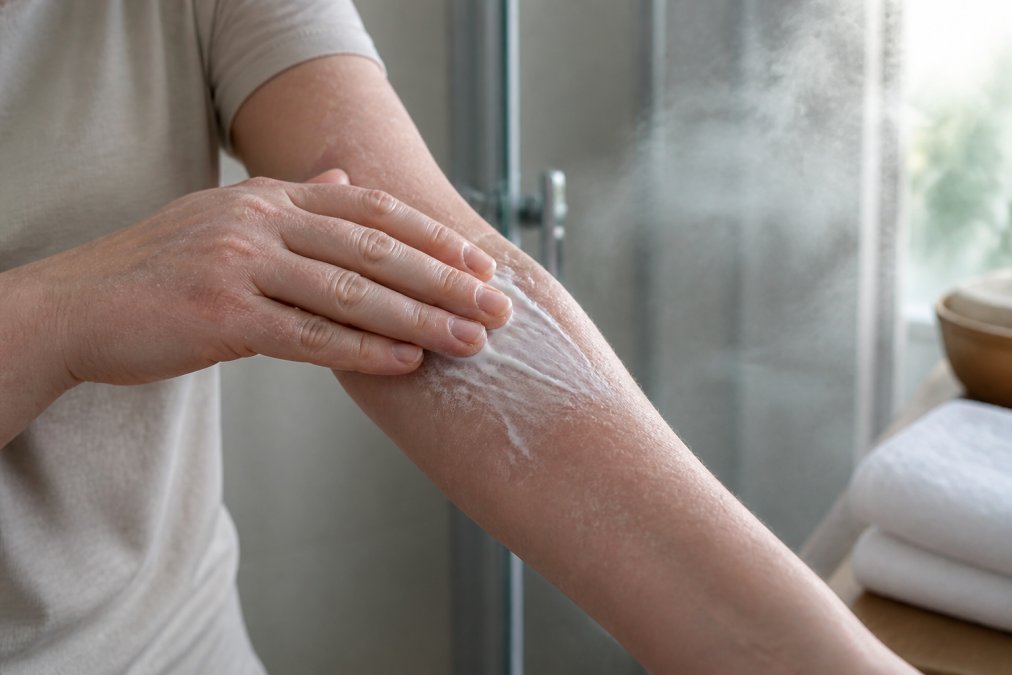
Pat your skin dry with a soft towel rather than rubbing, then apply a cream or ointment in smooth, downward strokes. Rubbing vigorously can irritate sensitive skin and trigger more itching. For severely dry areas like elbows, knees, and heels, look for a treatment cream that contains a moisture-locking barrier botanical oil alongside regenerative essential oils. A product like Wellaroma's Lush Skin healing cream combines these elements. If you are using a topical treatment like hydrocortisone for inflammation, apply that first, wait ten minutes, then layer your moisturizer over the top.

Step 3: Best Essential Oils for Itchy Skin and How to Use Them
Essential oils offer targeted relief because they are concentrated plant compounds that address both inflammation and the nervous system's perception of itch. The best essential oils for itchy skin are those with high concentrations of esters and alcohols that calm the skin and reduce the urge to scratch.
Lavender, Chamomile, and Other Calming Choices
Lavender oil is the most versatile option, offering anti-inflammatory properties that reduce redness while its calming aroma helps break the psychological itch-scratch habit, especially at night. Roman chamomile is equally effective for sensitive skin, containing bisabolol, a compound known to reduce skin sensitivity and promote healing. For a cooling sensation that interrupts the itch signal, a small amount of peppermint oil diluted in a carrier can provide immediate, though temporary, relief.
A common mistake is using essential oils in a hot bath, which can actually worsen dryness. Instead, add your diluted oil blend to a warm bath or mix it into an unscented lotion base. Wellaroma's Lavender Shower Oil offers a convenient way to incorporate these benefits into your daily cleansing routine.
Step 4: Natural Remedies for Dry Skin You Can Try Tonight
If you need immediate relief before your moisturizer arrives or want to supplement your routine, several pantry staples can help. A cold compress is the fastest way to dull the nerve endings responsible for itch. Soak a clean cloth in cold water, wring it out, and hold it against the itchy area for 10 to 15 minutes. This is particularly effective before bed when itching often intensifies.
Oatmeal is another scientifically backed remedy. Colloidal oatmeal contains avenanthramides, compounds that specifically reduce inflammation and itching (peer-reviewed research). Grind plain, unscented oats into a fine powder and add two cups to a lukewarm bath, soaking for 15 minutes. Avoid hot water, which strips oils and worsens the cycle. After your soak, pat dry and immediately apply a thick, occlusive moisturizer like shea butter or a barrier cream to seal in the moisture. For cracked heels or severely dry patches, apply a heavy cream and wear cotton socks or gloves overnight to enhance penetration.
Step 5: How to Prevent Dry Skin in Winter and All Year Long
Winter is the harshest season for skin because cold air holds less moisture and indoor heating further reduces humidity. To prevent dry skin in winter, you must adjust your routine to compensate for the environmental shift. The single most effective change is to use a humidifier in your bedroom, aiming for an indoor humidity level between 30 and 50 percent. This reduces transepidermal water loss while you sleep.
Humidity: The Invisible Thief of Skin Moisture
When indoor humidity drops below 30 percent, common in heated homes from November through March, the air literally pulls water from your stratum corneum to balance the gradient. A hygrometer, available for under $15 at most hardware stores, lets you measure this precisely. If your reading falls below 30 percent, run a cool-mist humidifier in the room where you spend the most waking hours, not just the bedroom. Place it at least three feet from your bed to avoid dampening your pillows, and clean it weekly with white vinegar to prevent mineral dust and mold spores from circulating, both of which can trigger itch in sensitive individuals.
During the warmer months, the opposite problem occurs: air conditioning removes humidity just like heating does. If you run central AC, the same 30-to-50 percent target applies. A simple bathroom exhaust fan left running after a shower can also pull moisture out of the air, so turn it off once the mirror clears.
Fabric Selection: What Touches Your Skin Matters More Than You Think
The itch-scratch cycle is often amplified by what you wear. Wool is the most notorious offender, its coarse fibers contain lanolin, which acts as a contact irritant for many people, and the microscopic scales on wool fibers create friction that physically triggers itch receptors. Synthetic fabrics like polyester and nylon trap heat and sweat, creating a warm, moist environment that exacerbates irritation and can worsen conditions like eczema.
Instead, choose tightly woven, smooth fibers that lie flat against the skin. Here is a practical hierarchy:
- Bamboo viscose - The most breathable option, with natural temperature regulation and a silky texture that minimizes friction. Look for 100 percent bamboo or a bamboo-cotton blend.
- Long-staple cotton - Egyptian or Pima cotton has longer fibers that produce a smoother, less abrasive weave than standard cotton. Choose a sateen or percale weave with a high thread count (300 or above) for the softest feel.
- Silk - Naturally hypoallergenic and smooth, but expensive and less durable for everyday wear. Reserve it for pillowcases, which reduce overnight facial friction.
For base layers in winter, merino wool is the exception to the wool rule, its fibers are much finer (under 20 microns) and less likely to irritate. But if you have known wool sensitivity, skip it entirely and layer bamboo or cotton under a breathable fleece instead.
Laundry Detergent: The Hidden Residue Problem
Standard detergents leave behind fragrance molecules, optical brighteners, and surfactant residues that accumulate in fabric fibers over time. These residues transfer to your skin with every wear and can trigger contact dermatitis, especially in people with a compromised skin barrier. The fix is not just switching to a "free and clear" detergent, it is changing how you wash.
- Use a liquid detergent rather than powder; powders often contain borax and fillers that do not fully dissolve in cold water.
- Choose a product certified by the National Eczema Association, which screens for known irritants.
- Run an extra rinse cycle on every load of clothing that touches your skin directly.
- Skip fabric softeners and dryer sheets entirely. They coat fibers with a waxy layer of quaternary ammonium compounds and fragrances that trap heat and irritate skin. Instead, add half a cup of white vinegar to the rinse cycle, it naturally softens fabric without residue.
- Wash new clothing before wearing it. New garments are often treated with formaldehyde-based resins to prevent wrinkling during shipping, and these chemicals are potent contact irritants.
Air Quality: The Overlooked Trigger
Indoor air pollution, from cooking fumes, candles, and cleaning products, can settle on your skin and trigger inflammatory responses. If you live in an urban area or have a gas stove, consider a HEPA air purifier in your main living space. While the evidence for air purifiers directly reducing skin itch is still emerging, many dermatologists note that patients with sensitive skin report fewer flare-ups when particulate matter is reduced. At minimum, ventilate your home daily by opening windows for five minutes, even in winter, to flush out accumulated indoor pollutants.
When to See a Dermatologist for Persistent Itching
While most dry skin responds well to home care, persistent itching can signal an underlying condition that requires professional diagnosis. You should see a dermatologist if the itching lasts more than two weeks despite consistent moisturizing, if it interferes with your sleep, or if you notice visible changes like severe cracking, oozing, or widespread redness. These symptoms can indicate eczema, psoriasis, or a contact dermatitis that requires prescription topical treatment.
A dermatologist can also help rule out less obvious causes, such as a thyroid condition or iron deficiency, which can manifest as generalized pruritus. According to guidelines from the American Academy of Dermatology on managing itchy skin, prescription-strength treatments are often necessary when over-the-counter anti-itch creams and moisturizers fail to provide relief. If you have tried a consistent routine for several weeks without improvement, professional evaluation is the safest next step.
The Hidden Cost of Chronic Itch: Sleep and Mental Health
What most clinical articles fail to mention is that chronic itching is not just a skin problem, it is a quality-of-life problem. The itch-scratch cycle is neurologically wired to disrupt sleep in a specific way: itching peaks in the evening and during the night because your body's natural cortisol levels drop, removing the anti-inflammatory brake on histamine release. This means you are fighting a biological rhythm, not just a dry patch.
The consequences extend beyond fatigue. Persistent pruritus activates the same brain regions as chronic pain, and research in dermatology clinics consistently finds elevated rates of anxiety and depression among patients with chronic itch conditions. The urge to scratch becomes a compulsive behavior, scratching releases a small burst of endorphins that provides temporary relief, which paradoxically reinforces the behavior. Over time, this can create a conditioned response where even the thought of your skin itching triggers an actual itch sensation.
This is why addressing the psychological dimension is not optional, it is essential to breaking the cycle. Here is what you can do while waiting for a dermatology appointment:
- Practice habit reversal training. When you feel the urge to scratch, replace the behavior with a competing action that does not damage skin: clench your fist for 30 seconds, press your palm firmly against the itchy area, or apply a cold compress. This interrupts the neural pathway without reinforcing the scratch response.
- Use cognitive distraction techniques. Itching is perceived as more intense when you are focused on it. Engaging in a mentally absorbing task, a puzzle, a conversation, a hands-on hobby, can reduce itch perception by up to 30 percent in clinical studies of itch perception.
- Address sleep disruption directly. If itching wakes you at night, take an over-the-counter oral antihistamine like diphenhydramine (Benadryl) before bed. Its sedating effect helps you fall asleep despite the itch, and its antihistamine action reduces nighttime histamine flares. Non-sedating antihistamines like loratadine (Claritin) are better for daytime use if itching is interfering with work or daily activities.
- Track your itch patterns. Before your appointment, keep a simple log for one week: note the time of day your itching peaks, what you were doing, what you had eaten, and what products touched your skin in the preceding two hours. This information helps your dermatologist identify triggers that might otherwise be missed.
What to Expect at Your Appointment
A dermatologist will likely perform a full-body skin examination and ask about your medical history, medications, and recent product changes. Be prepared to discuss your sleep quality and any anxiety you have noticed, these are clinically relevant, not incidental. The doctor may order blood tests to check for thyroid function, iron levels (ferritin), and kidney or liver function, all of which can cause generalized pruritus without a visible rash. In some cases, a skin biopsy may be recommended to rule out conditions like cutaneous T-cell lymphoma, though this is rare.
Prescription treatments go beyond what is available over the counter. Topical corticosteroids are the first line, but for chronic itch, dermatologists increasingly prescribe topical calcineurin inhibitors like tacrolimus (Protopic) or pimecrolimus (Elidel), which suppress the immune response that drives inflammation without the skin-thinning side effects of steroids. For severe, treatment-resistant pruritus, options include oral medications like gabapentin or pregabalin, which modulate nerve signals, or narrowband UVB phototherapy, which reduces inflammation and normalizes skin cell turnover.
Do not delay seeking help out of embarrassment or the belief that "it is just dry skin." Chronic itching that disrupts sleep for more than two weeks is a medical condition worthy of professional attention, and effective treatments exist that can restore both your skin and your quality of life.
Conclusion: Build Your Daily Anti-Itch Routine
The most effective strategy for chronic dry skin is consistency, not intensity. A daily routine that combines a gentle, oil-based cleanser, immediate moisturizing on damp skin, and the strategic use of soothing essential oils will rebuild your skin barrier faster than sporadic, aggressive treatments. Consistency is the single biggest factor in breaking the itch-scratch cycle permanently.
At Wellaroma, we understand how disruptive persistent itching can be, which is why our shower oils and healing creams are crafted to support sensitive and dry skin with natural, organic ingredients. Our products provide a spa-like experience at home while actively working to restore your skin's moisture balance. Get started with Wellaroma and give your skin the gentle, effective care it needs to stay calm, hydrated, and itch-free all year long.
Frequently Asked Questions
What is the fastest way to soothe itchy dry skin?
The fastest relief comes from applying a rich moisturizer with ceramides or natural oils to damp skin within three minutes of bathing. This locks in hydration and repairs the skin barrier. For intense itching, a cold compress or an anti-itch cream with 1% hydrocortisone can calm the flare quickly. Avoid scratching, which damages the skin and worsens inflammation.
Are essential oils safe for soothing dry, itchy skin?
Yes, when diluted properly. Lavender and chamomile essential oils are known for their calming and anti-inflammatory properties. Always mix a few drops with a carrier oil like jojoba or fractionated coconut oil before applying. Never apply essential oils directly to skin, and do a patch test first. Wellaroma's Shower Oil formulas blend essential oils with moisturizing botanical oils for safe, all-over use.
Can a vitamin deficiency cause dry, itchy skin?
Yes. Low levels of vitamin D, vitamin B3 (niacin), or iron can contribute to dry, itchy skin. Vitamin D helps regulate skin cell turnover, and a deficiency is more common in winter months. If you experience persistent itching along with fatigue or other symptoms, ask your doctor about a blood test. Correcting a deficiency through diet or supplements often improves skin hydration and reduces pruritus.
Why does my skin itch more at night, and how do I stop it?
Nighttime itching often stems from increased skin temperature, lower humidity, and fewer distractions. Your skin also loses more water overnight, a process called transepidermal water loss. To reduce symptoms, apply a rich moisturizer before bed, keep your bedroom cool, and use a humidifier. Wearing soft, breathable cotton pajamas can also prevent irritation from synthetic fabrics.

Leave a comment