


Why Choose Organic Body Products in 2026: Real Benefits
Table of Contents
- What Counts as an Organic Body Product?
- Natural vs Synthetic Body Care Ingredients: The Real Difference
- 5 Reasons to Choose Organic Body Products for Your Skin
- Organic Shower Oil Benefits You Will Notice Quickly
- How to Identify Organic Body Products: Labels and Certifications
- The Honest Cost Comparison: Organic vs. Drugstore
- Making the Switch Without Wasting Your Current Routine
- Conclusion: Your Skin, Your Call
- Frequently Asked Questions
What Counts as an Organic Body Product?
Organic body products are skincare and cleansing formulas made primarily from plant-based ingredients grown without chemical pesticides or synthetic fertilizers, and processed without synthetic preservatives, artificial dyes, or petrochemicals. The term carries real weight only when a product carries third-party organic certification, which verifies both the farming practices and the final formulation. Without that verification, "organic" on a label can mean very little.
At Wellaroma, we have spent years formulating natural and organic body care products. The distinction matters because your skin absorbs much of what you apply to it. Dermal absorption means the synthetic fragrances, parabens, and sulfates found in many conventional body washes end up in your bloodstream, not just on the surface of your skin.
The good news is that you do not need a chemistry degree to make better choices. You need to understand what separates a genuinely organic product from clever marketing. That is exactly what this guide covers, along with the practical benefits you will notice after switching.
Natural vs Synthetic Body Care Ingredients: The Real Difference
The gap between natural and synthetic body care ingredients is not about one being automatically good and the other automatically bad. It is about what your skin recognizes and how it responds.
Natural ingredients, such as botanical extracts, essential fatty acids, and plant oils, exist in forms your skin barrier can process and use. Antioxidants from plants help neutralize free radicals that accelerate aging. Synthetic ingredients, by contrast, are often designed for shelf stability and low cost rather than skin health. Many synthetic fragrances contain phthalates, which are linked to hormone disruption, while sulfates strip the skin of its natural moisture barrier (the NIH).
| Ingredient Type | Common Examples | Skin Impact | Environmental Footprint |
|---|---|---|---|
| Natural | Shea butter, jojoba oil, botanical extracts | Supports skin barrier, rich in antioxidants | Biodegradable, supports biodiversity |
| Synthetic | Parabens, phthalates, synthetic fragrances | Can irritate sensitive skin, strip moisture | Slow to degrade, petrochemical-derived |
A common mistake is assuming "fragrance-free" means chemical-free. It often just means the manufacturer hides the chemical cocktail under a different term. Reading the full ingredient list matters more than any front-of-label claim.
5 Reasons to Choose Organic Body Products for Your Skin
Why choose organic body products? The honest answer comes down to five concrete benefits that go beyond trend-driven clean beauty marketing.
1. Fewer irritants for sensitive skin. Organic formulations skip the synthetic fragrances, dyes, and harsh preservatives that trigger redness and itching. For anyone with eczema, dry patches, or reactive skin, this alone justifies the switch.
2. Higher concentration of active compounds. Organic plant oils retain more of their natural vitamins, antioxidants, and essential fatty acids because they are not heavily processed or diluted with fillers. These bio-available nutrients actually feed your skin.
3. Better for your skin barrier. Harsh sulfates strip away your skin's protective oils, leaving it vulnerable to dryness and irritation. Organic cleansers use gentler plant-derived surfactants that clean without compromising barrier function.
4. Supports collagen production and inflammation reduction. Antioxidant-rich botanical extracts help calm inflammation and protect the collagen that keeps skin firm and youthful.
5. Aligns with holistic wellness. What you put on your body is as important as what you put in it. Choosing organic supports a non-toxic lifestyle that benefits your whole family.
Organic Shower Oil Benefits You Will Notice Quickly
The most immediate organic shower oil benefits appear within your first few uses, and they are hard to miss. Unlike traditional body washes that leave skin feeling tight and stripped, shower oils cleanse while depositing a layer of moisture-rich plant oils. You step out of the shower with skin that feels supple, not squeaky.
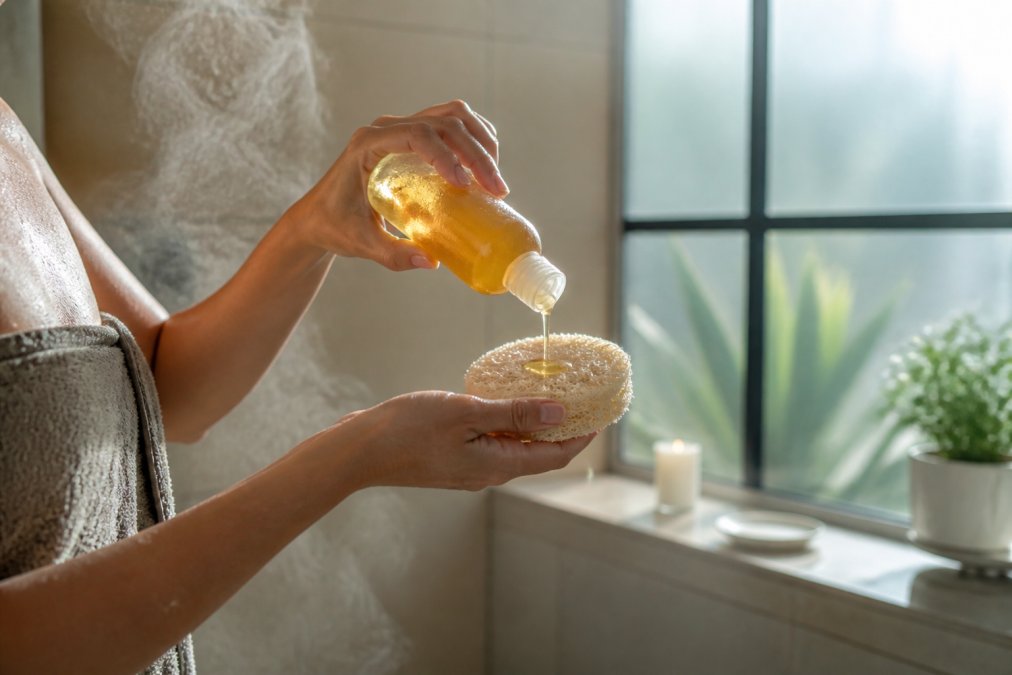
For those with dry or sensitive skin, this shift is transformative. Conventional body washes often contain sulfates that worsen conditions like eczema. A quality shower oil, formulated with ingredients such as jojoba or sunflower seed oil, cleanses without disrupting your skin's natural pH. You may find you need less body lotion afterward, which is both a cost saving and a simplification of your routine.
Look for shower oils that combine cleansing agents with nutrient-dense botanical oils. Many users also report that the aromatherapy benefits of essential oil-infused formulas turn a daily shower into a genuine spa-like experience at home.
How to Identify Organic Body Products: Labels and Certifications
Identifying authentic organic body products requires looking past aesthetic packaging and checking for recognized certification seals. The USDA Organic seal remains the gold standard in the United States, verifying that at least 95 percent of the ingredients are organically produced. The National Organic Program standards also restrict the use of synthetic preservatives and artificial ingredients in certified formulas.
But the certification landscape is more nuanced than a single seal. Here is how the major programs differ, because knowing which seal you are looking at changes what it actually guarantees:
- USDA Organic (United States): The most rigorous standard for agricultural ingredients. For body care, this seal means at least 95 percent of the content (excluding water and salt) is certified organic. The remaining 5 percent must come from an approved list of non-agricultural substances. Crucially, this seal does not regulate non-agricultural ingredients like minerals or certain processing aids, so a product can be USDA Organic and still contain a preservative you might want to avoid.
- COSMOS (COSMOS-standard AISBL, Europe): This is the most comprehensive standard for cosmetics specifically. It covers organic farming, but also restricts preservatives, requires biodegradable ingredients, and bans controversial processes like ethoxylation (which can produce 1,4-dioxane, a possible carcinogen). A COSMOS-certified product is held to a higher bar for the final formula than a USDA Organic product, which only certifies the agricultural inputs.
- ECOCERT (France): One of the oldest certifiers, ECOCERT offers two levels: "Organic" (at least 95 percent of plant ingredients are organic, and at least 10 percent of the total product is organic) and "Natural" (lower thresholds). ECOCERT also audits the entire supply chain, from farm to finished bottle, which adds a layer of traceability many brands skip.
- Leaping Bunny (Cruelty-Free, not Organic): This seal only certifies that no animal testing occurred at any stage of production. It says nothing about organic content. A product can be Leaping Bunny certified and full of synthetic chemicals. Do not confuse cruelty-free with organic, they are entirely separate claims.
Beyond certification seals, look for these markers of quality:
- Full ingredient transparency: The brand lists every ingredient, not just "fragrance" or "proprietary blend."
- Specific botanical names: Labels like "lavandula angustifolia" indicate a serious formulator rather than a marketer.
- Third-party testing: Certifications such as Leaping Bunny for cruelty-free status add another layer of accountability.
A practical tip: when you see a certification seal, look up the certifier's name on the back label. Some brands design logos that mimic certification seals but are entirely self-created. If the certifier is not a recognized third party, the claim is marketing, not verification.
The Honest Cost Comparison: Organic vs. Drugstore
There is no way around it: organic body products cost more upfront, and pretending otherwise does you no service. A drugstore body wash might run a few dollars, while a premium organic alternative commands a higher price. The question is whether the total cost of ownership actually favors the organic option.
Consider what you are paying for with a certified organic product. You are covering the cost of sustainable farming practices that protect biodiversity and soil health, higher-quality botanical ingredients, and smaller-batch production that avoids cheap synthetic preservatives. You are also avoiding the hidden costs of conventional products: the dermatologist visits for irritated skin, the heavy moisturizers needed to combat stripping cleansers, and the environmental damage from petrochemical runoff.
For families, especially those managing conditions like molluscum or eczema, the value calculation shifts further. Gentle, non-irritating products reduce the need for additional treatments. When comparing, look at cost per use rather than cost per bottle. A concentrated organic shower oil often lasts longer than a foamy drugstore wash because you need less per shower.
Making the Switch Without Wasting Your Current Routine
Transitioning to organic body products does not require throwing away everything you own today. A gradual approach saves money and lets your skin adjust without shock.
Start with the product that touches the largest surface area of your skin: your body wash or shower oil. This single swap delivers the most noticeable benefit. Use up your current conventional body wash for your hands, but introduce your organic shower oil for your body. Once your skin adjusts, typically within one to two weeks, you will notice the difference in how it feels.
Next, replace your daily moisturizer. If you have dry or cracked skin, look for a healing cream with essential oils and botanical moisture-locking barriers. Products like Wellaroma's Lush Skin healing cream are designed for chapped, burning skin and provide immediate relief while supporting skin regeneration.

Here is what most guides do not tell you: the "detox" phase is real, but it is not your skin detoxing, it is your skin rebalancing its microbiome and lipid barrier. Conventional body washes with sulfates strip away not just dirt but also the beneficial bacteria and natural oils that keep your skin's ecosystem stable. When you remove the stripping agent, your skin may temporarily overproduce sebum to compensate for years of over-drying. This is not a purge in the acne sense; it is a readjustment period.
To minimize this transition, follow a two-week protocol:
Week 1: The Overlap Phase. Use your organic body wash or shower oil every other day, alternating with your conventional product. This gives your skin barrier time to rebuild its lipid layer without the shock of a sudden change. On your "organic days," pay attention to how your skin feels immediately after drying, it should feel soft, not tight.
Week 2: The Full Swap. Move to your organic product exclusively. If you notice any temporary oiliness or dryness, do not reach for a stronger conventional product. Instead, apply a lightweight organic facial oil or body oil to damp skin within three minutes of showering. This locks in hydration and signals to your skin that it does not need to overproduce oil.
The pH Factor. Conventional body washes often have a pH of 8 to 10, which is highly alkaline. Your skin's natural pH is around 4.5 to 5.5. Organic cleansers formulated with plant-based surfactants typically sit closer to this range. When you switch, your skin's acid mantle, the thin protective film on its surface, begins to restore itself. This is why some users report a temporary feeling of "different" skin texture in the first week. It is not the product failing; it is your skin returning to its natural state.
Finish by auditing your specialty products: lotions, serums, and treatments. The Lemon Rosemary Lotion from Wellaroma offers year-round moisture with an extra boost during winter months. As you run out of each conventional product, replace it with an organic alternative. Within a few months, your entire routine will have shifted without a single wasted bottle.

One more practical note: organic products have shorter shelf lives because they lack the heavy-duty synthetic preservatives found in conventional formulas. Check the expiration date on the bottle and store products away from direct sunlight and heat. A cool, dark bathroom cabinet is ideal. If a product changes color or develops an off smell, replace it, that is the trade-off for avoiding parabens and formaldehyde-releasing preservatives.
Conclusion: Your Skin, Your Call
The decision to switch to organic body products is personal, and the evidence supporting it grows stronger each year. As documented in research on dermal absorption of cosmetic chemicals, your skin is not a barrier but a pathway, and what you apply matters. The shift away from synthetic preservatives and petrochemicals toward plant-based, certified organic ingredients is one of the most effective steps you can take for your long-term skin health.
At Wellaroma, we build our entire product line around this philosophy. From our R4 Serum for facial brightness to our targeted healing creams, every formula prioritizes organic ingredients suitable for all skin types, including sensitive and dry skin. Our essential oil-based solutions support your body's natural healing processes, whether you are managing a skin condition or simply seeking a spa-like experience at home.

Your skin works hard every day to protect you. Choosing organic body products is one way to return the favor. Browse the Wellaroma collection and give your skin the natural support it deserves.
Frequently Asked Questions
Is organic skincare really better for sensitive skin?
Yes, for most people. Organic body products skip the synthetic fragrances, parabens, and sulfates that commonly trigger redness and itching. Instead, they rely on botanical oils and butters that support the skin barrier rather than stripping it. If you have had reactions to conventional body washes, switching to organic body products removes many of the usual culprits. Patch test any new product on your inner arm for 24 hours first, since even natural ingredients like essential oils can bother a small percentage of people.
How can you tell if a body product is truly organic?
Look for third-party certification seals from the USDA National Organic Program or NSF. These require a minimum percentage of certified organic ingredients and prohibit certain synthetic chemicals. Read the ingredient list, not just the front label. Terms like 'natural' or 'clean' are not regulated, so a product can call itself natural while still containing synthetic preservatives. The ingredient order matters: if a botanical oil like jojoba or shea butter appears near the top, the product contains a meaningful amount of it.
What are the primary benefits of using organic body products?
Organic body products deliver three main advantages. First, they avoid synthetic fragrances, parabens, and phthalates that can irritate skin and disrupt hormones. Second, the plant oils and botanical extracts used are rich in antioxidants and essential fatty acids that support the skin barrier and reduce inflammation. Third, organic farming practices support biodiversity and avoid chemical pesticides, so your purchase has a smaller environmental footprint. For dry or sensitive skin, the difference in how your skin feels after a shower is often noticeable within the first week.
Why do organic body products cost more than conventional ones?
The price gap comes down to ingredients and certification. Certified organic botanical oils, butters, and essential oils cost several times more than petrochemical-based alternatives like mineral oil or synthetic emollients. Organic certification also requires fees, paperwork, and annual inspections that conventional brands do not pay. You are paying for higher-quality inputs and verified farming practices. A 4 oz jar of organic healing cream at $22 may last two months, while a $6 drugstore lotion loaded with water and synthetic thickeners may last three weeks because you need to reapply it more often.
Switching routines can feel overwhelming, especially when you are managing sensitive skin or a persistent condition. We created Wellaroma to make natural, organic body care accessible for the whole family. Get started with Wellaroma and experience the difference that thoughtfully crafted, essential oil-based products make for your skin and your peace of mind.
This article was written using GrandRanker

Leave a comment