


Natural Remedies for Molluscum Contagiosum
Table of Contents
- What Is Molluscum Contagiosum and Why It's So Stubborn
- How Long Does Molluscum Last in Children
- Natural Remedies for Molluscum Contagiosum: A Step-by-Step Approach
- Essential Oils for Molluscum: Tea Tree, Lemon Myrtle, and More
- Preventing Molluscum Spread in the Household
- Dietary and Immune-Boosting Support for Natural Molluscum Treatment
- The Emotional Side: Supporting Your Child Through a Long Infection
- When to See a Dermatologist Instead of Treating at Home
Last Updated: August 18, 2026
What Is Molluscum Contagiosum and Why It's So Stubborn
Molluscum contagiosum is a viral skin infection caused by a poxvirus that produces small, dome-shaped papules with a distinctive central dimple, ranging from 2 to 5 millimeters in diameter. The virus is self-limiting, a healthy immune system will eventually clear it, but that process can take anywhere from six months to two years.
The poxvirus hides inside individual skin cells, cloaking itself from the immune system. Unlike bacterial infections that trigger immediate inflammation, molluscum lesions often sit quietly for weeks before the body mounts a meaningful defense, which is why families feel stuck.
This guide from Wellaroma covers practical natural remedies for molluscum contagiosum, from essential oil application to household hygiene and immune-support strategies, focusing on what parents actually need to know.
How the Poxvirus Spreads Through Skin-to-Skin Contact and Fomites
Transmission occurs through direct skin-to-skin contact or through fomites, contaminated objects like towels, clothing, and sports equipment. Swimming pools are common transmission environments for children. The virus does not spread through the air or casual contact like hugging.
Scratching existing papules is one of the fastest ways to spread lesions to new areas, a process called autoinoculation. Teaching children not to scratch is one of the most effective preventive steps a parent can take. According to CDC information on molluscum contagiosum, the infection is most common in children between one and ten years old, though it can affect adolescents and adults, particularly those who are immunocompromised.
How Long Does Molluscum Last in Children
Most cases resolve within six to eighteen months without treatment; some extend to two years, especially when new lesions continue to appear. The timeline depends on immune response strength and whether autoinoculation is adding new bumps.
A common mistake is interpreting new lesions as treatment failure. New bumps during resolution are normal, the immune system targets each infected cell individually, so clearing is gradual and uneven.
Signs the Immune System Is Winning
The clearest sign that the body is clearing the infection is redness and mild inflammation around individual papules. When a lesion becomes red, swollen, or looks like a small pimple about to burst, the immune system has recognized that cell and is attacking it.
Other positive signs include lesions flattening and losing their dome shape, the central dimple becoming less defined, overall reduction in lesion count over four to six weeks, and no new bumps appearing for two consecutive weeks.
Natural Remedies for Molluscum Contagiosum: A Step-by-Step Approach
The most effective natural approach combines topical treatments targeting lesions directly with systemic support for immune function. No single remedy clears the infection overnight; consistency over weeks matters.
| Remedy | Primary Action | Application Frequency | Best For |
|---|---|---|---|
| Colloidal oatmeal bath | Soothes irritation, supports skin barrier | 2-3 times per week | Widespread lesions, itchy skin |
| Apple cider vinegar | Mild antiviral, irritant to lesion tissue | Once daily with caution | Isolated lesions in older children |
| Iodine solution | Antiviral, drying | Once daily | Targeted spot treatment |
| Zinc oxide | Topical barrier, anti-inflammatory | Twice daily | Protecting surrounding skin |
Colloidal Oatmeal Baths to Calm Irritation and Support the Skin Barrier
Colloidal oatmeal baths are not a direct antiviral treatment, but they serve a critical supporting role. Molluscum lesions frequently cause itching, and scratching breaks the skin barrier, introduces secondary infection risk, and accelerates autoinoculation.
To prepare a colloidal oatmeal bath: use finely milled oatmeal labeled "colloidal," add roughly one cup to lukewarm water until milky, soak for fifteen to twenty minutes, pat skin dry gently with a clean dedicated towel, and apply fragrance-free moisturizer immediately. Repeat two to three times per week.
Apple Cider Vinegar and Iodine: What the Evidence Actually Shows
Apple cider vinegar and iodine are among the most commonly discussed home treatments. The evidence is largely anecdotal, but the mechanism is plausible, both create an environment inhospitable to the virus and may trigger an immune response at the lesion site.
For apple cider vinegar: dilute at a one-to-one ratio with water, apply with a cotton swab only to the lesion, cover with a bandage for no more than two hours, and discontinue if surrounding skin becomes significantly irritated. For iodine: use standard antiseptic solution, apply with a cotton swab once daily, and allow to dry before covering.
Neither treatment should be used on children under three, on facial lesions, or near eyes or genitals. Consult a pediatrician before starting on sensitive skin.
Zinc Oxide as a Topical Barrier Treatment
Zinc oxide creates a physical barrier over lesions, reduces inflammation in surrounding skin, and may slow virus spread to adjacent areas. Apply a thin layer twice daily, it is gentle enough for young children and unlikely to cause irritation.
Essential Oils for Molluscum: Tea Tree, Lemon Myrtle, and More
Essential oils for molluscum have attracted genuine scientific interest, particularly tea tree oil and lemon myrtle. Both have demonstrated antiviral properties in laboratory settings. Essential oils are highly concentrated plant extracts requiring careful dilution before skin application.
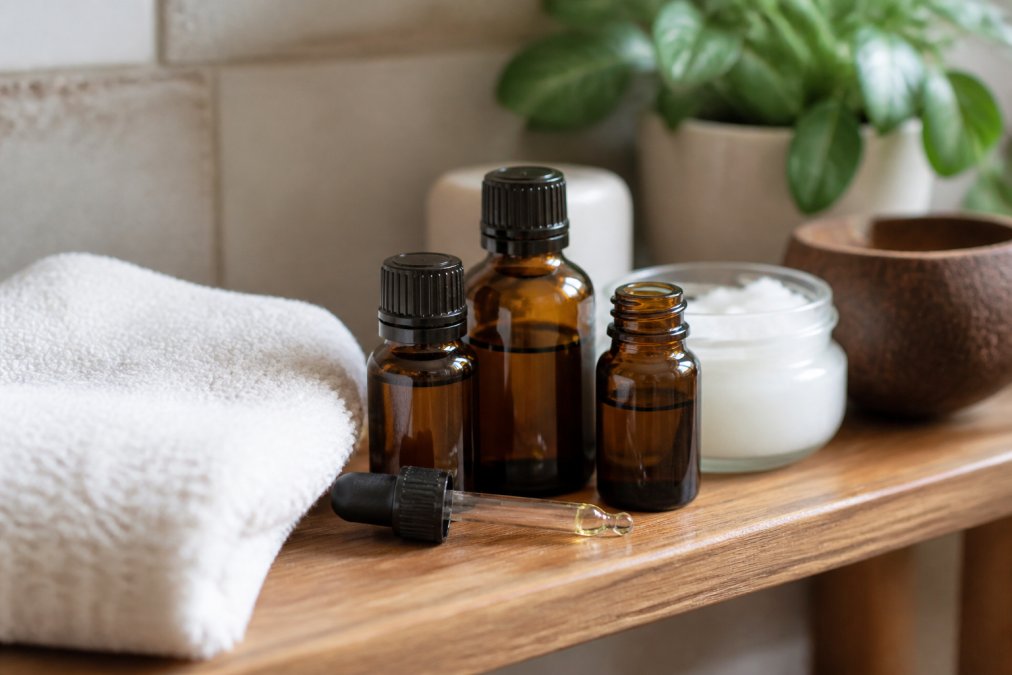
Tea tree oil contains terpinen-4-ol, which has demonstrated antiviral and anti-inflammatory activity. Lemon myrtle oil contains high concentrations of citral, which according to National Center for Biotechnology Information research on lemon myrtle has shown activity against molluscum contagiosum virus. Coconut oil serves as an effective carrier oil, and its lauric acid content provides additional soothing and mild antimicrobial support. Clove oil is among the most potent and irritating essential oils and is not appropriate for pediatric use.
How to Dilute Essential Oils Safely for Pediatric Skin
Dilution ratios for children differ from adults. For children between two and six years old, a safe dilution is one percent (one drop of essential oil per one teaspoon of carrier oil). For children six and older, a two percent dilution is generally appropriate.
Practical dilution guide:
- 1% dilution (ages 2-6): 1 drop essential oil per 5 ml carrier oil
- 2% dilution (ages 6-12): 2 drops essential oil per 5 ml carrier oil
- 2-3% dilution (adults): 3-6 drops essential oil per 10 ml carrier oil
Coconut oil, jojoba oil, and sweet almond oil all work well as carrier oils. Coconut oil is most widely available and adds its own skin-supporting properties.
Patch Testing and Safety Precautions Before You Apply
A patch test is non-negotiable before applying any diluted essential oil to a child's skin. Apply a small amount to the inside of the elbow and wait twenty-four hours. If no redness, swelling, or itching appears, the blend is likely safe.
Additional safety precautions: never apply essential oils to broken, bleeding, or actively inflamed skin; keep all oils away from eyes, mucous membranes, and the genital area; store oils out of reach of children; and do not use on infants under two without explicit pediatrician guidance.
Wellaroma's molluscum cream is formulated with these dilution and safety principles built in, so parents who prefer a ready-made option do not have to calculate ratios or source individual oils separately.
Preventing Molluscum Spread in the Household
Preventing molluscum spread starts with understanding that the virus can live on surfaces for a meaningful period. The most important behavioral change is simple: the infected child should not share towels, washcloths, or clothing with other family members. Lesions should be covered with clothing or a bandage during activities where skin-to-skin contact is likely.

Clothing, Bedding, and Shared Item Management
Wash the infected child's clothing, bedding, and towels separately using the warmest water setting safe for the fabric. Change bedding at least twice per week during active infection.
Practical household management checklist:
- Assign a dedicated towel to the infected child, washed after every use
- Change pillowcases every two to three days
- Avoid shared baths; showers are preferable during active infection
- Cover lesions on arms and legs with lightweight clothing during school and sports
- Avoid sharing sports equipment, helmets, or protective padding
- Wipe down shared surfaces like bathtub edges and sink handles with diluted disinfectant regularly
Keeping a child home from school is generally not necessary, as outlined in American Academy of Dermatology guidance on molluscum contagiosum. Covered lesions pose minimal risk to classmates.
Dietary and Immune-Boosting Support for Natural Molluscum Treatment
The immune system clears molluscum. Dietary support is therefore central to how quickly a child moves through the infection.
Zinc: Plays a direct role in immune cell production and skin repair. Foods include meat, shellfish, legumes, seeds, and whole grains.
Vitamin C: Supports collagen synthesis and immune response. Citrus fruits, bell peppers, broccoli, and strawberries are good sources.
Vitamin D: Many children are deficient. Vitamin D supports immune regulation and may reduce viral infection duration. A pediatrician can check levels and recommend supplementation if needed.
Probiotic-rich foods: Gut health and immune function are closely linked. Yogurt with live cultures, kefir, and fermented foods support the microbiome.
Adequate sleep: Sleep is when the immune system does its most intensive repair work. Protecting sleep schedules during active infection is a genuine treatment strategy.
The Emotional Side: Supporting Your Child Through a Long Infection
Molluscum contagiosum is visible. Other children notice. A child with visible bumps for six months has likely absorbed anxiety about their skin. That emotional weight is real and affects how families cope with the treatment timeline.
Normalize the infection without minimizing it. Molluscum is common, not dangerous, and it will go away. Children benefit from hearing this clearly and repeatedly.
Give children age-appropriate agency. Letting a child apply their own treatment or choose which bandage covers their lesion gives them a sense of control.
Prepare them for questions from peers. Rehearsing a simple answer ("It's a skin thing, it's not contagious from touching me") reduces social anxiety.
Watch for signs of deeper distress. If a child refuses school, withdraws from activities, or expresses significant shame about their skin, that warrants a conversation with a pediatrician or school counselor.
For parents, the frustration of a long infection is exhausting. Connecting with other parents managing molluscum through online communities reduces isolation.
When to See a Dermatologist Instead of Treating at Home
Natural remedies are appropriate for most otherwise healthy children with typical presentations. See a dermatologist if lesions spread rapidly despite consistent treatment, the child has more than thirty to forty lesions, lesions appear on eyelids or very close to eyes, any lesion shows signs of secondary bacterial infection, the child is immunocompromised, the infection has persisted beyond two years, or a lesion causes significant functional or emotional distress.
Dermatologists have access to clinical treatments including cantharidin, a topical blistering agent applied in-office, and podophyllotoxin, a topical treatment for older patients. These can significantly accelerate resolution when natural approaches have not been sufficient.
According to American Academy of Pediatrics clinical guidance, treatment decisions should weigh the discomfort of treatment against the self-limiting nature of the infection. Watchful waiting combined with good hygiene and immune support is a legitimate, evidence-consistent approach for most children.
Post-treatment scarring is a concern some parents raise. Keeping skin moisturized, protecting healing lesions from sun exposure, and avoiding picking at resolving bumps reduce lasting marks. For lesions that have left shallow scars, a dermatologist can advise on appropriate options once the infection has fully cleared.
Managing molluscum contagiosum at home is a long game requiring both a consistent topical strategy and a plan for keeping the whole child healthy through a months-long process. Wellaroma's molluscum cream brings together essential oil healing solutions formulated specifically for this infection, with dilution and safety standards built in for pediatric skin. The product is designed for sensitive skin and can be used alongside the hygiene and immune-support strategies outlined above. Get started with Wellaroma and give your child's skin the consistent, gentle care that makes the difference over time.
Frequently Asked Questions
Will tea tree oil get rid of molluscum contagiosum?
Tea tree oil has antiviral properties that may help reduce the size and appearance of molluscum papules over time, but it is not a guaranteed cure. It must always be diluted in a carrier oil like coconut oil before applying to skin, especially on children. A typical safe dilution ratio for pediatric skin is 1-2%. Results vary by individual immune response, and the infection is self-limiting, meaning the body will eventually clear it on its own. Consistent, careful application alongside good hygiene gives the best chance of faster resolution.
Is molluscum contagiosum contagious to other family members?
Yes, molluscum contagiosum is contagious. The viral skin infection spreads through direct skin-to-skin contact and through fomites, shared objects like towels, clothing, and bath sponges. Family members can pick it up by touching an infected person's lesions or sharing personal items. Preventing molluscum spread in the household means giving each person their own towel, washing bedding frequently, keeping lesions covered, and avoiding shared baths. Children should also avoid scratching the papules, which can transfer the poxvirus to other areas of their own skin.
Can apple cider vinegar remove molluscum bumps?
Apple cider vinegar is a popular home remedy for molluscum contagiosum. Its acidity may irritate the papules enough to trigger an immune response that speeds clearing. However, it can also cause skin irritation or chemical burns if applied undiluted, particularly on sensitive or pediatric skin. If you try it, dilute it with water and apply with a cotton ball only to individual lesions, not surrounding skin. It is not clinically proven as a standalone treatment, so pair it with other natural remedies and monitor for any signs of secondary infection.
What makes molluscum contagiosum flare up or spread further?
Scratching is the most common reason molluscum spreads to new areas of the body. Each papule contains the poxvirus, and breaking the skin releases it onto surrounding areas or onto hands that then touch other body parts. Weakened immune system function, whether from stress, poor sleep, or nutritional gaps, can also slow the body's ability to clear the infection. Shared baths, towels, and clothing transfer the virus between people. Keeping lesions covered, trimming fingernails, and supporting overall immunity are the most effective ways to prevent further spread.
This article was written using GrandRanker

Leave a comment