


How to Use Essential Oil Blends: A 2026 Guide
Table of Contents
- What Are Essential Oil Blends and How Do They Work?
- Essential Oil Dilution Ratios for Safe Topical Application
- How to Diffuse Essential Oil Blends at Home
- Essential Oil Safety Guidelines: What You Must Know First
- Blending by Scent Notes: Top, Middle, and Base
- Aromatic Bathing, Spa Techniques, and DIY Home Cleaning
- Troubleshooting Bad Blends and Sourcing Sustainable Oils
- Conclusion
Last Updated: August 20, 2026
What Are Essential Oil Blends and How Do They Work?
Essential oil blends are combinations of two or more individual essential oils formulated to work together for a specific therapeutic, aromatic, or wellness purpose. A well-crafted blend creates synergy where the combined effect exceeds what each oil would produce independently. When you inhale an essential oil blend, volatile compounds travel through the nasal passage and directly stimulate the limbic system, the brain region governing emotion, memory, and stress response. This is why a well-constructed blend can shift your mood within seconds.
Synergy and Chemical Constituents
Synergy in essential oil blending refers to the phenomenon where specific chemical constituents from different oils interact to amplify therapeutic properties. A blend of lavender and frankincense, for example, combines linalool from lavender with alpha-pinene from frankincense, two constituents that research suggests may complement each other's calming effects. Understanding constituent families, monoterpenes, esters, phenols, oxides, helps you build blends that genuinely work rather than just smell interesting.
Essential Oil Dilution Ratios for Safe Topical Application
Applying essential oils "neat" (undiluted) directly to skin is one of the most common errors in home aromatherapy and can cause sensitization, irritation, or chemical burns with certain oils like clove or cinnamon bark.
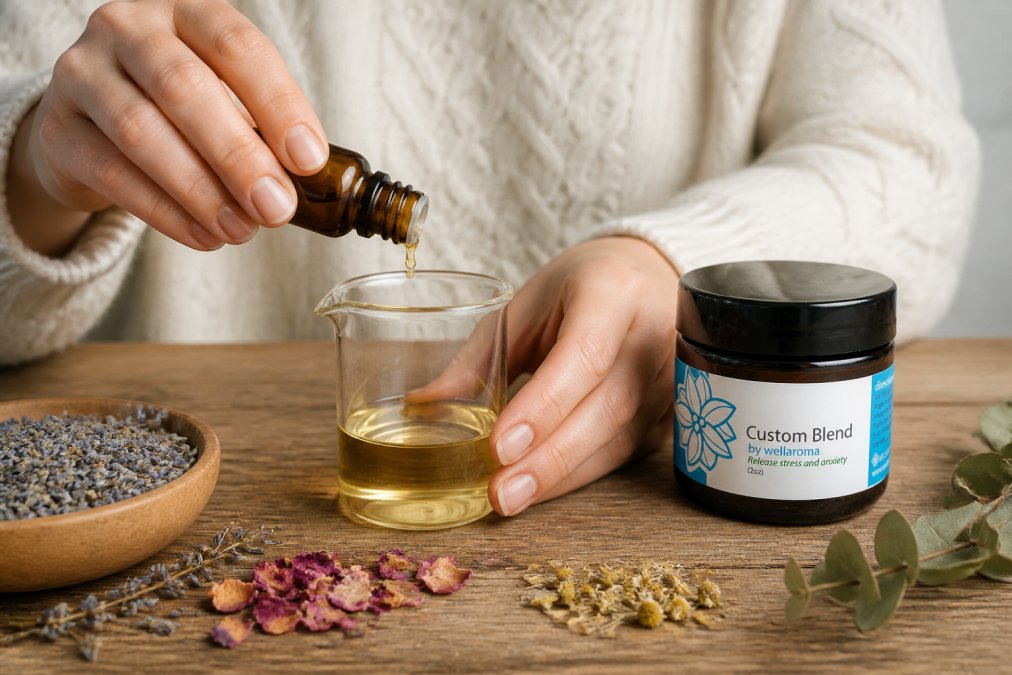
The National Association for Holistic Aromatherapy dilution guidelines provides clear standards for safe use:
| Use Case | Dilution Ratio | Drops per 1 oz Carrier Oil |
|---|---|---|
| Sensitive or children's skin | 0.5-1% | 3-6 drops |
| General adult body use | 2% | 12 drops |
| Localized muscle relief | 3-5% | 18-30 drops |
| Acute, short-term use only | Up to 10% | 60 drops (max) |
| Facial application | 0.5-1% | 3-6 drops |
A 2% dilution is the standard starting point for most adults. For sensitive or dry skin, drop that to 0.5-1% and patch test first.
Carrier Oils: Choosing the Right One for Your Skin Type
A carrier oil is the fatty, cold-pressed or expeller-pressed base oil that dilutes essential oils for safe skin contact. Carrier oils have their own therapeutic properties, viscosity levels, and shelf lives that affect both the blend's performance and absorption.
- Jojoba oil: Mimics skin's natural sebum, ideal for oily or acne-prone skin. Long shelf life.
- Sweet almond oil: Light viscosity, absorbs quickly, suits most skin types.
- Rosehip seed oil: Rich in essential fatty acids, excellent for dry or mature skin. Shorter shelf life.
- Fractionated coconut oil: Stays liquid at room temperature, absorbs cleanly, odorless. Great for roller bottles.
- Argan oil: Heavier, nourishing, suits very dry or damaged skin.
For roller bottle blends, fractionated coconut oil or jojoba are most practical.
Pulse Point Application Step by Step
Pulse points are areas where blood vessels sit close to the skin surface, generating warmth that helps diffuse your blend throughout the day.
- Shake or roll your diluted blend to ensure even distribution.
- Apply a small amount to your wrist, inner elbow, base of throat, or behind the ears.
- Do not rub wrists together, as this breaks down volatile compounds.
- Reapply every 4-6 hours as needed.
- Avoid pulse point application of citrus-heavy blends before sun exposure due to photosensitivity risk.
How to Diffuse Essential Oil Blends at Home
Diffusing is the easiest and most versatile method for experiencing essential oil blends through inhalation. An ultrasonic diffuser disperses water and essential oils as a fine mist without using heat, preserving the volatile compounds.
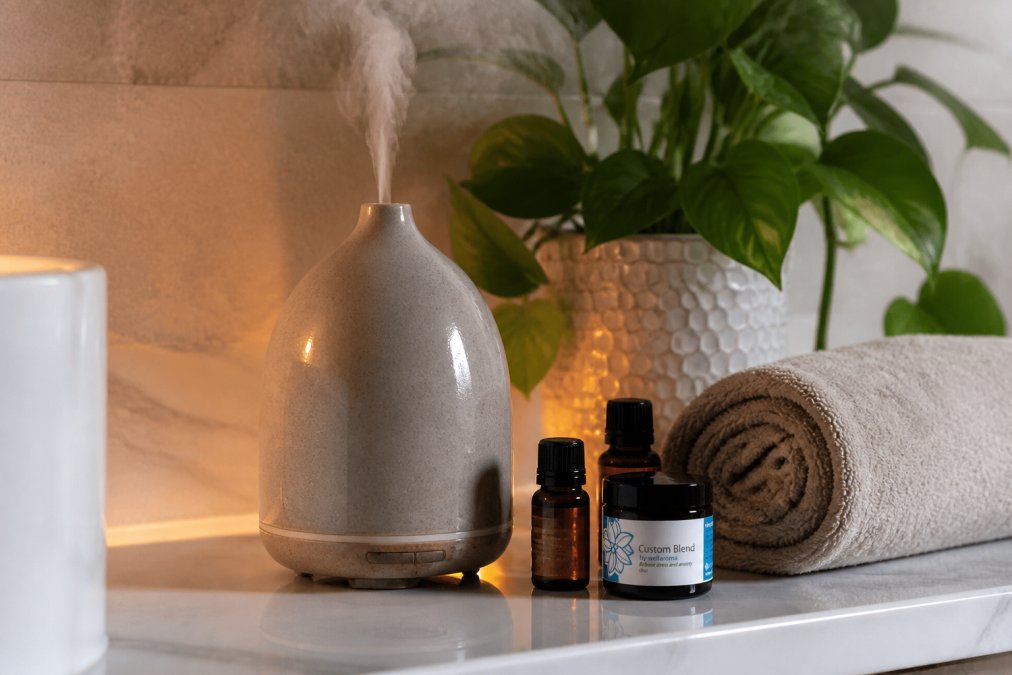
General guidelines for home diffusing:
- Add 3-5 drops of your essential oil blend per 100 ml of water.
- Run the diffuser in 30-60 minute intervals rather than continuously, as the olfactory system habituates quickly.
- Diffuse in a ventilated space, especially with children or pets present.
- Clean your diffuser every 3-5 uses to prevent oil buildup and microbial growth.
Steam Inhalation and Direct Inhalation Methods
Steam inhalation is one of the oldest aromatherapy techniques. Add 2-3 drops of essential oil blend to a bowl of steaming water, drape a towel over your head, and inhale slowly for 5-10 minutes. Keep eyes closed to avoid irritation.
Direct inhalation is simpler: place 1-2 drops on a tissue or in cupped hands and inhale deeply. This method is fast, portable, and requires no equipment. According to University of Minnesota's Center for Spirituality and Healing, inhalation is among the most researched delivery methods in aromatherapy, with documented effects on the nervous system.
Essential Oil Safety Guidelines: What You Must Know First
Photosensitivity is a real and underappreciated risk. Cold-pressed citrus oils, bergamot, lemon, lime, grapefruit, contain furanocoumarins that react with UV light and can cause severe skin darkening or burns. Always use steam-distilled citrus oils when applying topically, or avoid sun exposure for at least 12 hours after application.
Certain essential oils carry contraindications for specific health conditions. Clary sage and fennel should be avoided during pregnancy. Eucalyptus and peppermint should not be used near infants or young children. Oils high in methyl salicylate (wintergreen, birch) are contraindicated for anyone taking blood-thinning medications.
A patch test is non-negotiable before using any new blend topically. Apply a small amount of your diluted blend to the inner forearm, wait 24 hours, and check for redness, itching, or swelling.
Pet and Child Safety Specificities
For children: The American Association of Poison Control Centers fields thousands of essential oil exposure calls annually. Children's skin is more permeable and their smaller body mass means lower safe thresholds. Stick to a 0.5% dilution for children aged 2-10. Avoid peppermint, eucalyptus, and rosemary entirely for children under 10.
For pets: Cats lack the liver enzyme glucuronyl transferase, which means they cannot metabolize many phenolic compounds found in essential oils. Tea tree, clove, oregano, and cinnamon are particularly dangerous for cats. Dogs are more tolerant but still sensitive; diffuse in well-ventilated spaces and always give pets the option to leave the room. Never apply essential oils topically to pets without veterinary guidance.
Blending by Scent Notes: Top, Middle, and Base
Understanding the top, middle, base note framework is what separates a cohesive blend from one that smells confused.
Top notes evaporate fastest, usually within 30-60 minutes, creating the first impression. Common examples: bergamot, lemon, peppermint, eucalyptus. Use at roughly 20-30% of your total drop count.
Middle notes form the body of the blend and last 2-4 hours, bridging top and base notes. Common examples: lavender, geranium, clary sage, rosemary. These typically make up 50-60% of the blend.
Base notes are the heaviest, slowest-evaporating compounds that anchor the blend. Common examples: cedarwood, vetiver, frankincense, sandalwood, ylang ylang. Use at 10-25% of the blend.
A practical starting formula for a 10-drop blend: 3 drops top note + 5 drops middle note + 2 drops base note.
Aromatic Bathing, Spa Techniques, and DIY Home Cleaning
Aromatic bathing combines inhalation, topical absorption, and the relaxing effects of warm water simultaneously. Essential oils do not dissolve in water, so always disperse your blend first in a carrier oil, full-fat milk, or unscented bath gel before adding to the tub. A practical ratio: 5-10 drops of essential oil blend in 1 tablespoon of carrier oil, stirred into the bath as it fills.
For a spa-style body treatment, try a salt scrub: combine 1 cup of Epsom or sea salt with 2 tablespoons of carrier oil and 10-15 drops of your essential oil blend.
DIY home cleaning applications leverage the antimicrobial properties of oils like tea tree, eucalyptus, lemon, and thyme. A simple all-purpose cleaner: combine distilled water, white vinegar, and 20-30 drops of a lemon-tea tree blend in a spray bottle. Shake before each use.
The Wellaroma Roller Pouch + 3 Rollers set is a practical way to keep your most-used blends organized and accessible for daily rituals.

Troubleshooting Bad Blends and Sourcing Sustainable Oils
The blend smells too sharp or "chemical": You've over-weighted the top notes. Add more middle note drops to balance; lavender is the most reliable bridge oil.
The blend is muddy and indistinct: Too many base notes or too many oils overall. Simplify to 3-4 oils.
The blend smells fine in the bottle but odd on skin: Some oils change character when warmed or reacting with skin chemistry. Test blends on skin during development.
The blend fades too quickly: Your base notes are too light. Add a small amount of cedarwood or vetiver.
On sourcing: the term "therapeutic grade" is not regulated by the FDA. What matters is gas chromatography/mass spectrometry (GC/MS) testing, which verifies the chemical constituent profile. Look for brands that make third-party GC/MS reports publicly available.
Sustainability matters too. Sandalwood, frankincense, and rosewood are under ecological pressure from overharvesting. The Convention on International Trade in Endangered Species trade database tracks protected plant species. Choosing suppliers with verified sustainable harvesting practices protects ecosystems and long-term oil quality.
For those who want a professionally formulated starting point, Wellaroma's Custom Roller and Custom Blend options let you work directly with their team to develop a blend tailored to your specific needs.
Getting essential oil blends right takes practice, patience, and a willingness to start simple. The dilution ratios, note structures, and safety protocols covered here give you the foundation to experiment confidently. Wellaroma's range of roller blends, aromatherapy kits, and custom formulation options makes it straightforward to start with expertly crafted blends and build your own knowledge from there. Add to cart and experience what a professionally developed essential oil blend actually feels like on skin.
Frequently Asked Questions
How do you properly dilute essential oil blends for skin application?
For adults, a 2% dilution is the standard starting point: add 12 drops of essential oil per 1 oz (30 ml) of carrier oil. For children ages 2-10, drop to 0.5-1%, which equals 3-6 drops per 1 oz. Always perform a patch test on the inner forearm before full application. Sensitive or dry skin types should start at 1% and increase only if no reaction occurs after 24 hours. Never apply essential oil blends neat, undiluted, directly to skin without professional guidance.
What is the 20/30/50 rule for creating essential oil blends?
The 20/30/50 rule is a blending formula based on scent notes: 20% top notes (the first aroma you smell, like citrus or peppermint), 30% middle notes (the heart of the blend, like lavender or rosemary), and 50% base notes (the longest-lasting anchor, like cedarwood or frankincense). This ratio creates a balanced aromatic profile that evolves over time rather than smelling flat. It's a useful starting framework, though personal preference and therapeutic intent may lead you to adjust the percentages.
Which essential oils should not be mixed together?
Some combinations cause skin sensitization or cancel out therapeutic properties. Avoid blending clove, cinnamon bark, or oregano with other oils for topical use without significant dilution, these are high-phenol oils that irritate skin even at low concentrations. Citrus oils like bergamot and lemon increase photosensitivity, so blends containing them should not be applied before sun exposure. Eucalyptus and peppermint are contraindicated for children under 10 because of their high 1,8-cineole and menthol content, which can affect respiratory function in young children.
Can essential oil blends be used in a humidifier?
Standard cool-mist or warm-mist humidifiers are not designed for essential oil blends, the oils can degrade plastic components and void warranties. Use an ultrasonic diffuser or a nebulizing diffuser built specifically for aromatherapy instead. If you want to add scent to a room alongside a humidifier, place a few drops of your essential oil blend on a cotton ball near the unit's air output rather than inside the water reservoir. Always check the manufacturer's guidelines before adding any oil to any device.
This article was written using GrandRanker

Leave a comment