


Best Natural Skincare for Eczema-Prone Skin
Table of Contents
- Understanding Eczema-Prone Skin and Why Natural Skincare Eczema Products Help
- Natural Ingredients for Eczema Relief: What to Look For
- Ingredients to Avoid If You Have Eczema-Prone Skin
- Best Natural Skincare for Eczema-Prone Skin: Top Picks
- Organic Body Wash for Sensitive Skin: How to Choose Wisely
- Building an Eczema-Safe Skincare Routine That Actually Works
- When to See a Dermatologist
- Conclusion
Last Updated: August 19, 2026
Eczema-prone skin is frustrating because the wrong product can trigger a flare-up within hours. At Wellaroma, we've worked with families navigating sensitive, reactive skin for years, and the same question comes up repeatedly: which natural skincare products actually help without making things worse? This guide breaks down exactly what to look for, what to avoid, and which products deliver real relief.
Eczema, clinically known as atopic dermatitis, disrupts the skin barrier function, allowing transepidermal water loss to accelerate and leaving skin vulnerable to irritants and allergens. Natural skincare formulated specifically for eczema-prone skin works by restoring and protecting the barrier rather than stripping it further.
Quick Picks:
- Best Budget Cleanser: Wellaroma African Black Soap - Unscented ($5.99), fragrance-free, paraben-free, ethically sourced
- Best Healing Cream: Wellaroma Lush Skin Healing Cream ($22.00), moisture-locking barrier cream with essential oils
- Best Daily Lotion: Wellaroma Lavender Eucalyptus or Lavender Orange Lotion ($20.00), shea butter, sunflower oil, aloe vera base
- Best for Targeted Soothing: Wellaroma Roman Chamomile Essential Oil ($38.29), pure therapeutic grade, dilute before topical use
Understanding Eczema-Prone Skin and Why Natural Skincare Eczema Products Help
Eczema-prone skin is characterized by a compromised skin barrier that fails to retain moisture and allows environmental irritants to penetrate more easily than healthy skin. This breakdown triggers inflammation, intense itching, and recurring flare-ups.

The skin microbiome also plays a role. Disrupted barrier function alters the balance of microorganisms on the skin's surface, worsening inflammation and sensitivity. Conventional products loaded with synthetic fragrances, sulfates, and preservatives compound this problem by introducing additional irritants.
Natural skincare eczema products prioritize lipid replenishment, soothing botanicals, and pH-balanced formulas that work with the skin rather than against it. Ingredients like ceramides, shea butter, and colloidal oatmeal have well-established track records for supporting barrier repair without triggering reactions.
According to National Eczema Association guidance on moisturizers, applying a moisturizer within three minutes of bathing is one of the most effective ways to lock in moisture and reduce flare-up frequency. For many people with atopic dermatitis, fragrance-free, paraben-free, and sulfate-free products reduce potential irritants and directly lower flare-up risk.
Natural Ingredients for Eczema Relief: What to Look For
Not all natural ingredients are created equal for eczema-prone skin. Some offer genuine barrier support; others, despite being plant-derived, can actually aggravate sensitive skin.
Emollients, Occlusives, and Humectants That Protect the Skin Barrier
The best natural skincare for eczema prone skin combines three categories of moisturizing agents.
Emollients fill gaps between skin cells, smoothing texture and reducing irritation. Shea butter, sunflower seed oil, jojoba oil, and flaxseed oil are among the most effective plant-based emollients.
Occlusives form a physical barrier over the skin surface to prevent moisture from escaping. Plant-based alternatives like shea butter and coconut oil provide meaningful occlusive effects when applied to damp skin.
Humectants draw water from the environment or deeper skin layers to the surface. Hyaluronic acid and aloe vera are the most widely used natural humectants. Aloe vera also carries anti-inflammatory properties particularly useful during active flare-ups.
A product combining all three is genuinely effective for eczema. One that only hydrates without sealing tends to leave skin drier than before as water evaporates.
Soothing Botanicals: Colloidal Oatmeal, Aloe Vera, and Chamomile
Colloidal oatmeal is one of the most clinically validated natural ingredients for eczema relief. According to FDA monograph on colloidal oatmeal as a skin protectant, colloidal oatmeal is recognized as a safe and effective over-the-counter skin protectant. It reduces itching, soothes inflammation, and helps restore the skin barrier.
Aloe vera works as both a humectant and soothing agent, calming redness and reducing the urge to scratch, critical for breaking the itch-scratch cycle.
Roman chamomile is well regarded for its anti-inflammatory and skin-calming properties. When used as a diluted essential oil in topical application, it provides targeted relief without the irritation risk that stronger botanicals carry.

Ingredients to Avoid If You Have Eczema-Prone Skin
Synthetic fragrances are the most common trigger for eczema flare-ups. They are often listed simply as "fragrance" on ingredient labels, concealing dozens of individual chemical compounds.
Sodium lauryl sulfate (SLS) and related sulfates are surfactants that create lather but strip the skin's natural oils and disrupt barrier function.
Parabens are preservatives used across many conventional skincare products. While evidence on their specific role in eczema is not conclusive, many dermatologists recommend paraben-free products for sensitive skin as a precautionary measure.
Alcohol-based products (particularly denatured alcohol) dry the skin aggressively and should be avoided in any moisturizer intended for eczema-prone use.
Certain essential oils at high concentrations can be problematic. Citrus oils, clove, cinnamon, and oregano are among the more irritating options.
Best Natural Skincare for Eczema-Prone Skin: Top Picks
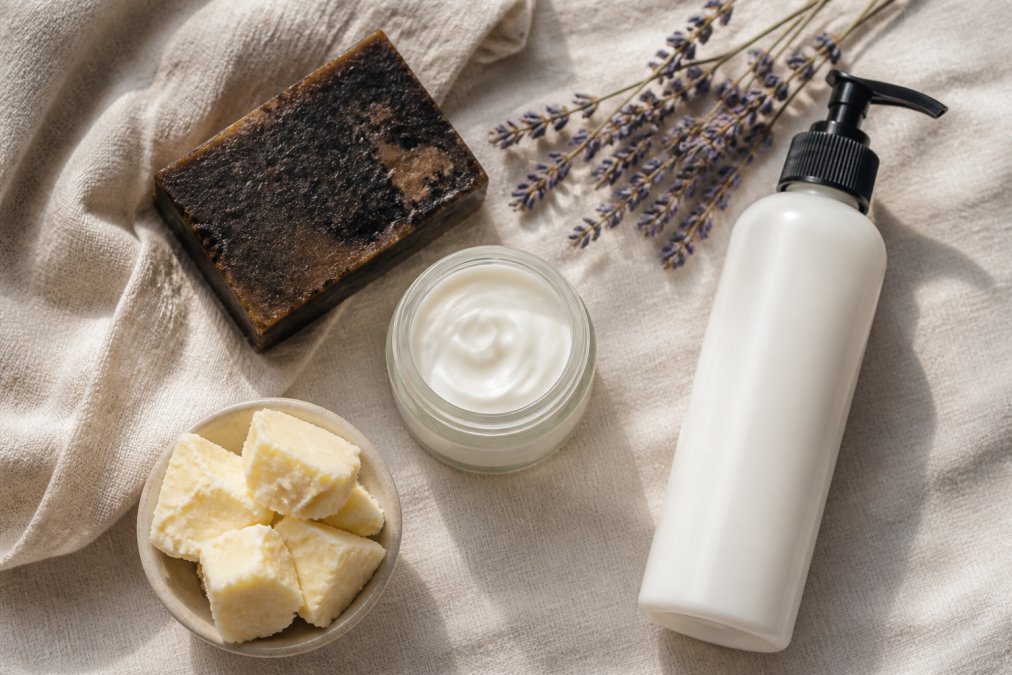
The products below are Wellaroma's top recommendations for eczema-prone skin. Each is fragrance-free or formulated with low-irritation botanicals, free from SLS and parabens, and designed with sensitive skin as the primary consideration.
1. African Black Soap - Unscented ($5.99)
Wellaroma's African Black Soap - Unscented is handcrafted in Accra, Ghana, using charcoal from roasted cocoa pods and plantain skins, blended with shea butter and coconut oil. It cleanses without stripping and contains no parabens, SLS, synthetic fragrance, or dyes. Raw ingredients are sourced from women-run collectives in Ghana and Nigeria, ensuring ethical sourcing and supply chain transparency. For anyone triggered by drugstore cleansers, the $5.99 price point makes this a low-risk first step.
2. Lush Skin Healing Cream ($22.00)
Wellaroma's Lush Skin Healing Cream is formulated for dry, cracked, and burning skin with a moisture-locking barrier oil. Key ingredients are dragon's blood, lavender, and frankincense. Dragon's blood is a plant resin with documented wound-healing and anti-inflammatory properties. Together, these ingredients make this cream particularly effective for severely dry, cracked skin that accompanies chronic eczema.

3. Lavender Eucalyptus Lotion ($20.00)
Wellaroma's Lavender Eucalyptus Lotion delivers layered moisturizing: the base contains purified water, aloe vera, sunflower oil, shea butter, olive oil, flaxseed oil, hemp seed oil, jojoba oil, vitamin E, and dragon's blood essential oil. This covers all three moisturizing categories: humectants, emollients, and light occlusives. Apply sparingly to damp skin after bathing for best results.
4. Lavender Orange Lotion ($20.00)
Structurally identical to the Lavender Eucalyptus formula, Wellaroma's Lavender Orange Lotion swaps eucalyptus for orange essential oil. The base cream is the same. The practical difference comes down to scent preference and individual skin response. Both are suitable for year-round use and particularly effective as a winter moisture boost.
5. Roman Chamomile Essential Oil ($38.29)
Wellaroma's Roman Chamomile Essential Oil is sourced from USA-grown chamomile flowers and carries a sweet, fruity scent. Roman chamomile is one of the gentler essential oils available, making it more appropriate for sensitive skin than many alternatives. For topical use, it must be diluted in a carrier oil before application. It can also be used in a diffuser for ambient aromatherapy support.
| Product | Price | Key Benefit | Best For |
|---|---|---|---|
| African Black Soap - Unscented | $5.99 | Fragrance-free, SLS-free cleansing | Daily cleansing, sensitive skin |
| Lush Skin Healing Cream | $22.00 | Barrier repair, moisture locking | Cracked, severely dry skin |
| Lavender Eucalyptus Lotion | $20.00 | Full-spectrum moisturizing | Daily maintenance, all seasons |
| Lavender Orange Lotion | $20.00 | Gentle aromatic moisturizing | Daily maintenance, winter boost |
| Roman Chamomile Essential Oil | $38.29 | Targeted anti-inflammatory support | Flare-up management, aromatherapy |
Organic Body Wash for Sensitive Skin: How to Choose Wisely
Choosing an organic body wash for sensitive skin starts with one question: what is the cleanser actually removing, and at what cost to the skin barrier? Most conventional body washes prioritize lather and fragrance, both irrelevant to skin health and actively harmful for eczema-prone skin.
A genuinely skin-safe cleanser should be sulfate-free, fragrance-free, and pH-balanced to match the skin's natural acidity. The African Black Soap cleanses without disrupting the lipid layer using natural saponified oils rather than synthetic detergents.
Look for these markers on any organic body wash label: no SLS or SLES, no synthetic fragrance, no parabens, dermatologist-tested or hypoallergenic designation, and a short, recognizable ingredient list.
Natural vs. Synthetic Cleansers: A Cost-Benefit View
Synthetic cleansers that trigger flare-ups lead to topical steroid use, dermatologist visits, and lost productivity. Many families spend far more managing reactions than they would have spent on gentler products from the start. Natural formulas with recognizable ingredients also make it straightforward to identify which ingredient caused a reaction.
Building an Eczema-Safe Skincare Routine That Actually Works
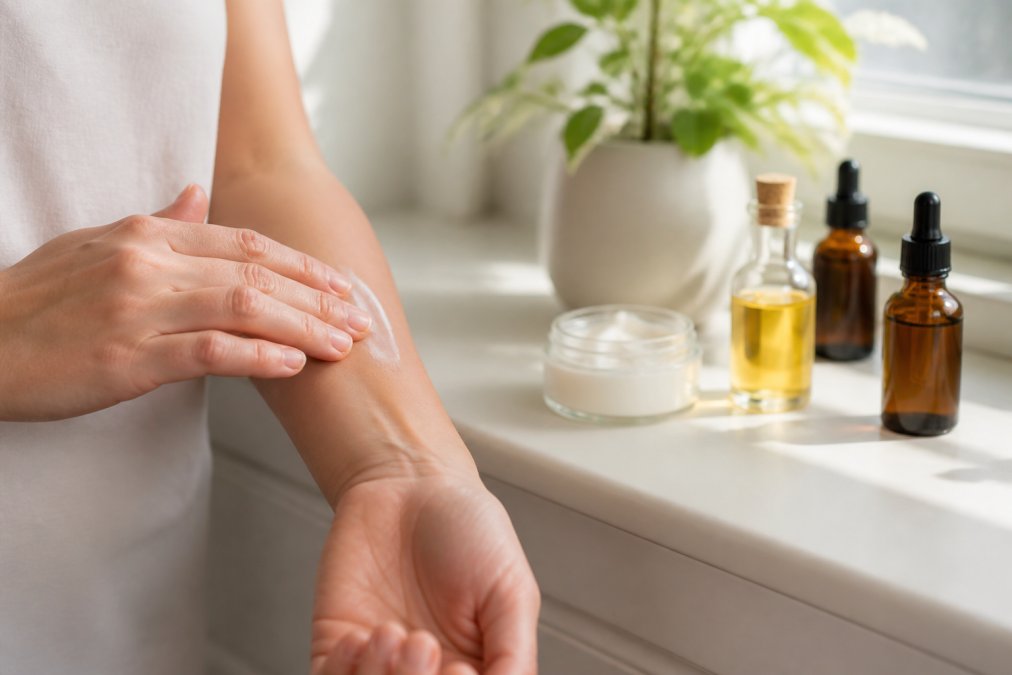
An eczema-safe skincare routine requires consistency and sequencing. The goal is to cleanse gently, hydrate immediately, and seal in moisture before the skin dries out.
A practical daily routine:
- Cleanse with a sulfate-free, fragrance-free bar or wash using lukewarm water
- Pat skin dry with a soft towel, never rub
- Apply a humectant-rich product like a lotion containing aloe vera within three minutes of bathing
- Follow immediately with an emollient-occlusive cream to seal in moisture
- For targeted areas of inflammation, apply a diluted soothing botanical after the moisturizing step
Patch Testing Protocol: How to Introduce New Products Safely
Patch testing is the single most important step most people skip when introducing natural skincare for eczema prone skin. Even gentle, natural formulas can cause reactions in highly sensitized individuals.
The standard patch test protocol:
- Apply a small amount of the new product to the inner forearm or behind the ear
- Leave it on for 24 hours without washing the area
- Check for redness, itching, swelling, or any change in skin texture
- If no reaction occurs after 24 hours, repeat for a second day before full application
- Introduce only one new product at a time, waiting at least one week between additions
Seasonal Skincare Adjustments for Eczema-Prone Skin
Eczema behaves differently across seasons due to changes in humidity, temperature, and indoor heating.
Winter is typically the most challenging. Central heating reduces indoor humidity dramatically, accelerating moisture loss. Increase moisturizer frequency, switch to a heavier occlusive cream, and consider a humidifier in the bedroom. Wellaroma's Lavender Eucalyptus and Lavender Orange Lotions are winter moisture boosters, and the Lush Skin Healing Cream is ideal for cracked or bleeding skin.
Summer brings sweat, sun exposure, and pool chemicals that can trigger flare-ups. Lighter, non-comedogenic formulas work better. Rinse off promptly after swimming and reapply moisturizer immediately.
Spring and fall are transition periods where allergen levels spike, requiring extra vigilance about ingredient lists and more frequent moisturizing.
When to See a Dermatologist
Natural skincare provides genuine relief for many people with eczema-prone skin, but it has limits. See a board-certified dermatologist if:
- Flare-ups are severe, widespread, or occur more than twice per month despite consistent skincare
- The skin shows signs of infection: weeping, crusting, increased warmth, or fever
- Over-the-counter and natural treatments have not produced improvement after four to six weeks of consistent use
- Eczema is significantly disrupting sleep, work, or daily functioning
- A child's eczema is worsening or covering large areas of the body
According to American Academy of Dermatology guidance on eczema treatment, prescription treatments including topical corticosteroids, calcineurin inhibitors, and newer biologic medications can be highly effective for moderate to severe atopic dermatitis. Natural skincare works best as a foundation and maintenance layer, not as a replacement for medical treatment when the condition is severe.
For anyone unsure whether their symptoms warrant a dermatologist visit, the National Eczema Association symptom tracker and resources provides guidance on severity classification and when to escalate care.
Managing eczema-prone skin takes consistency, the right ingredients, and products you can trust. The best natural skincare for eczema prone skin combines gentle cleansing, layered moisturizing, and targeted soothing agents that work with the skin barrier rather than against it. Wellaroma's range, from the $5.99 African Black Soap to the Lush Skin Healing Cream and daily maintenance lotions, offers a complete natural routine built around fragrance-free, paraben-free, ethically sourced formulas. Add to cart and give your skin the consistent, gentle care it needs to stay calm through every season.
Frequently Asked Questions
What is the best natural ingredient to soothe eczema flare-ups?
Colloidal oatmeal, ceramides, and shea butter consistently rank among the most effective natural ingredients for calming eczema flare-ups. Colloidal oatmeal reduces inflammation and supports skin barrier function, while shea butter acts as an occlusive to lock in moisture and reduce transepidermal water loss. Aloe vera provides immediate soothing relief. For a fragrance-free, affordable option, Wellaroma's African Black Soap ($5.99) uses shea butter and coconut oil without parabens, sulfates, or added fragrance.
Are essential oils safe for people with eczema?
Essential oils can be safe for eczema-prone skin when properly diluted in a carrier oil before topical application. Undiluted essential oils should never go directly on irritated skin. Lavender and Roman chamomile are among the gentler options, known for their soothing and anti-inflammatory properties. Always perform a patch test on a small area of skin for 24 hours before wider use. Wellaroma's essential oils come with MSDS documentation and clear dilution guidance to help you use them safely.
How does organic body wash help manage eczema symptoms?
Conventional body washes often contain sulfates, synthetic fragrances, and preservatives that strip the skin's natural oils and disrupt the skin microbiome, triggering the itch-scratch cycle. Organic body wash formulas that are sulfate-free, fragrance-free, and pH-balanced cleanse without compromising the skin barrier. Choosing a wash with emollient ingredients like sunflower seed oil or shea butter adds a layer of moisture retention during cleansing, which is especially important for atopic dermatitis management.
What should I avoid in skincare if I have eczema?
Avoid synthetic fragrances, alcohol-based products, sulfates (SLS/SLES), parabens, and harsh preservatives, these are the most common irritants that trigger eczema flare-ups. Heavily scented lotions and dyes also compromise skin barrier function. Opt for products labeled hypoallergenic, fragrance-free, paraben-free, and dermatologist-tested. Always check ingredient lists rather than relying on marketing claims like 'natural,' since that term is not regulated by the FDA.
Can natural skincare replace medical treatments for eczema?
Natural skincare products support eczema management by maintaining moisture retention, reducing irritants, and calming inflammation, but they are not a replacement for medical treatment in moderate to severe cases. Atopic dermatitis can require prescription topical corticosteroids or biologics prescribed by a dermatologist. Natural products work best as part of a daily maintenance routine that reduces flare-up frequency. If symptoms worsen, cover large areas of the body, or include signs of infection, consult a board-certified dermatologist.
This article was written using GrandRanker

Leave a comment