


Sustainable Spa Products for Daily Use at Home
Last Updated: November 4, 2026
Quick Summary
Sustainable spa products are body care items made with responsibly sourced ingredients and reusable or low-waste packaging, designed for regular use rather than occasional pampering. Build a daily core from a shower oil, a bare bar soap, and washable bamboo cotton facial pads, which together cost $52.00. Add scrubs, masks, and bath salts as weekly treatments instead of daily ones.
- The global spa products market reached $71.85 billion in 2026, with day spas holding 41.2% of that share.
- Bamboo Cotton Facial Pads cost $10.50 and can be washed up to 1,000 times, with a mesh bag included.
- A 2026 Market.us survey found 73% of respondents prefer skincare with sustainable packaging.
- Scrub damp skin for about 30 seconds per area, then apply shower oil or body butter while skin is still damp.
- A complete routine costs under $135.00, with the daily core at $52.00.
Table of Contents
- Why Sustainable Spa Products Belong in Your Daily Routine
- Quick Comparison: Sustainable Spa Products for Daily Use
- Certified Organic Skincare Essentials and Non-Toxic Ingredients to Look For
- Zero-Waste Beauty Alternatives and Sustainable Packaging That Lasts
- How to Use Essential Oil Blends in a Daily At-Home Spa Experience
- Natural Body Scrub Recipes for Exfoliation and Eco-Friendly Bath Rituals
- Skin Sensitivity, Ingredient Transparency, and What Greenwashing Hides
- Building Your Daily Sustainable Spa Kit with Wellaroma
- Frequently Asked Questions
Why Sustainable Spa Products Belong in Your Daily Routine
The global spa products market reached $71.85 billion in 2026, according to Fortune Business Insights' spa products market analysis, and day spas alone hold 41.2% of that share (Coherent Market Insights, 2026).
At Wellaroma, we build body care around that daily-use idea: shower oils, bar soaps, refillable tools, and essential oil blends that fit a normal morning rather than a once-a-month treat.
Quick Comparison: Sustainable Spa Products for Daily Use
Here is our full lineup side by side, with real prices so you can plan a kit without guessing.
| Product | Price | Best For | Frequency |
|---|---|---|---|
| Coffee Infused Shower Oil: Awaken | $36.00 | Replacing daily body lotion | Every shower |
| Bamboo Cotton Facial Pads | $10.50 | Zero-waste makeup removal | Daily |
| Naked Soaps-Matcha Peppermint | $5.50 | Everyday cleansing | Daily |
| Shower Steamer - Relax / Lavender | $5.00 | Evening wind-down | 2-3x weekly |
| Vanilla Bloom Sugar Scrub | $15.50 | Weekly exfoliation | 1-2x weekly |
| Clay Mask Set | $30.00 | Detox and pore care | Weekly |
| Facial Ice Roller | $9.45 | Morning puffiness | 1-2x daily |
| Body Butter - Grapefruit | $22.00 | Extra dry patches | As needed |
| Happy Feet Foot Repair | $14.00 | Cracked heels | Nightly |
| Pineapple Bliss Raw Juice Mask | $5.00 | Quick brightening | Weekly |
The whole daily core, shower oil plus bar soap plus facial pads, costs $52.00.

Certified Organic Skincare Essentials and Non-Toxic Ingredients to Look For
Start with the label, not the marketing. A product earns a place in your daily routine when you can read every ingredient and understand why it is there.
According to Columbia Climate School's sustainable beauty research, 78% of people with sensitive skin prioritize brands that publish transparent ingredient lists. That is not a small niche.
What to scan for on a label:
- Plant oils named specifically, such as jojoba, avocado, and fractionated coconut oil, rather than "fragrance" or "parfum"
- Essential oils instead of synthetic scent, which is how aromatherapy grade products get their smell
- Free-from lists that mean something: paraben-free, sulfate-free, phthalate-free, mineral oil free
Our Clay Mask Set is labeled vegan, cruelty-free, gluten-free, paraben-free, fragrance-free, phthalate-free, mineral oil free, and sulfate-free.
Zero-Waste Beauty Alternatives and Sustainable Packaging That Lasts
The most sustainable product is the one you buy once, but the second-most sustainable is the one you dispose of correctly. Most spa content stops at the purchase. Daily use means you will eventually finish a bar, wear out a pad, or empty a jar, and what you do next determines whether the product was actually low-waste.
A 2026 survey from Market.us skincare statistics found that 73% of respondents prefer skincare with sustainable packaging, and the refillable beauty trend keeps growing because it removes the repeat purchase entirely. Our zero-waste picks include:
- Bamboo Cotton Facial Pads ($10.50) replace disposable cotton rounds and can be washed up to 1,000 times, with a mesh storage bag included
- Naked Soaps-Matcha Peppermint ($5.50) comes as a bare bar with no plastic wrap, made from saponified organic palm, coconut, olive, and palm kernel oils
- Facial Ice Roller ($9.45) is refillable and reusable, so you freeze a fresh cube each use
What to do with each item when you are done
Lifecycle instructions are where most sustainable beauty advice goes quiet. Here is the end-of-life path for the daily-use categories in this article, based on common US municipal recycling rules:
- Bare soap bars: the paper sleeve, if present, is usually curbside recyclable; the bar dissolves completely. Store it on a draining dish so it lasts longer.
- Bamboo cotton pads: compostable in a home bin after removing any synthetic stitching or elastic. When edges fray, cut them into cleaning rags before composting.
- Refillable tools (ice roller, shower steamer tray): wipe clean and keep using. If the housing cracks, check for a replacement part before buying new.
Watch out: "compostable" and "recyclable" are not the same claim. A bamboo pad tossed in the trash goes to landfill just like a cotton round, and a glass jar with residue can contaminate a recycling batch. Rinse first, then sort.
Packaging claims worth verifying
A package can say "eco-friendly" without meeting any legal standard, because no US regulator defines the term for cosmetics packaging. Three checks separate real low-waste packaging from a green label:
- Does the brand name the specific material (glass, aluminum, paper, bamboo) rather than a vague adjective?
- Is there a refill option, or is the container single-use by design?
- Does the product page tell you how to dispose of it, or does the guidance stop at the ingredients?
If a brand cannot answer all three, treat the packaging claim as unverified. Daily-use products generate the most packaging waste over a year, so the disposal path matters more here than for a one-off gift set.
How to Use Essential Oil Blends in a Daily At-Home Spa Experience
Essential oil blends work best tied to a time of day, not a special occasion. Pick one scent for mornings and one for evenings, and your brain starts associating the aroma with the transition.
Here is a simple three-step daily ritual:
- Morning: use the Coffee Infused Shower Oil in Awaken, a blend of coffee, lemon, and bergamot essential oils, on wet skin before you towel off. It replaces body lotion entirely.
- Midday reset: run the Facial Ice Roller over your face in 30-second circular intervals to reduce puffiness.
- Evening: drop a lavender Shower Steamer ($5.00) at the base of the shower and let the steam carry the essential oil.
For a deeper walkthrough of dilution, blending, and safe application, read our full guide on how to use essential oil blends.
Natural Body Scrub Recipes for Exfoliation and Eco-Friendly Bath Rituals
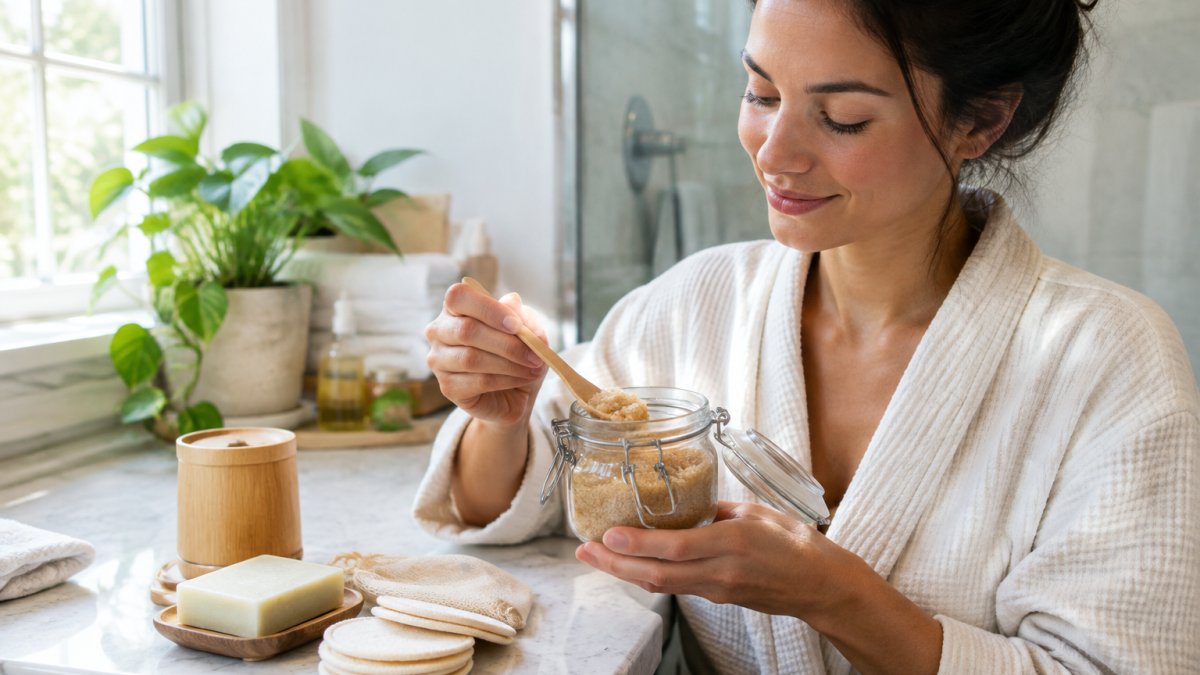
You can make an effective scrub from three pantry ingredients, or buy one that is already balanced. Both beat a plastic tub of microbeads. The bigger question for daily use is how often and with what, because the wrong scrub for your skin type does more damage than skipping it.
Coffee Infused Shower Oil: Awaken →
A base recipe you can adjust
For a homemade version, mix two parts sugar with one part carrier oil, such as jojoba or avocado, and add a few drops of essential oil. Use it on damp skin in the shower, rinse, then follow with a moisturizer. For a ready-made option, our Vanilla Bloom Sugar Scrub ($15.50) does the same job with no measuring.
Sugar is the right base for most people because it dissolves as you scrub, so the abrasion softens instead of staying sharp. Salt scrubs are coarser and better for feet and elbows than arms and legs. Coffee grounds add grip but can clog a shower drain, so rinse with plenty of water.
Match the scrub to your skin type
This is where generic scrub advice fails. A scrub that works for oily back skin can trigger a flare on eczema-prone arms.
- Sensitive or eczema-prone skin: skip sugar scrubs on active flare areas and use a soft washcloth with a fragrance-free cleanser instead. Our African Black Soap Unscented for Sensitive, Eczema-Prone Skin is formulated without fragrance for this reason. When skin is calm, a gentle sugar scrub once a week is usually enough.
- Acne-prone body skin (back, chest, shoulders): a sugar scrub can help clear dead skin that traps oil, but scrubbing active breakouts spreads bacteria. Use a clean scoop every time, never dip wet hands into the jar, and rinse the tub after each use.
- Dry or mature skin: oil-based scrubs are the better fit because the carrier oil stays on the skin after rinsing. Follow with body butter on rough patches rather than scrubbing harder.
Frequency and order of operations
Pair exfoliation with a bath ritual once or twice a week. Our Lavender Eucalyptus Bath Salts are built for exactly that: a scoop in warm water after you scrub, so the essential oils settle into freshly exfoliated skin.
A workable weekly sequence for most skin types:
- Shower and cleanse first, so the scrub is working on clean skin.
- Scrub damp skin in gentle circular motions for about 30 seconds per area, then rinse.
- Follow with shower oil or body butter within a few minutes, while skin is still damp, to lock in moisture.
- Reserve bath salts for a separate evening so you are not exfoliating and soaking on the same day if your skin is reactive.
Watch out: scrub before you shave, not after. Exfoliating freshly shaved skin causes irritation, especially on legs and underarms. And never scrub over a sunburn, an open cut, or a fresh tattoo, because broken skin is an entry point for infection.
Keeping the ritual low-waste
A glass jar with a metal lid is the easiest scrub container to recycle or refill, and a wooden spoon or silicone spatula keeps water out so the product lasts to the last scoop. If you make your own, a wide-mouth glass jar from your kitchen works as well as anything you would buy and avoids a new plastic tub.
Skin Sensitivity, Ingredient Transparency, and What Greenwashing Hides
Terms like "clean" and "sustainable" are not formally defined for cosmetics, which leaves room for greenwashing.
That is why we lean on specifics instead of adjectives. Our African Black Soap Unscented for Sensitive, Eczema-Prone Skin is unscented by design, because fragrance is the most common trigger for reactive skin.
Three questions that separate real transparency from marketing:
- Can the brand name the farm or region its botanical extracts come from?
- Does the ingredient list appear in full on the product page, not just "key ingredients"?
- Is the packaging actually recyclable or compostable, or just described as eco-friendly?
If a brand cannot answer all three, treat the sustainability claim as unverified.
Building Your Daily Sustainable Spa Kit with Wellaroma
Build the kit around frequency, not variety. Products you touch every day deserve the most attention; weekly treatments can stay simple.
Our recommended starter kit:
- Daily: Coffee Infused Shower Oil ($36.00), Naked Soaps-Matcha Peppermint ($5.50), Bamboo Cotton Facial Pads ($10.50)
- Weekly: Vanilla Bloom Sugar Scrub ($15.50), Clay Mask Set ($30.00)
- As needed: Body Butter - Grapefruit ($22.00) for dry patches, Happy Feet Foot Repair ($14.00) for heels
That is a complete routine for under $135.00, with the daily core at $52.00.
Building a genuinely sustainable daily routine takes more than swapping one bottle. It takes products you will actually reach for every morning, made with ingredients you can trace.
Frequently Asked Questions
What makes a spa product truly sustainable?
A sustainable spa product holds up on four fronts: what is in it, what it comes in, how long it lasts, and what happens when you are done with it. Look for short ingredient lists built on plant oils and clays, packaging that refills or composts, and products concentrated enough that one bottle covers months of use. Be careful with the word clean: these terms are not formally defined for cosmetics, so a label claim means little without a visible ingredient list.
How do I build a daily spa routine using eco-friendly products?
Keep it to three steps you will actually repeat. In the shower, use a bar soap or a shower oil so you skip a plastic lotion bottle. Twice a week, swap in a scrub or clay mask instead of adding a separate product. At the sink, replace disposable cotton rounds with washable bamboo pads, which can be washed up to 1,000 times. The goal is fewer products used more often, not a shelf full of jars. A $5.50 bar of matcha peppermint soap and a $10.50 set of reusable pads cost $16.00 together.
Are organic essential oils better for daily spa use?
Organic matters most when you use a product every day, because repeated exposure is where quality shows. Essential oils are concentrated, so dilution is the deciding factor, not the label. The Coffee Infused Shower Oil is made with jojoba, avocado, and coconut oils and is applied to wet skin. If you have sensitive skin or are buying for a child, patch test on the inner arm first and stop if any redness appears.
What are the benefits of natural body scrubs for daily exfoliation?
Sugar and salt scrubs lift dead surface cells so moisturizer absorbs better, and they do it without microbeads. Daily use is too much for most skin types; two to three times a week is enough. Follow with a body butter or shower oil while skin is still damp to seal in moisture, and skip scrubbing altogether on any area that is cracked, sunburned, or irritated.
How do I choose sustainable skincare that is safe for sensitive skin?
Start with the ingredient list, not the front of the package. Fragrance-free and sulfate-free formulas are the safer starting point, and the Wellaroma clay mask set is labeled fragrance free, paraben free, sulfate free, and vegan. Patch test anything new on your inner forearm for 24 hours. Sustainable packaging can also help here: a bar soap or a refillable glass bottle means fewer preservatives are needed than a tub of cream that sits open for months. If a reaction appears, stop using the product and note the ingredient so you can avoid it next time.


Leave a comment