


Gentle Organic Skincare Routine for Sensitive Skin
Table of Contents
- Why Sensitive, Acne-Prone Skin Needs a Gentler Routine
- Choosing a Gentle Cleanser for Sensitive Acne-Prone Skin
- How to Patch Test Skincare Products Before Using Them
- A Simple Morning and Night Skincare Routine for Acne
- How Long to Try a Skincare Routine for Acne Before Switching
- What to Avoid When Your Skin Is Sensitive and Acne-Prone
- Adjusting Your Gentle Organic Skincare Routine During a Breakout
- Conclusion
- Frequently Asked Questions
Last Updated: October 8, 2026
Why Sensitive, Acne-Prone Skin Needs a Gentler Routine
If your skin stings, turns red, or breaks out worse after a new product, you are not imagining it.
The mistake most people make is treating acne like a war, reaching for strong scrubs, high-percentage acids, and drying spot treatments all at once.
A gentler plan works with your skin instead of against it, focusing on four things:
- Cleansing without stripping natural oils
- Adding water back through hydration
- Calming redness and irritation
Below, we break down each step of a gentle organic skincare routine, from picking a cleanser to knowing when to switch products.
Choosing a Gentle Cleanser for Sensitive Acne-Prone Skin
The best cleanser for sensitive, acne-prone skin is a pH-balanced, fragrance-free formula that removes oil and dirt without leaving skin tight. According to American Academy of Dermatology guidance on face washing, most people should cleanse twice daily and avoid harsh scrubs.
Look for these traits in a gentle cleanser:
- pH-balanced so it does not disrupt your skin barrier
- No added fragrance or dyes, which trigger redness
- Non-comedogenic, meaning it will not clog pores
Our unscented African Black Soap is made for sensitive and eczema-prone skin, using charcoal from roasted cocoa pods and plantain skins blended with shea butter and coconut oil, no parabens, SLS, fragrance, or dyes.

How to Double Cleanse Without Stripping Your Skin
Double cleansing means using an oil-based cleanser first to lift makeup and sunscreen, then a water-based one to clear sweat and leftover residue.
Here is how to do it without irritation:
- Massage an oil-based cleanser onto dry skin for 30 seconds.
- Add warm water and rinse fully.
- Follow with a small amount of gentle water-based cleanser.
- Pat dry with a soft cloth. Never rub.
If your skin feels tight after cleansing, you used too much product or water that was too hot.
How to Patch Test Skincare Products Before Using Them
A patch test checks whether a product will irritate your skin before you apply it to your whole face. It takes a few days but prevents full-face reactions.
Follow these steps:
- Apply a small amount behind your ear or on your inner forearm.
- Wait 24 hours and check for redness, itching, or bumps.
- If skin looks clear, apply a dime-sized amount to one cheek.
- Wait another 24 to 48 hours before using it on your full face.
- Introduce only one new product at a time, spaced a week apart.
This slow approach matters: if you start three products at once and react, you will not know which one caused it.
A Simple Morning and Night Skincare Routine for Acne
A simple morning and night skincare routine for acne needs five core steps: cleanse, hydrate, treat, moisturize, and protect. Keep it short. Fewer products mean fewer chances for irritation.
What separates a routine that works from one that backfires is not the number of steps but the order, wait times, and which ingredients touch each other.
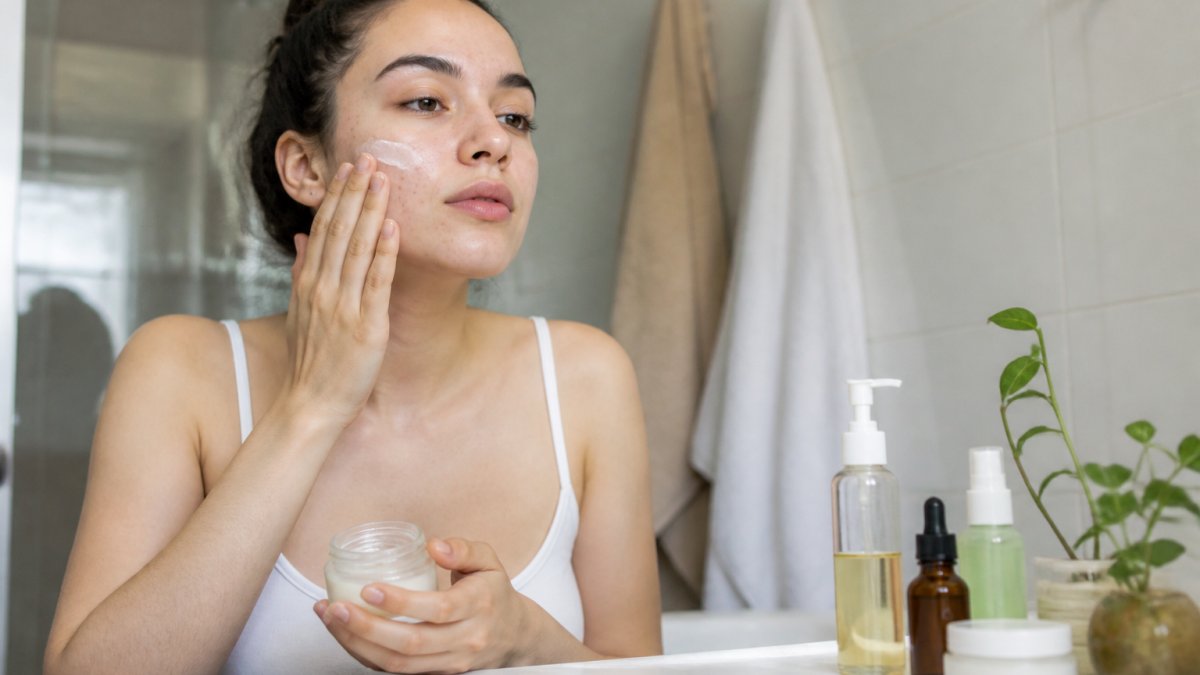
Morning Steps: Cleanse, Hydrate, Protect
The morning goal is defense, not correction: remove overnight oil and set up a barrier that can handle the day.
- Cleanse with lukewarm water and a gentle, pH-balanced cleanser. If your skin felt tight the night before, water alone is acceptable in the morning.
- Hydrate with a lightweight, fragrance-free hydrating toner or essence if your skin feels dry. Apply to damp skin, not dry skin, so it pulls water in rather than evaporating.
- Moisturize with a non-comedogenic, lightweight moisturizer. Gel-cream textures suit oily, acne-prone skin; cream textures suit skin that is also dry or reactive.
- Protect with a broad-spectrum sunscreen of SPF 30 or higher. This is the last step in the morning, always.
Sunscreen is not optional. According to U.S. Food and Drug Administration sunscreen guidance, broad-spectrum protection guards against both burning and deeper skin damage.
Layering rule for the morning: apply thinnest to thickest, toner, water-based serum, moisturizer, sunscreen, giving each layer 30 to 60 seconds to settle.
Evening Steps: Remove, Treat, Repair
The evening goal is removal and recovery. This is where most sensitive, acne-prone skin gets overloaded, so cap active steps at one.
- Remove makeup and sunscreen with an oil-based cleanser or cleansing balm. Massage onto dry skin for about 30 seconds, then emulsify with warm water.
- Cleanse again with your gentle water-based cleanser. If you wore no makeup or sunscreen, one cleanse is enough.
- Treat with a single targeted product on clean, dry skin. Choose one: a soothing serum, a low-strength chemical exfoliant, or an acne active. Not all three.
- Repair with moisturizer to lock in hydration overnight. If your skin is very dry or reactive, seal with a thin layer of a non-comedogenic facial oil after moisturizer.
Ingredient compatibility, in plain terms:
- Soothing serums (centella, oat, chamomile, allantoin, panthenol) layer safely with almost everything and are the right choice on irritated days.
- Niacinamide pairs well with most routines and is generally well tolerated, but some sensitive users react above roughly 5% concentration. Start low.
- Salicylic acid (BHA) is oil-soluble and reaches inside pores, which is why it suits blackheads and clogged pores. Do not stack it with benzoyl peroxide or a retinoid on the same night.
Our R4 Serum is built for the treat step. Apply 3-4 drops on clean skin at night. It blends jojoba oil with organic helichrysum, Roman chamomile, tea tree, and blue tansy to hydrate, calm redness, and support breakout-prone skin.

A Note on Organic and Natural Ingredients
"Organic" and "natural" describe how an ingredient was grown or sourced, not how your skin will react.
The practical takeaway: read the ingredient list, not the front label. A certified organic product can still trigger a reaction, and a fragrance-free synthetic formula can be gentler than a botanical one. Judge each product on its full formula and patch test it first.
How Long to Try a Skincare Routine for Acne Before Switching
Give any new routine at least six to eight weeks before judging it. Skin cells turn over roughly every four weeks, and acne takes longer to settle; switching products weekly resets your progress and stresses your skin.
Track your progress in a simple way:
- Take a photo in the same light each week
- Note new breakouts, redness, and dryness
- Write down any product changes
If your skin is getting calmer and less red after eight weeks, stay the course. If it is worse, stop the newest product first.
What to Avoid When Your Skin Is Sensitive and Acne-Prone
Skip harsh alcohols, physical scrubs, and heavy fragrances, the three biggest triggers for sensitive, acne-prone skin.
Avoid these ingredients and habits:
- Alcohol-based toners that leave skin tight
- Walnut or sugar scrubs that tear the skin
- Added fragrance and dyes
Natural does not always mean gentle: some plant extracts and essential oils irritate sensitive skin when used undiluted. Do not assume "organic" means "safe for everyone", patch test anyway.
Adjusting Your Gentle Organic Skincare Routine During a Breakout
When a breakout flares, simplify instead of adding more products. Cut back to three steps: gentle cleanse, moisturize, and sunscreen. Pause exfoliants and strong treatments until redness settles.
Signs You Should Pause a Product
Stop the newest product immediately if you notice any of these:
- Stinging or burning during or right after application, not just a brief tingle
- Spreading redness that extends beyond where you applied the product
- Swelling, hives, or raised welts
A brief tingling from an acid is common; pain, heat, or spreading redness is not. When in doubt, stop the product and let your skin return to baseline before trying it again.
Purge vs. Reaction: How to Tell Them Apart
- A purge happens only with ingredients that speed up cell turnover or clear pores, retinoids, AHAs, BHAs, benzoyl peroxide. It shows up in the areas you already break out, as smaller and faster-healing blemishes, and it typically settles within a few weeks.
- A reaction can happen with any product, including gentle ones. It shows up in new locations, as itchy or inflamed bumps, and it does not improve with continued use.
If it is a purge, you can usually continue at a lower frequency. If it is a reaction, stop the product.
The Reset Plan
| Phase | What to Do | How Long |
|---|---|---|
| Calm | Cleanse, moisturize, sunscreen only. No actives, no exfoliants, no new products. | 3-7 days, until redness and stinging stop |
| Reintroduce | Add one soothing serum at night. Nothing else. | 1 week |
| Rebuild | Add one active, at half your previous frequency. | 2 weeks |
| Reassess | If skin is calm, resume normal frequency. If not, return to Calm. | Ongoing |
During the Calm phase, keep water lukewarm, skip hot showers on your face, and avoid physical scrubs entirely. Resist the urge to spot-treat aggressively, drying a blemish while your barrier is compromised usually makes the surrounding skin worse.
When to See a Dermatologist
A gentle routine handles most mild, occasional breakouts. Seek professional care if you notice:
- Cystic or nodular acne, deep, painful bumps that do not come to a head
- Scarring, indentations or raised marks that persist after a blemish heals
- No improvement after 8 to 12 weeks of a consistent routine
Persistent acne that leaves marks or scars is worth treating early, since scarring is far easier to prevent than to reverse. A dermatologist can also rule out conditions that mimic acne, such as rosacea or perioral dermatitis.
Conclusion
Building a routine that respects sensitive, acne-prone skin takes patience, not more products. Wellaroma makes gentle, plant-based care for exactly this kind of skin. Our unscented African Black Soap cleanses without stripping, our R4 Serum calms redness and supports breakout-prone skin at night, and our Bamboo Cotton Facial Pads make daily care simple and low-waste. Explore our collection and find the gentle organic skincare routine that fits your skin.

Frequently Asked Questions
What is the best skincare routine for sensitive, acne-prone skin?
Keep it simple with four steps: a gentle cleanser, a hydrating toner if you like, a lightweight non-comedogenic moisturizer, and sunscreen every morning. At night, add a treatment serum after cleansing. Introduce one new product at a time and wait one to two weeks before adding another so you can tell what works and what irritates your skin.
How should I patch test a new natural skincare product?
Apply a small amount behind your ear or on your inner forearm and leave it for 24 to 48 hours. If you see redness, itching, or swelling, stop using it. For leave-on products like serums and moisturizers, you can also test a dime-sized amount on your jawline for two to three nights before applying it to your whole face.
Which ingredients should I avoid if I have sensitive, acne-prone skin?
Skip harsh sulfates, added fragrance, drying alcohols, and coarse scrubs. Be cautious with strong acids like glycolic acid and high-concentration benzoyl peroxide, which can trigger redness and irritation. Instead, look for pH-balanced cleansers, non-comedogenic moisturizers, and soothing plant-based ingredients such as chamomile, oat, and witch hazel.
How long should I try a skincare routine before changing products?
Give a new routine four to six weeks before judging results. Acne cycles take about 28 days, so visible improvement often appears in the second month. If your skin gets worse with burning, peeling, or deep cysts, stop the new product right away. Otherwise, stay consistent and track changes with photos every week.
These statements have not been evaluated by the Food and Drug Administration. These products are not intended to diagnose, treat, cure, or prevent any disease.

Leave a comment