


Essential Oils for Skin Immunity: Safety & Benefits
Table of Contents
- How Essential Oils Support Skin Immunity
- How to Dilute Essential Oils for Skin
- Best Essential Oils for Skin Barrier Repair
- Safety Guidelines for Topical Essential Oil Use
- Essential Oils for Skin Immunity: Long-Term vs. Acute Use
- Common Mistakes When Using Essential Oils on Skin
- Frequently Asked Questions
Last Updated: September 27, 2026
How Essential Oils Support Skin Immunity
Essential oils skin immunity represents one of the most misunderstood intersections of natural wellness and dermatological science. The relationship between essential oils and your skin's immune function isn't about slathering undiluted oils directly onto your face, it's about understanding how volatile organic compounds interact with your skin barrier and modulate immune response at the cellular level.
Your skin functions as your body's first line of defense. The lipid barrier, composed of ceramides and fatty acids, works alongside immune cells to detect and neutralize pathogens before they penetrate deeper layers. When this barrier becomes compromised, whether from harsh weather, over-washing, or inflammatory conditions, your skin becomes vulnerable to bacterial colonization and infection. This is where essential oils enter the picture, but only when applied with precision and respect for their potency.
The benefits of essential oils for skin immunity stem from their antimicrobial activity and anti-inflammatory properties. Compounds like thymol in thyme, limonene in lemon, and eugenol in clove have demonstrated activity against common skin pathogens in research contexts. However, the leap from "antimicrobial in a test tube" to "effective on your skin" requires proper dilution, correct application, and understanding which oils actually work for your specific situation.
At Wellaroma, our approach prioritizes skin homeostasis, keeping your immune defenses strong without triggering sensitization or cytotoxicity from concentrated essential oil exposure. The difference between a product that supports skin immunity and one that damages it comes down to dilution ratios, carrier oil selection, and application frequency.
How to Dilute Essential Oils for Skin
Proper dilution is non-negotiable when using essential oils for skin immunity. This isn't a suggestion, it's the foundation of safe, effective topical application. Undiluted essential oils are volatile organic compounds that can strip your skin barrier, trigger contact dermatitis, and paradoxically weaken immune function through irritation.
Dilution Ratios for Topical Application
The standard dilution ratio for facial application is 1-2% essential oil concentration. For body application, you can safely increase to 2-3%. These percentages translate to drops per carrier oil volume:
| Application Area | Dilution % | Drops per 1 oz Carrier Oil | Drops per 10 ml |
|---|---|---|---|
| Face/Sensitive Skin | 1% | 3-5 drops | 2-3 drops |
| Body/General Use | 2% | 6-10 drops | 3-6 drops |
| Hands/Resilient Areas | 3% | 12-15 drops | 6-9 drops |
The math is straightforward but critical. A 1% dilution means one drop of essential oil per teaspoon of carrier oil. Most people underestimate how concentrated essential oils actually are, one drop of pure lemon oil contains enough limonene to affect dermal absorption significantly. Going above 3% for body application without professional guidance risks phototoxicity (for citrus oils) and sensitization.
Wellaroma's Cold & Flu Away Kids roller comes pre-diluted in coconut oil at a safe concentration specifically formulated for children, eliminating the guesswork. This approach ensures consistent dosing without the risk of miscalculation that plagues DIY applications.

Choosing the Right Carrier Oil
Your carrier oil does more than dilute, it modulates how essential oils penetrate and how your skin responds. Different carrier oils have different molecular structures, absorption rates, and therapeutic properties that either complement or compete with your essential oils.
Coconut oil, used in our Kids formulation, offers antimicrobial properties that synergize with essential oils while providing a protective barrier. However, it's comedogenic for some skin types, meaning it can clog pores. Jojoba oil more closely mirrors skin sebum composition, making it ideal for facial applications and sensitive skin. Sweet almond oil absorbs quickly and works well for body application but lacks the antimicrobial boost of coconut.
The carrier oil selection determines bioavailability, how effectively your skin actually absorbs and utilizes the essential oil compounds. A 2% dilution in jojoba oil will penetrate differently than the same dilution in coconut oil. Choose based on your skin type: jojoba for face, coconut for body, sweet almond for quick absorption on irritated areas.
Best Essential Oils for Skin Barrier Repair
Not all essential oils are created equal for skin immunity support. Some excel at reducing inflammation, others at antimicrobial defense. The most effective approach combines oils with complementary properties rather than relying on a single oil.
Oils That Reduce Inflammation
Inflammation is the enemy of skin immunity. When your skin mounts an excessive inflammatory response, it exhausts immune resources and leaves you vulnerable to secondary infection. German chamomile, helichrysum, and frankincense are your anti-inflammatory powerhouses.
German chamomile contains bisabolol and chamazulene, compounds that suppress proinflammatory cytokines and reduce redness within hours of application. Frankincense works through a different mechanism, it modulates immune response rather than simply suppressing inflammation, meaning it supports your skin's natural defense without creating immune suppression. Helichrysum accelerates skin repair by promoting fibroblast activity, which rebuilds the lipid barrier that inflammation damages.
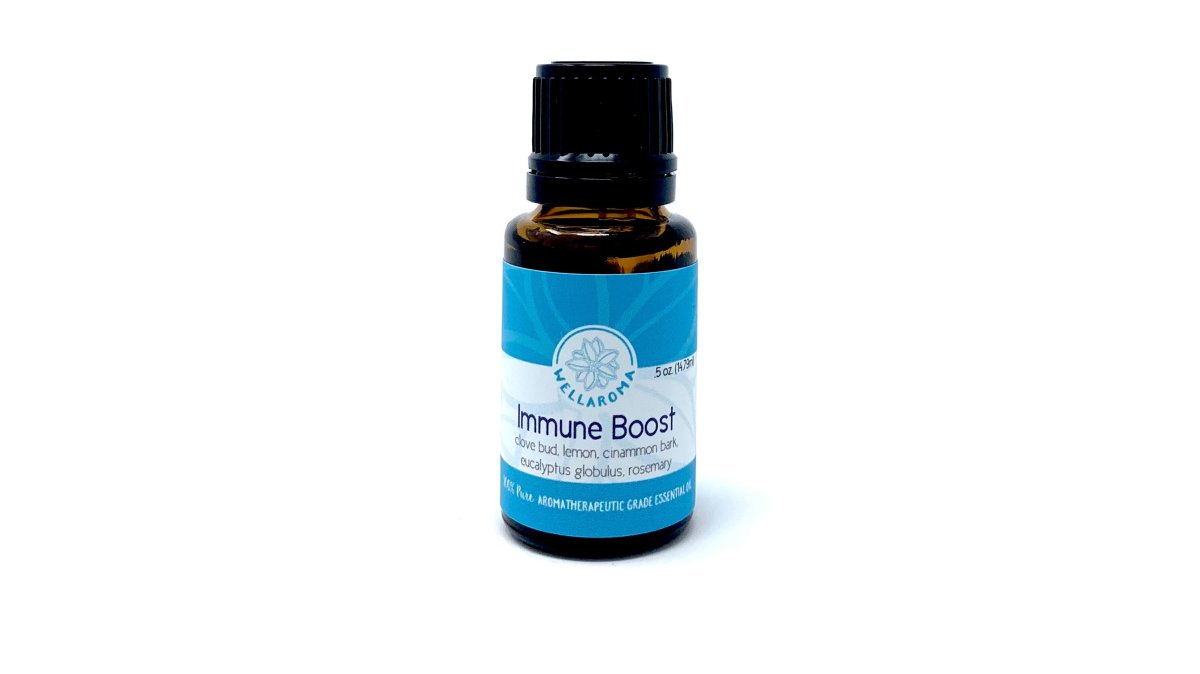
The Immune Boost blend from Wellaroma includes eucalyptus radiate, which has demonstrated anti-inflammatory activity while maintaining antimicrobial strength.

Oils With Antimicrobial Properties
Antimicrobial doesn't mean "kills everything indiscriminately." The best antimicrobial oils for skin support pathogen defense without disrupting your skin microbiome. Tea tree, thyme linolal, and oregano are potent, but oregano is too harsh for regular topical use on skin.
Tea tree oil has the most research backing for topical skin application. Its antimicrobial activity targets bacteria like Staphylococcus and Streptococcus while showing lower cytotoxicity to human skin cells compared to other antimicrobial oils. Thyme linolal (a specific chemotype of thyme) delivers antimicrobial punch without the harshness of thyme ct. thymol, making it suitable for sensitive skin.
Lemon essential oil combines antimicrobial activity with antioxidant properties that combat oxidative stress, a key driver of skin aging and immune dysfunction. The Germ Defense bundle includes lemon oil in a pre-formulated hand sanitizer, providing practical antimicrobial protection without requiring dilution calculations.
Safety Guidelines for Topical Essential Oil Use
Safety isn't boring, it's what separates effective skin immunity support from dermatological damage. Essential oils can trigger contact dermatitis, phototoxicity, and sensitization if you ignore basic protocols.
Patch Testing Before Full Application
Patch testing isn't optional. Your individual skin chemistry, microbiome composition, and genetic predisposition to sensitization are unique. An oil that works beautifully for someone else might trigger a reaction on your skin.
Apply a single drop of diluted essential oil (at your intended concentration) to the inside of your wrist or behind your ear. Wait 24-48 hours. Watch for redness, itching, burning, or swelling. If you see any reaction, that oil isn't appropriate for your skin, regardless of how "safe" it's considered for others.
This matters more for facial application and for anyone with a history of sensitive skin or eczema. Your skin barrier is already compromised in these cases, making sensitization more likely.
Age Restrictions and Special Populations
Children under six should not receive topical essential oil application. Their skin barrier is still developing, and their detoxification pathways aren't fully mature. Pregnant and nursing individuals should consult healthcare providers before topical essential oil use, some oils can affect hormone regulation or transfer through breast milk.
Essential Oils for Skin Immunity: Long-Term vs. Acute Use
Your approach to essential oils changes depending on whether you're supporting baseline immunity or addressing an active problem. This distinction determines frequency, concentration, and which oils you select.
Common Mistakes When Using Essential Oils on Skin
Understanding what not to do often matters more than knowing what to do.
Frequently Asked Questions
Can essential oils boost the immune system through the skin?
Essential oils contain compounds that interact with skin barrier function and may support immune response when properly diluted and applied topically. The skin acts as a protective barrier, and certain essential oils contain antimicrobial and anti-inflammatory properties that help maintain skin health. However, essential oils work best as part of a comprehensive wellness routine, they're not a substitute for medical care. Always dilute before use and consult a healthcare provider if you have specific health concerns.
How do I know if an essential oil is safe for my sensitive skin?
Always perform a patch test before full application. Dilute one drop of essential oil in a teaspoon of carrier oil, apply to a small area of skin (inner arm or behind the ear), and wait 24 hours. If no redness, itching, or irritation occurs, it's likely safe for you. For sensitive skin, use lower dilution ratios (1-2% concentration) and start with milder oils like frankincense or chamomile. Consider pre-diluted products designed for sensitive skin, such as Wellaroma's Cold & Flu Away Kids roller, which uses coconut oil as a gentle carrier.
What's the difference between therapeutic-grade and other essential oils?
Therapeutic-grade essential oils are sourced from reputable farms, third-party tested for purity using GC/MS testing, and free from contaminants or synthetic additives. This testing ensures you're getting pure botanical extracts without fillers. Lower-grade oils may contain impurities that increase the risk of skin sensitization or adverse reactions. Wellaroma sources only therapeutic-grade oils that have been third-party tested, with testing reports available upon request. When buying essential oils, always verify the source and testing standards.
Can I use essential oils on my child's skin safely?
Essential oils require careful handling on children's skin. Most essential oils should not be applied topically to children under age 6 without professional guidance. Pre-diluted products formulated specifically for children, like Wellaroma's Cold & Flu Away Kids roller, are safer options because they use appropriate dilution ratios and child-safe ingredients. Always consult a pediatrician before using any essential oil product on a child, and never diffuse strong oils in a baby's room. Follow the product instructions carefully and watch for any signs of skin irritation.

Leave a comment