


Buy Organic Aromatherapy Essential Oils: A 2026 Guide
Table of Contents
- What Makes an Essential Oil Truly Organic?
- Decoding Labels: How to Buy Organic Aromatherapy Essential Oils Without Getting Fooled
- Top Organic Essential Oils for Everyday Aromatherapy
- How to Use Essential Oil Blends for Relaxation and Focus
- How to Dilute Essential Oils for Skin: A Simple Guide
- Essential Oil Safety Guidelines Every Beginner Should Know
- Your Organic Aromatherapy Starter Kit
- Final Thoughts on Choosing Quality Oils
- Frequently Asked Questions
Last Updated: September 7, 2026
Walking into a store to buy organic aromatherapy essential oils can feel overwhelming. Shelves are lined with identical amber bottles, each promising purity, yet prices vary wildly. This guide from Wellaroma shows you what to look for, which oils earn their place, and how to use them safely.
The distinction between a product that supports wellness and one that merely smells pleasant comes down to sourcing, testing, and transparency.
What Makes an Essential Oil Truly Organic?
Organic essential oils are derived from plants cultivated without synthetic pesticides, herbicides, or fertilizers. Plants grown in chemical-free environments tend to produce oils with a more complex chemical profile, giving them their therapeutic properties. Reputable producers use steam distillation or cold pressing to preserve the delicate constituents that make each oil unique.
To be certified organic, a farm must adhere to strict standards set by a recognized certifying body, such as USDA certified organic status in the US, which involves rigorous documentation and on-site inspections (usda.gov). When you buy organic aromatherapy essential oils, certification ensures the entire process, from seed to bottle, has been verified by a third party.
Decoding Labels: How to Buy Organic Aromatherapy Essential Oils Without Getting Fooled
The biggest mistake shoppers make is confusing "natural" with "organic," or assuming a pretty label guarantees purity. A product can be plant-based and still contain synthetic fillers.
Before you make a purchase, check for these key indicators:
- Botanical Name: The label should list the Latin name (e.g., Lavandula angustifolia), not just "lavender," so you know the exact species.
- GC/MS Testing: Look for a batch-specific GC/MS test report. This analysis confirms the oil's chemical constituents and verifies that it hasn't been adulterated with cheaper synthetic compounds.
- Sourcing Information: A trustworthy brand will tell you where the plant was grown and how the oil was extracted.
- Certification Seals: Look for third-party seals like USDA organic, which provide an independent guarantee of the farming practices.
Top Organic Essential Oils for Everyday Aromatherapy
Certain oils deliver consistent, reliable benefits that make them worthy staples. Lavender is the undisputed champion of relaxation, known for its calming aroma that supports restful sleep. Basil offers a warm, herbaceous scent that can sharpen focus and ease mental fatigue. Ylang Ylang provides a sweet, heavy fragrance often used to uplift mood and promote calm.

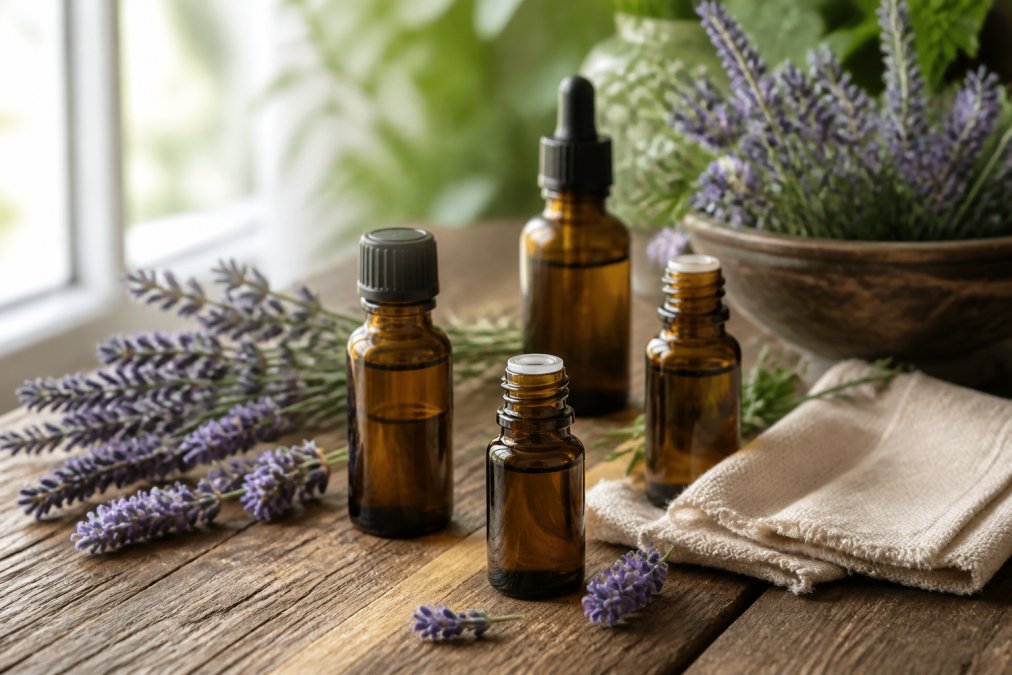
These oils are versatile, blending well with a host of others, which makes them ideal for creating your own synergy blends at home. For example, our Lavender Organic oil is sourced from environmentally conscious farms in the USA and is ready to use in a diffuser. It is an excellent starting point because its gentle profile is suitable for nearly everyone, and it pairs beautifully with citrus oils like sweet orange for a bright, cheerful daytime blend.
How to Use Essential Oil Blends for Relaxation and Focus
Most guides stop at 'put drops in a diffuser.' The real skill lies in building a blend that targets a specific outcome, leveraging the synergistic effects of different aromatic molecules.
The Top-Middle-Base Note Framework
Perfumers and aromatherapists categorize each oil by its evaporation rate, which influences how quickly you perceive its scent and how long it lingers.
- Top Notes (Evaporate in 1-2 hours): These are the first scents you smell. They are usually light, fresh, and uplifting. Common examples include Lemon, Sweet Orange, Peppermint, and Eucalyptus. They provide an immediate, energizing lift.
- Middle Notes (Evaporate in 2-4 hours): These form the 'heart' of the blend. They are often floral, herbaceous, or spicy. Lavender, Basil, Ylang Ylang, and Geranium are classic middle notes. They provide balance and a sense of well-being.
- Base Notes (Evaporate in 4+ hours): These are the grounding, heavy scents that anchor the blend and make it last. They are often woody, earthy, or resinous. Examples include Vetiver, Sandalwood, Patchouli, and Frankincense. They provide a sense of calm and depth.
A classic, balanced blend uses a ratio of roughly 30% top note, 50% middle note, and 20% base note. This ensures the blend is initially invigorating, then settles into a comforting heart, and finally leaves a lasting, grounding trail.
Two Simple, Science-Backed Blends to Try
Here are two specific recipes that apply this framework. Each is designed for a 100ml ultrasonic diffuser.
Blend 1: The 'Deep Focus' Synergy
This blend promotes alertness and mental clarity without the jittery feeling of caffeine. Basil is rich in linalool and estragole, compounds studied for their potential to support cognitive function.
- 3 drops Basil (Middle Note)
- 2 drops Lemon (Top Note)
- 1 drop Peppermint (Top Note)
Why it works: The Basil provides primary cognitive support, while Lemon and Peppermint act as a catalyst, sharpening the blend's stimulating profile, more effective than any single oil alone.
Blend 2: The 'Evening Wind-Down' Synergy
This blend signals to your nervous system that it is time to transition from the busyness of the day to a state of rest. Lavender is the most well-researched oil for sleep support, and its calming properties are enhanced when paired with a grounding base note like Vetiver.
- 4 drops Lavender (Middle Note)
- 2 drops Sweet Orange (Top Note)
- 1 drop Vetiver (Base Note)
Why it works: Lavender soothes the mind, while Sweet Orange adds gentle warmth. The single drop of Vetiver is key; its heavy, earthy scent acts as an anchor, preventing lighter notes from evaporating too quickly and promoting deeper calm.
The 3:1:1 Rule for Beginners
If you are not ready to build from scratch, the 3:1:1 ratio is a foolproof way to create a balanced blend from oils you already own.
- Start with 3 drops of a 'base' oil - typically a relaxing oil like Lavender or a grounding oil like Frankincense.
- Add 1 drop of a 'support' oil - this could be a floral like Ylang Ylang or a herbaceous oil like Basil.
- Add 1 drop of a 'lift' oil - this is your citrus or mint oil, like Sweet Orange or Peppermint.
This formula ensures you always have a dominant note, a supporting character, and a bright accent, an excellent way to experiment without creating a muddled scent.
How to Dilute Essential Oils for Skin: A Simple Guide
Essential oils are highly concentrated and should never be applied directly to the skin without a carrier oil, such as jojoba, coconut, or sweet almond oil, which safely delivers the benefits while preventing irritation. The standard dilution for most adults is 2-3 drops per 1 teaspoon of carrier oil, roughly a 1-2% dilution (naha.org).
When you buy organic aromatherapy essential oils for topical use, you choose a product free from synthetic residues that could exacerbate skin sensitivity. Some oils, particularly citrus varieties, can cause photosensitivity, so avoid sun exposure on treated areas for at least 12 hours (the FDA).
Essential Oil Safety Guidelines Every Beginner Should Know
Aromatherapy is a powerful practice that requires respect and caution. The most critical safety rule is that essential oils are for external use only and should never be ingested. Even when diluted, they can irritate mucous membranes and the digestive tract. Keep bottles out of reach of children and pets, as some oils are toxic to animals.
Contraindications for Specific Demographics
Pregnancy and Nursing
The olfactory system is directly linked to the limbic system, which governs emotions and hormone regulation, so certain aromatic compounds can profoundly affect the body. Most practitioners advise avoiding essential oils entirely during the first trimester. For the second and third trimesters, a very limited set is generally considered safe when highly diluted (0.5-1%). natural botanical face serums.
Oils to strictly avoid during pregnancy include:
- Basil (Ocimum basilicum): Contains high levels of estragole, which has been shown to have emmenagogue effects (stimulating blood flow in the pelvic area).
- Clary Sage (Salvia sclarea): Known to potentially stimulate uterine contractions.
- Juniper Berry (Juniperus communis): Can act as a uterine stimulant.
- Rosemary (Rosmarinus officinalis): Should be avoided due to its potential effect on blood pressure and uterine activity.
Nursing mothers should also exercise caution, as aromatic compounds can pass into breast milk. Avoid topical application on the chest area to prevent the infant from ingesting the oil. Always consult a qualified healthcare provider before using any essential oil during pregnancy or while nursing.
Infants and Young Children
Children are not simply small adults. Their skin is thinner and more permeable, and their metabolic systems are not fully developed, making them far more sensitive to essential oils. Avoid using them on infants under 3 months old. For children over 3, the dilution ratio should be significantly lower than for adults, typically 0.25% to 0.5%.
Oils that are specifically contraindicated for children under 10 include:
- Peppermint (Mentha piperita): Can cause a choking sensation or respiratory depression in young children, especially when applied near the face or chest.
- Eucalyptus (Eucalyptus globulus): Similar to Peppermint, it can trigger breathing issues in young children.
- Wintergreen (Gaultheria procumbens): Contains methyl salicylate, which is toxic even in small amounts.
Pets
What is safe for humans is often not safe for pets. Cats are especially vulnerable because they lack the liver enzyme needed to metabolize many phenolic compounds, so oils like Peppermint, Wintergreen, and Tea Tree can build to toxic levels, leading to liver failure. Birds are also extremely sensitive to airborne particles and can develop respiratory distress from diffused oils. When using a diffuser, ensure the room is well-ventilated and your pet can leave if they choose. Never apply essential oils topically to a pet without veterinary guidance.
The 'One Oil at a Time' Protocol
Adverse reactions often come not from a single oil but from a complex blend where the culprit is impossible to identify. To build a safe practice, adopt the 'one oil at a time' protocol:
- Introduce a single new oil in a highly diluted form (1% dilution).
- Use it consistently for 3-5 days, monitoring for any skin irritation, respiratory changes, or shifts in mood.
- If no adverse reaction occurs, you can confidently add this oil to your rotation or use it in a blend.
- If any reaction occurs, stop using it immediately and note the oil in your journal as a potential sensitivity.
This methodical approach is the most reliable way to understand your unique biochemistry and avoid confusion when a problem arises.
Your Organic Aromatherapy Starter Kit
Building a starter kit does not require dozens of bottles. Starting with a few high-quality, versatile oils is a smarter strategy that lets you learn their individual properties before creating more complex blends. A well-rounded kit might include Lavender for relaxation, Sweet Orange for an uplifting mood boost, and Basil for focus and clarity.
Here is a simple summary of a recommended starter approach:
| Oil | Primary Benefit | Suggested Use | Blends Well With |
|---|---|---|---|
| Lavender | Relaxation, sleep support | Diffuse in the evening | Most oils, especially citrus and floral |
| Ylang Ylang | Mood uplift, calm | Diffuse during the day | Sweet Orange, Lavender, Bergamot |
| Basil | Focus, mental clarity | Diffuse while working | Lemon, Lime, Bergamot |
| Helichrysum | Skin support, grounding | Dilute in carrier oil | Geranium, Clary Sage, Lavender |
Final Thoughts on Choosing Quality Oils
Choosing where to buy organic aromatherapy essential oils ultimately comes down to trusting the source as much as the product. A brand that openly shares its sourcing, provides testing documentation, and offers a clear picture of its farming partners demonstrates a commitment to purity that mass-market producers rarely match.

When you are ready to build your collection, prioritize suppliers who specialize in natural healing and understand the nuances of the craft. At Wellaroma, our collection features premium essential oils sourced from environmentally conscious farms, ready to support your family's wellness and immunity naturally. From the calming properties of our Ylang Ylang oil to the grounding scent of Helichrysum, each product is crafted to deliver a spa-like experience at home, gentle enough for sensitive and dry skin.
Choosing the right oils is about more than picking a pleasant scent. It requires a commitment to quality, a basic understanding of safety, and a willingness to look past clever marketing. By focusing on certified organic sources, verifying purity through testing, and starting with a few versatile staples, you can build a wellness routine that truly supports your mind and body.
Frequently Asked Questions
How can I tell if an essential oil is truly organic?
Look for a USDA Certified Organic seal on the bottle. This certification means an independent inspector verified the farm's soil, growing practices, and extraction process. Don't rely on labels that just say 'natural' or 'pure.' Ask for GC/MS testing reports, which confirm the oil's chemical makeup and purity. Reputable sellers provide batch-specific reports upon request.
What is the best way to use essential oil blends for beginners?
Start with a diffuser. Add 3-5 drops of your chosen blend to water and run it for 15-30 minutes. This is the safest and easiest method. For a more personal experience, add a drop to a cotton ball and inhale. As you get comfortable, you can explore topical use, but always dilute properly with a carrier oil and perform a patch test first.
Are USDA certified organic essential oils better than non-organic?
For aromatherapy, organic oils are often the better choice. Non-organic plants may be treated with synthetic pesticides and herbicides. During steam distillation, residues can concentrate in the oil. Choosing USDA certified organic oils reduces your exposure to these chemicals, supporting both your health and more sustainable farming practices.
How do I dilute essential oils for skin application safely?
Never apply essential oils directly to your skin. A safe dilution ratio for most adults is 2-3 drops of essential oil per 1 tablespoon (15 ml) of carrier oil, like jojoba or fractionated coconut oil. For sensitive skin, start with a 1% dilution (1 drop per tablespoon). Always do a patch test on your inner forearm and wait 24 hours to check for any reaction.

Leave a comment