


Why Choose Organic Skincare Over Drugstore Options
Table of Contents
- The Real Difference Between Organic Skincare and Drugstore Formulas
- What "Organic" Actually Means on a Label
- Benefits of Organic Skincare for Sensitive and Dry Skin
- How to Read Skincare Labels Without Getting Fooled
- Finding an Organic Body Wash for Sensitive Skin
- The Hybrid Approach: When Drugstore Still Makes Sense
- What You're Actually Paying For: Price, Shelf-Life, and Safety
- Frequently Asked Questions
Last Updated: September 14, 2026
The Real Difference Between Organic Skincare and Drugstore Formulas
The gap between an organic skincare product and a drugstore formula comes down to three things: ingredient sourcing, preservative systems, and how much active ingredient reaches your skin. The smartest choice usually sits between the "clean beauty" aisle and the budget shelf.
At Wellaroma, parents and sensitive-skin shoppers ask the same question: is organic skincare worth the extra cost, or just marketing? This guide breaks down what labels mean, where drugstore formulas cut corners, and how to protect your skin barrier without draining your wallet.
The framework that matters most: organic skincare is not automatically better, and drugstore skincare is not automatically worse. Formulation quality separates a good product from a bad one, not the aisle it sits in.
What "Organic" Actually Means on a Label
The word "organic" on a skincare label is not legally standardized the way it is for food. That surprises most people. In the United States, the USDA National Organic Program governs agricultural ingredients, but cosmetic products fall into a gray zone where "organic" can mean anything from certified agricultural content to a splash of aloe.
What you can trust:
- USDA Certified Organic means the product meets federal agricultural standards for its organic ingredients.
- "Made with organic ingredients" typically means a smaller percentage qualifies, often without third-party verification.
- "Natural" has almost no regulatory weight. It is a marketing term.
A product can be 99% organic and still contain a synthetic preservative, because without one, water-based formulas grow bacteria within days. That is chemistry, not a flaw.
What Drugstore Products Often Contain
Drugstore formulas are engineered for shelf-life and cost, which usually means a longer ingredient list with synthetic preservatives, fillers, and fragrance, parabens, phthalates, synthetic dyes, and petroleum-derived emollients. None are automatically dangerous in small amounts, but for sensitive skin they are frequent triggers for contact dermatitis and irritation. The trade-off: drugstore products last longer and cost less, while organic formulas use shorter lists with fewer potential irritants but a shorter shelf-life.
Benefits of Organic Skincare for Sensitive and Dry Skin
For sensitive and dry skin, organic skincare offers a clear advantage: fewer chemical irritants, more barrier-supporting oils, and ingredients your skin can recognize. Not every organic product is gentle, but the odds improve when the list is short and free of synthetic fragrance.
The benefits show up in three areas:
- Barrier function. Organic oils like jojoba, argan, and shea butter mimic the skin's natural lipids, helping to repair a compromised barrier.
- Lower irritation risk. Fragrance-free and hypoallergenic formulas reduce the chance of a reaction, which matters for anyone prone to contact dermatitis.
- Antioxidant support. Natural extracts and cold-pressed oils carry antioxidants that help defend against oxidative stress from pollution and UV exposure.
A common mistake is assuming "organic" means "won't irritate me." Essential oils, even organic ones, can trigger reactions. Patch test on your inner forearm for 24 hours before committing to a full routine.
How to Read Skincare Labels Without Getting Fooled
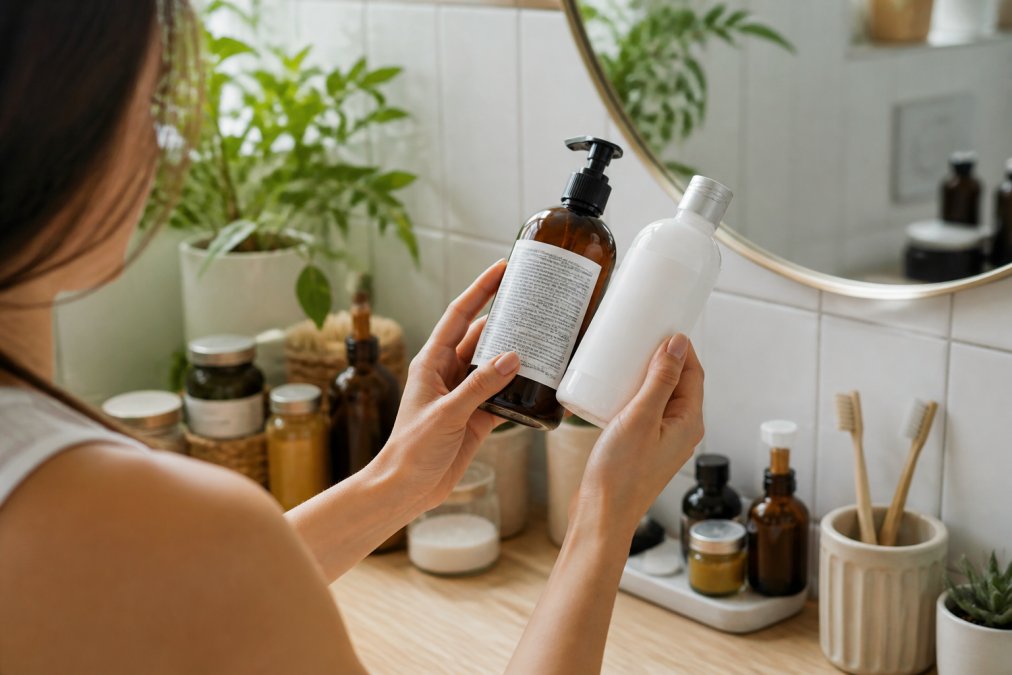
Reading a skincare label well means scanning for three things: the first five ingredients, the preservative system, and any fragrance listing. Ingredients are listed by concentration, so what appears first is what you are mostly buying, but first you need to know what the label is legally allowed to say.
The Regulatory Vacuum Behind the Word "Organic"
Here is the part most shoppers never hear: in the United States, there is no federal legal definition of "organic" for cosmetic products the way there is for food. The USDA National Organic Program certifies agricultural ingredients and finished products that meet its standards, but a cosmetic that is not USDA-certified can still print "organic" on the front of the bottle with almost no oversight. The FDA regulates cosmetics for safety and labeling but does not define or enforce the term "organic" at all.
That means the word on a skincare label can mean any of these things:
- USDA Certified Organic, the product or its agricultural ingredients meet federal organic standards, verified by a third-party certifier. This is the only claim with real teeth.
- "Made with organic ingredients", typically means a portion of the formula qualifies, often without independent verification of the percentage.
- "Organic" as a standalone marketing word, legally meaningless on a cosmetic. It can describe a single botanical extract in a formula that is otherwise fully synthetic.
- "Natural", has no regulatory weight for cosmetics. Poison ivy is natural.
- "Clean", a retailer-invented term. Every store defines it differently, and none of those definitions are law.
How to Actually Read an INCI List
Ingredient lists follow International Nomenclature of Cosmetic Ingredients (INCI) conventions, which is why Latin plant names and chemical-sounding compounds sit side by side. Two rules make them readable:
- Order equals concentration. Everything above 1% must be listed in descending order. Below 1%, companies can list ingredients in any order, which is why preservatives, fragrance, and actives often cluster at the bottom regardless of how much is actually there.
- Water is usually first. If "aqua" or "water" leads the list, the product is water-based, which means it needs a preservative system. A water-based product with no preservative listed is either mislabeled or a microbiological risk.
Red Flags and Green Flags on Ingredient Lists
Red flags:
- "Fragrance" or "parfum" listed high, which can hide dozens of undisclosed compounds
- A long list of unpronounceable fillers before any active ingredient
- No preservative in a water-based product, signaling a lie or a safety risk
- "Organic" on the front label with no certifier logo or number
- A botanical extract listed after the preservative, present at a fraction of a percent, purely for label appeal
Green flags:
- Named plant oils and extracts in the first five ingredients
- A transparent preservative system, such as phenoxyethanol or ethylhexylglycerin
- "Fragrance-free" rather than "unscented," which sometimes masks a scent
- A visible certifier mark (USDA Organic or a recognized third-party seal) with a certificate number you can look up
- A "best by" or "period after opening" (PAO) symbol, the open-jar icon with a number of months, signaling the maker is thinking about stability
Finding an Organic Body Wash for Sensitive Skin
An organic body wash for sensitive skin should clean without stripping, which means gentle surfactants and no synthetic fragrance. The best options use plant-based cleansers and add oils that leave a light moisture barrier behind.
Here is what to look for:
| Feature | Why It Matters | What to Avoid |
|---|---|---|
| Surfactant type | Determines how harshly it cleans | Sulfates like SLS |
| Fragrance | Top trigger for contact dermatitis | "Parfum" high on the list |
| Preservative | Keeps the product safe | Undisclosed or absent |
| Added oils | Supports skin barrier function | Petroleum-derived fillers |
| pH balance | Protects the acid mantle | Highly alkaline formulas |
If your skin reacts to everything, start with the shortest ingredient list you can find and add one product at a time. Wellaroma's body care centers on essential oil blends and plant oils that support sensitive and dry skin without synthetic fragrance, which is why our Lush Skin healing cream is a common starting point for cracked, reactive skin.

The Hybrid Approach: When Drugstore Still Makes Sense
A hybrid routine beats an all-or-nothing approach for most people: use organic products where they touch your skin barrier most, and drugstore products where formulation matters less.
Where drugstore still wins:
- Sunscreen. Mineral and chemical sunscreens are regulated and tested, and drugstore options are often excellent.
- Acne treatments. Active ingredients like benzoyl peroxide and salicylic acid work regardless of brand tier.
- Body scrubs and tools. Physical exfoliants do not need to be organic to work.
Where organic earns its price:
- Leave-on products like serums, lotions, and face oils that sit on your skin all day
- Anything used on children or on compromised, dry, or reactive skin
- Products where you want a short, transparent ingredient list
What You're Actually Paying For: Price, Shelf-Life, and Safety
The price gap between organic and drugstore comes down to ingredient cost, batch size, and preservative strategy. Organic oils cost more per ounce than synthetics, and small-batch producers cannot spread that cost across millions of units. But the bigger difference is what happens after you open the formula.
The Microbiological Reality of "Preservative-Free"
Water is the enemy of shelf-life. Any formula containing water, most lotions, serums, creams, and body washes do, is a potential growth medium for bacteria, yeast, and mold the moment the seal breaks. A well-preserved drugstore lotion can sit on a shelf for two to three years and survive months of finger-dipping. An organic formula marketed as "preservative-free" has no such protection.
The common workarounds small organic brands use, and their limits:
- Anhydrous (water-free) formulas, oils, balms, and butters contain no water, so they cannot support microbial growth. Genuinely safe without preservatives, but they feel different on skin and cannot deliver water-soluble actives.
- Self-preserving systems, certain glycols, chelators, and organic acids can inhibit growth without a conventional preservative. These work, but are formulation-sensitive and less forgiving.
- Antioxidants like vitamin E (tocopherol), these slow oxidation of oils (rancidity) but do nothing against bacteria. A product can be "preserved" against going rancid and still be growing microbes.
- Essential oils as preservatives, tea tree, rosemary, and similar oils have some antimicrobial activity in a lab dish, but at skincare concentrations they are not reliable preservatives. Relying on them is a common and risky shortcut.
What this means for you: a "preservative-free" water-based organic product is not automatically safer, it is often riskier. The FDA does not require cosmetic manufacturers to test finished products for microbial contamination, so the burden falls on the formulator and, ultimately, on you.
How to Manage Shelf-Life in Practice
- Check the PAO symbol. The open-jar icon with a number (6M, 12M, 24M) tells you how many months the product is stable after opening. Organic formulas with minimal preservation are usually 6M or 12M; well-preserved drugstore formulas are often 24M.
- Store away from heat and direct light. Heat accelerates oxidation and microbial growth. A bathroom windowsill is the worst place for any skincare product.
- Use clean hands or a spatula. Jar packaging exposes the entire formula to whatever is on your fingers every time you dip. Pump and airless packaging dramatically reduce contamination risk.
- Buy in amounts you will finish. A 4-ounce organic cream you use twice a week will likely expire before you finish it.
- Smell and look before you use. A change in scent, color, or texture, especially a sour or "off" smell in a water-based product, means stop.
Cost Per Use, Not Sticker Price
The sticker price is the least useful number on the shelf. What matters is cost per use, and that math often flips the conventional wisdom.
- A $10 drugstore lotion that irritates your skin and gets abandoned after a week costs $10 per week of use.
- A $34.95 leave-on serum used twice daily for three months costs roughly $0.19 per application.
- A $29.95 serum used the same way costs roughly $0.17 per application.
Wellaroma's R4 Serum at $29.95 and R4 Hydrate at $34.95 are leave-on serums, so a single bottle lasts months. Divide by applications and the gap between "cheap" and "expensive" narrows fast, and disappears entirely if the cheaper product triggers a reaction you then have to treat.


What the Extra Money Actually Buys
- Higher-quality base oils with more antioxidant content and better oxidative stability
- Shorter ingredient lists with fewer fillers and chemical irritants
- Smaller batches, which often means fresher product on arrival
- A disclosed preservative strategy, good brands tell you what they use and why, rather than hiding behind "preservative-free"
The trade-off is real: organic formulas with lighter preservation have shorter windows, so buy in amounts you will actually use and store them away from heat and light. The right question is not "organic or drugstore" but "is this formula preserved well enough to be safe for the months I will actually use it?"
Frequently Asked Questions
Is organic skincare actually better for your skin than drugstore products?
It depends on your skin type and concerns. Organic skincare often uses fewer synthetic preservatives, fragrances, and chemical irritants that trigger contact dermatitis in sensitive skin. Drugstore products may include active ingredients like retinoids and peptides that are clinically proven for anti-aging. For people with reactive or dry skin, organic formulas tend to be gentler and support skin barrier function better. For those targeting specific concerns like acne or deep wrinkles, a hybrid approach works well.
How do I know if a skincare product is truly organic?
Look for third-party certifications on the label, not just the word "organic" in the product name. In the U.S., the USDA Organic seal means at least 95% organic ingredients. Also check how to read skincare labels carefully: ingredients are listed by concentration, so if a "natural extract" appears near the end, it is present in tiny amounts. Watch for greenwashing terms like "clean beauty" or "low tox" that have no regulatory definition.
Does organic skincare work better for sensitive skin?
Many people with sensitive skin find organic formulas cause less irritation because they skip synthetic preservatives, dyes, and heavy fragrance loads. Fragrance-free and hypoallergenic options reduce contact dermatitis risk. However, natural extracts and essential oils can still trigger reactions in some people, so patch testing is essential before applying anything new to your face or body. An organic body wash for sensitive skin should list every ingredient clearly and avoid synthetic fragrance.
Is it worth the extra cost to switch to organic skincare?
The price difference comes down to ingredient sourcing, smaller batch production, and formulation stability testing. Organic products often cost more because organic raw materials and safe preservative systems are expensive. If you have sensitive or dry skin, the reduced risk of irritation can save money on dermatologist visits and failed products. You do not need to replace everything at once. Start with the products that sit on your skin longest, like body lotions and serums, and keep drugstore options where they work for you.

Leave a comment