


Safe Essential Oils for Children's Skin: A 2026 Guide
Table of Contents
- Why Children's Skin Needs Special Consideration
- Safe Essential Oils for Children's Skin: The Approved List
- Essential Oil Dilution Chart for Children
- Essential Oils to Avoid for Babies and Young Children
- How to Patch Test Essential Oils on Kids
- How to Apply Safe Essential Oils to Children's Skin
- Storage, Toxicity Prevention, and Medication Interactions
- Conclusion
Last Updated: August 21, 2026
Most parents assume that "natural" automatically means "safe for kids." With essential oils, that assumption can cause real harm. Children's skin absorbs aromatic compounds far more readily than adult skin, and what's gentle for a grown-up can trigger respiratory distress, dermal irritation, or worse in a toddler. At Wellaroma, we've spent years formulating essential oil products specifically for children's delicate systems, and the question we hear most often is: which safe essential oils for children's skin actually hold up under scrutiny?
This guide answers that question directly. Below, you'll find the approved oils, age-specific dilution guidelines, patch testing protocols, and the oils you should keep far away from your kids. The goal isn't to scare you away from aromatherapy, it's to help you use it correctly.
Why Children's Skin Needs Special Consideration
Children's skin is not simply smaller adult skin. The skin barrier in infants and young children is structurally thinner, with a higher surface-area-to-body-weight ratio that accelerates absorption of topical substances. This means a dilution ratio that's perfectly safe for an adult can deliver a much higher effective dose to a child's system.
The concern goes beyond dermal irritation. Certain aromatic compounds, particularly ketones and phenols, can affect the central nervous system in young children, with documented risks of neurotoxicity at concentrations that would cause no harm in adults. According to the American Association of Poison Control Centers, essential oil exposures are among the more common pediatric poisoning calls they receive, with topical misapplication a significant contributor.
Respiratory distress is another real risk. Young children, especially those under two, are far more sensitive to volatile organic compounds in the air. A diffuser running eucalyptus or peppermint in a small bedroom can trigger airway constriction in a toddler even when the concentration seems mild.
The bottom line: essential oil safety for children requires stricter dilution, more careful oil selection, and age-appropriate usage guidelines that most general aromatherapy resources don't provide.
Safe Essential Oils for Children's Skin: The Approved List
Not every essential oil that's gentle for adults belongs anywhere near a child's skin. The oils below have well-established safety profiles for pediatric aromatherapy when properly diluted. Each one is a botanical extract with a long history of use and a relatively low risk of dermal irritation or neurotoxicity in children.
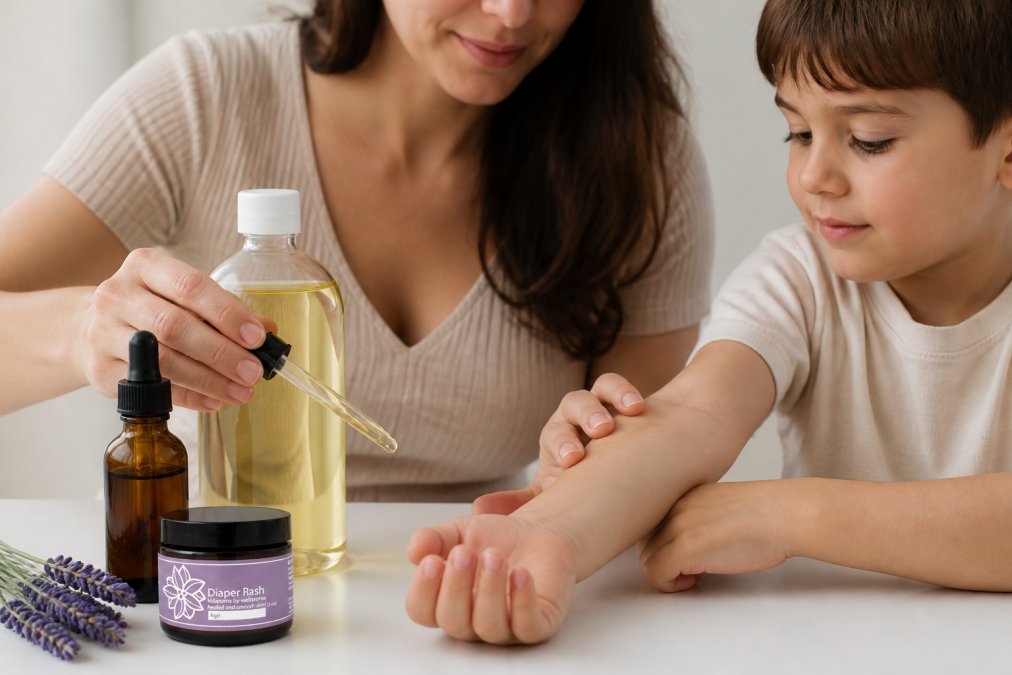
Lavender
Lavender is the most widely used safe essential oil in pediatric aromatherapy, and for good reason. Its aromatic compounds are well-tolerated by children over three months of age when used at appropriate concentrations. It's commonly used to support sleep, ease mild skin irritation, and calm the nervous system before bedtime.
The one thing most guides miss: not all lavender is the same. True lavender (Lavandula angustifolia) is the appropriate choice for children. Lavandin (Lavandula x intermedia), which is far more common in budget products, contains higher levels of camphor and is a poor substitute for use on kids.
Roman Chamomile
Roman chamomile (Chamaemelum nobile) is arguably the gentlest option on this list. It's one of the few oils considered appropriate for infants over three months, in very low concentrations, for soothing skin sensitivity and supporting relaxation. Its ester content gives it a mild, apple-like scent and a low irritation profile that makes it a reliable choice for children with reactive skin.
A common mistake is confusing Roman chamomile with German chamomile (Matricaria chamomilla). Both are safe, but German chamomile has a much stronger scent and a higher concentration of chamazulene, which can stain skin and fabric.
Frankincense
Frankincense has earned its place in pediatric blends because of its low dermal irritation risk and its skin-supporting properties. Many parents use it in diluted form for dry or inflamed skin. It's generally considered appropriate for children over two years old.
At Wellaroma, frankincense is a core ingredient in several of our targeted skin formulations. Its resinous aromatic compounds are well-suited to supporting the skin barrier without the aggressive chemistry of phenol-heavy oils.
Cedarwood and Sandalwood
Both cedarwood and sandalwood have gentle, woody scent profiles and low toxicity ratings for children. Cedarwood is often used in bedtime blends for its calming effect, while sandalwood is valued for its skin-conditioning properties. Both are appropriate for children over two years when properly diluted in a lipid-based carrier.
One practical note: sandalwood is one of the more expensive botanical extracts on the market. If a product claims to contain sandalwood at a very low price point, verify the species and purity. Amyris, sometimes sold as "West Indian sandalwood," is a cheaper alternative with a different chemical profile.
Essential Oil Dilution Chart for Children
Dilution is where most well-intentioned parents go wrong. The safe concentration for a child is significantly lower than what most adult-focused aromatherapy guides recommend. Below is an age-specific dilution chart based on widely accepted guidelines from professional aromatherapy organizations.
| Age Group | Recommended Dilution | Drops per 1 oz Carrier Oil |
|---|---|---|
| 3-24 months | 0.5-1% | 3-6 drops |
| 2-6 years | 1-2% | 6-12 drops |
| 6-12 years | 1.5-2.5% | 9-15 drops |
| 12+ years | 2-3% (adult approach) | 12-18 drops |
These are maximum safe concentrations for topical application, not targets. Starting at the lower end and observing for skin sensitivity is always the right call.
Choosing the Right Carrier Oil
A carrier oil is a lipid-based vehicle that dilutes the essential oil and helps control absorption through the skin. The right carrier matters as much as the dilution ratio itself.
Fractionated coconut oil is the most commonly recommended carrier for children. It's lightweight, odorless, and absorbs cleanly without leaving a heavy residue. Unlike regular coconut oil, the fractionated form stays liquid at room temperature and has an indefinitely long shelf life, which matters for storage.
Jojoba is technically a wax ester, not an oil, but it closely mimics the skin's natural sebum and is an excellent choice for children with dry or sensitive skin. It's cold-pressed and non-comedogenic.
Sweet almond oil is another solid option, though parents of children with tree nut allergies should consult a pediatrician before use.
Avoid mineral oil and petroleum-based carriers. They create a barrier that can trap the essential oil against the skin rather than facilitating controlled absorption.
Essential Oils to Avoid for Babies and Young Children
This is the part that doesn't get enough attention. Many oils that are staples in adult wellness routines are genuine contraindications for children.
According to the National Association for Holistic Aromatherapy's safety guidelines, the following categories require particular caution or outright avoidance in pediatric use:
Avoid entirely for children under 10:
- Eucalyptus (Eucalyptus globulus) and peppermint: Both contain high levels of 1,8-cineole, which can cause respiratory distress and, in infants, breathing cessation when applied near the face or chest
- Rosemary: Contains camphor and 1,8-cineole; neurotoxicity risk in young children
- Clove, cinnamon bark, and oregano: Phenol-dominant oils with high dermal irritation potential; can cause chemical burns even when diluted
- Wintergreen: Contains methyl salicylate, which is toxic to children and can cause salicylate poisoning
Use with caution, age-appropriate only:
- Tea tree (Melaleuca alternifolia): Generally considered safe for children over two when properly diluted, but it's a common sensitizer and should not be used on broken skin
- Citrus oils (lemon, bergamot, grapefruit): Phototoxicity risk; avoid applying to skin that will be exposed to sunlight
The rule of thumb: if an oil has significant camphor, menthol, phenol, or methyl salicylate content, it doesn't belong on a child's skin.
How to Patch Test Essential Oils on Kids
A patch test is a simple, non-negotiable protocol before applying any new essential oil blend to a child's skin. Even oils with established safety profiles can trigger an allergic reaction in individual children.
Step-by-step patch test protocol:
- Prepare your diluted blend at the intended concentration using your chosen carrier oil.
- Apply a small amount, roughly the size of a dime, to the inside of the child's wrist or inner elbow using a cotton pad.
- Leave the area uncovered and unwashed for 24 hours.
- Check at 30 minutes, 4 hours, and 24 hours for redness, itching, swelling, or raised skin.
- If any reaction appears at any check point, wash the area thoroughly with mild soap and water and discontinue use of that blend.
- If no reaction occurs after 24 hours, the blend is likely well-tolerated for that child.
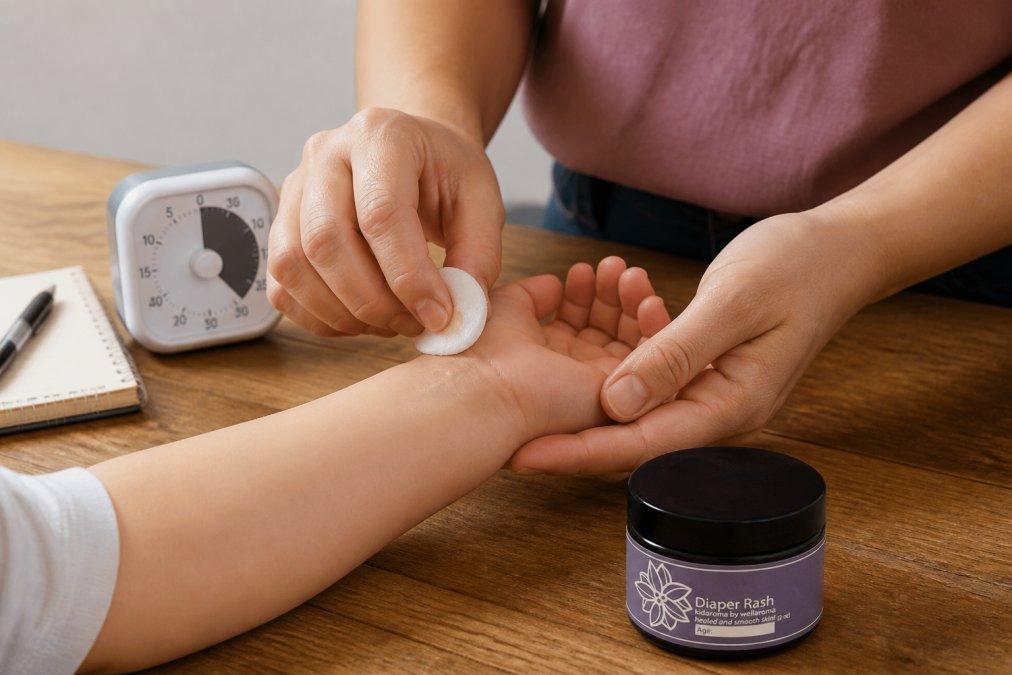
A patch test does not rule out systemic reactions or respiratory sensitivity. It only screens for localized dermal irritation and contact allergy. Always introduce new oils gradually, particularly with young children.
How to Apply Safe Essential Oils to Children's Skin
Topical Application
Topical application of diluted essential oil blends is the most controllable delivery method for children. The key is site selection and quantity.
Best application sites for children:
- Soles of the feet (thicker skin, lower absorption rate, away from face)
- Upper back and shoulders
- Outer upper arms
- Chest (for respiratory support blends, but avoid for infants under two)
Sites to avoid:
- Near the face, nose, or mouth in children under six
- Broken, irritated, or sunburned skin
- Mucous membranes
Apply no more than 1-2 ml of diluted blend per application. Massage gently until absorbed. Wash hands thoroughly after application to avoid accidental contact with the child's eyes.
Wellaroma's children's formulations, including the Bedtime Calm cream and Cold Free Kids cream, are pre-diluted to age-appropriate concentrations. This removes the guesswork from the dilution process and ensures consistent, safe concentration with every use.

Diffuser Safety
Diffusing is often presented as the safest way to use essential oils around children because it avoids direct skin contact. The reality is more nuanced.
A diffuser disperses volatile organic compounds into the air of an enclosed space. For children with respiratory sensitivity, asthma, or allergies, this can trigger symptoms even at low concentrations. According to the American Lung Association's guidance on indoor air quality, children are particularly vulnerable to airborne irritants because of their higher respiratory rate relative to body size.
Diffuser safety guidelines for children:
- Diffuse for no more than 30-60 minutes at a time, then air out the room
- Never diffuse in a room where an infant under three months is sleeping
- Use the lowest effective setting on your diffuser
- Keep the diffuser out of reach to prevent accidental ingestion
- Never diffuse eucalyptus, peppermint, or rosemary in rooms where young children sleep
Storage, Toxicity Prevention, and Medication Interactions
Essential oil toxicity in children is almost always a result of accidental ingestion or misapplication. Proper storage is the most effective prevention tool available.
Storage rules:
- Keep all essential oils in a locked cabinet or high shelf, out of children's reach and sight
- Store in original dark glass bottles away from heat and light to prevent degradation
- Never transfer oils to unlabeled containers, and never store them near food or beverages
- Check bottles regularly for damaged caps or seals
Essential oil ingestion is a medical emergency in children. If a child swallows any amount of undiluted essential oil, contact Poison Control immediately at 1-800-222-1222 or go to the nearest emergency room. Do not induce vomiting.
Medication interactions are an underreported concern in pediatric aromatherapy. Some aromatic compounds can affect how the liver metabolizes certain medications. Families whose children take anticonvulsants, anticoagulants, or immunosuppressants should consult a pediatrician before introducing any new essential oil regimen. This isn't a fringe concern, it's standard practice in integrative pediatric care.
The Wellaroma Diaper Rash Healing Cream and other targeted formulations are pre-formulated with age-appropriate dilutions built in. If your child is on any ongoing medication, a quick conversation with your pediatrician before adding any new topical product is always the right move.

| Risk Category | Prevention Step | Who to Contact |
|---|---|---|
| Accidental ingestion | Locked storage, out of sight | Poison Control: 1-800-222-1222 |
| Dermal reaction | Patch test before use | Pediatrician |
| Respiratory reaction | Limit diffusion time and concentration | Pediatrician |
| Medication interaction | Consult before starting any new regimen | Pediatrician or pharmacist |
Frequently Asked Questions
What essential oil is safest for children?
Lavender is widely regarded as the safest essential oil for children's skin. It has a gentle aromatic profile, a low risk of dermal irritation, and suits most age groups when properly diluted in a carrier oil like fractionated coconut oil. Roman chamomile is another excellent option, especially for babies over three months old. Always dilute to age-appropriate concentrations and do a patch test before full application. Consulting a pediatrician before starting any essential oil routine is strongly recommended.
How do you properly dilute essential oils for children?
Dilution ratio depends on the child's age. For babies three to twenty-four months, a 0.5% dilution is standard, roughly one drop of essential oil per two teaspoons of carrier oil. Toddlers aged two to six can tolerate a 1% dilution, and children six and older can use up to 2%. Always mix with a cold-pressed or fractionated carrier oil before any topical application. Never apply undiluted essential oils directly to a child's skin, as even therapeutic grade oils can cause dermal irritation at full strength.
Which essential oils should be avoided when using them on babies?
Several oils pose genuine risks for babies and young children. Eucalyptus and peppermint contain compounds that can cause respiratory distress in children under ten. Wintergreen and birch contain methyl salicylate, which carries toxicity concerns. Oils high in phenols, like clove and oregano, can irritate a baby's delicate skin barrier. Citrus oils such as bergamot carry phototoxicity risks, meaning sun exposure after application can cause burns. Oils with high ketone or camphor content also raise neurotoxicity concerns in young children.
What essential oils are safe to diffuse with a baby in the house?
Lavender and Roman chamomile are generally considered safe to diffuse around babies over three months old, provided the room is well ventilated and diffusion time is limited to thirty minutes or less. Keep the diffuser out of the baby's direct breathing zone and never seal the room. Avoid diffusing eucalyptus, peppermint, rosemary, or any oils high in 1,8-cineole around infants, as volatile organic compounds from these oils can affect a baby's respiratory system. Always monitor for signs of irritation and stop immediately if the baby shows any distress.
The challenge with essential oils for children isn't finding information, it's finding information you can actually trust and act on safely. Wellaroma's children's product line, including the Bedtime Calm Kids cream, Cold Free Kids cream, and Diaper Rash Healing Cream, is formulated with age-specific dilution rates built in, using only essential oils with established pediatric safety profiles. Add to cart and get the reassurance of knowing the dilution work has already been done for you.
This article was written using GrandRanker

Leave a comment