


How to Treat Molluscum Contagiosum Naturally
Table of Contents
- Understanding Molluscum Contagiosum: What You're Dealing With
- How to Prevent Molluscum Spread in Families
- Essential Oils for Molluscum Contagiosum: What Works and How to Use It Safely
- Soothing Itch and Inflammation: Baths and Topical Care
- Understanding Molluscum Contagiosum Duration in Children
- Natural Ways to Boost Child Immunity During an Outbreak
- When to See a Doctor and How to Treat Molluscum Naturally at Home
- Conclusion: A Patient, Natural Approach to Clear Skin
- Frequently Asked Questions
Last Updated: September 8, 2026
Understanding Molluscum Contagiosum: What You're Dealing With
Molluscum contagiosum is a common viral skin infection caused by a poxvirus that produces small, firm, dome-shaped papules. These lesions are typically painless but can become itchy and inflamed as the body mounts an immune response. This article explains how to treat molluscum contagiosum naturally at home. This article explains how to treat molluscum contagiosum naturally at home.
The condition is self-limiting, clearing within several months to a few years. The challenge for most families is managing itchiness and preventing spread while the immune system works.
Below, we walk through practical, natural strategies that reduce transmission risk, calm inflamed skin, and support your child's immune system, plus when a dermatologist should step in.
How to Prevent Molluscum Spread in Families
Molluscum contagiosum spreads through direct skin-to-skin contact and indirect contact with contaminated fomites, towels, washcloths, clothing, bedding, bath toys, and shared sports equipment. The virus can survive on surfaces for a significant period, making a rigorous, household-wide hygiene protocol your most powerful tool.
The Laundry Protocol: Your First Line of Defense
- Separate at the Source: Place a dedicated, lidded hamper in your child's bathroom or bedroom. Instruct them to place all used towels, washcloths, pajamas, and undergarments directly into this hamper, not mixing with other family members' clothing.
- Wash Hot, Rinse Thoroughly: Wash these items in the hottest water the fabric can tolerate (ideally 140°F or higher) with regular detergent (the CDC). Add a half-cup of white vinegar to the rinse cycle as a natural, additional virucidal agent.
- Dry on High Heat: Dry all items on the highest heat setting for at least 45 minutes. Do not air-dry, as this does not reliably kill the virus.
- Frequency is Key: Wash your child's towels and washcloths after every single use. Change bed linens every 2-3 days during an active outbreak.
Bathroom and Bathing Hygiene: Contain the Spread
Bath time is a high-risk activity for spreading molluscum to other body parts (autoinoculation) and to siblings.
- Bathe Your Child Last: If you have multiple children, bathe the child with molluscum last to prevent exposure to viral particles from a sibling.
- Use a Fresh Washcloth Daily: Use a fresh, clean washcloth for each bath and do not share it. After the bath, place it in the designated hamper.
- Disinfect the Tub: After your child's bath, wipe down the bathtub, faucets, and bath toys with a disinfecting wipe or diluted bleach (1 tablespoon per 1 gallon of water). Let it sit for 5-10 minutes before rinsing.
- Air-Dry Bath Toys: Place all bath toys in a mesh bag and hang them to dry completely. The virus thrives in moist environments, so a dry toy is safer.
Wound Care and Covering: The Occlusion Strategy
Covering lesions prevents viral shedding onto surfaces and other people.
- Use Hydrocolloid Bandages: For individual lesions, especially on the torso or limbs, use hydrocolloid bandages (often sold for blister treatment). These are more durable than standard adhesive bandages, stay on for days, and create a waterproof seal that prevents spread.
- The 'Clothing as a Barrier' Rule: For lesions on the trunk or back, a snug-fitting, long-sleeved cotton shirt acts as a physical barrier. For leg lesions, wear long pants or leggings.
- Swimming and Sports: Cover all visible lesions with a waterproof bandage or swim shirt. For sports like wrestling or gymnastics, where skin-to-skin contact is unavoidable, a doctor's note may be required and covering all lesions with a secure bandage is non-negotiable.
Nail Care and Scratching: Breaking the Autoinoculation Cycle
Scratching is the primary driver of spreading lesions to new areas. Manage this aggressively.
- The 'Daily Trim' Habit: Make nail trimming a daily ritual. Short nails are less effective at breaking the skin and harboring viral particles.
- The Overnight Glove: For children who scratch in their sleep, apply a light coating of plain petroleum jelly to the lesions and cover them with cotton gloves or socks. This creates a physical barrier and moisturizes the skin, reducing itch.
- The 'Tap, Don't Scratch' Technique: Teach your child to tap the area firmly with their palm or a clean, cool cloth instead of scratching. This provides relief without breaking the skin.
Essential Oils for Molluscum Contagiosum: What Works and How to Use It Safely
Essential oils are among the most researched natural options for molluscum, with several showing antiviral properties. The most commonly cited are tea tree oil, Australian lemon myrtle oil, and iodine-based protocols.
Tea tree oil has demonstrated broad-spectrum antimicrobial activity in dermatological research (PubMed). Australian lemon myrtle oil, which contains a high concentration of citral, has also shown promise in clinical studies. The carrier oil and dilution ratio matter as much as the essential oil itself.
Dilution Ratios and Skin Sensitivity Testing
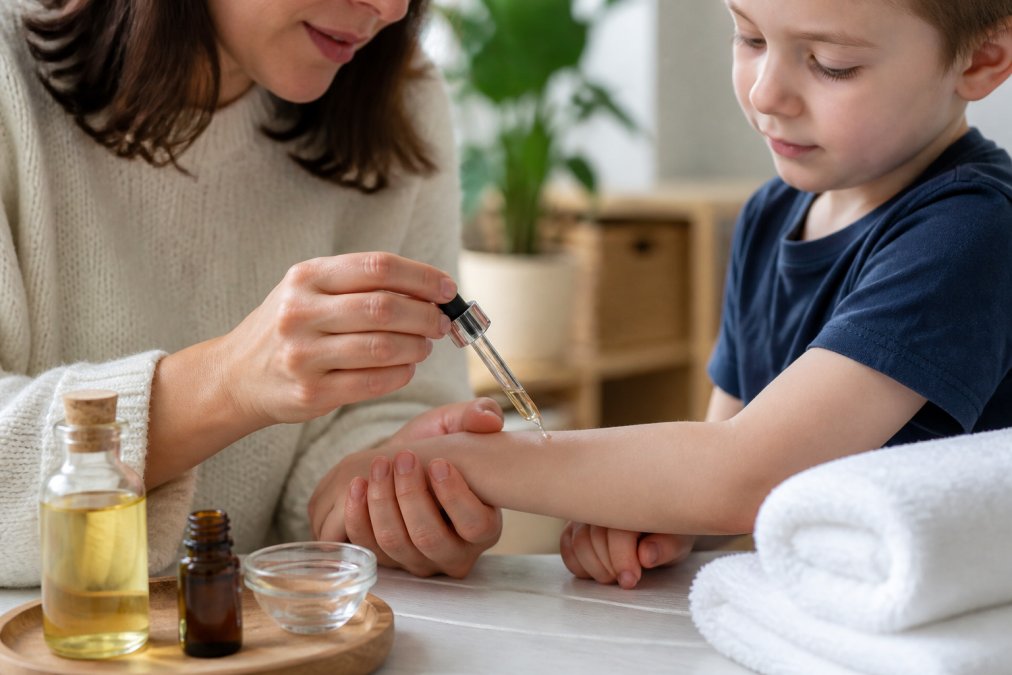
Essential oils are highly concentrated and must never be applied directly to skin without dilution. A safe starting ratio for children is 1 drop of essential oil per 1 teaspoon of carrier oil, such as coconut oil or jojoba oil. For adults with less sensitive skin, increase to 2-3 drops per teaspoon.
Before applying any new oil blend to lesions, perform a patch test on a small area of unaffected skin, such as the inner forearm. Apply the diluted mixture, wait 24 hours, and check for redness, swelling, or irritation. If any reaction occurs, discontinue use and try a more diluted ratio or a different oil.
Tea Tree Oil and Iodine Protocols
A widely used home protocol combines tea tree oil with iodine. Apply a drop of diluted tea tree oil to each papule, followed by a small amount of iodine solution, repeating once or twice daily. Tea tree oil addresses the viral component while iodine dries out lesions and prevents bacterial overgrowth.
Another variation involves applying the oil blend and covering lesions with a small adhesive bandage overnight, keeping treatment in contact with skin and preventing scratching. Many parents report bumps becoming inflamed and crusting over within a few weeks, a sign the immune system is fighting the virus.
Soothing Itch and Inflammation: Baths and Topical Care
The itchiness associated with molluscum can be one of the most distressing symptoms for children, often leading to scratching that spreads the virus. Colloidal oatmeal baths are a time-tested remedy. Add a cup of finely ground colloidal oatmeal to lukewarm bath water and let your child soak for 15-20 minutes. soothing sensitive skin naturally.
Baking soda baths offer similar relief, particularly when lesions are inflamed. For targeted relief, apply a cool compress soaked in chamomile tea to irritated areas.
Coconut oil serves dual purposes in molluscum care: it dilutes essential oils for safe application, and on its own it supports the skin barrier, reducing dryness and preventing cracking. Look for virgin, cold-pressed coconut oil.
Understanding Molluscum Contagiosum Duration in Children
Molluscum contagiosum duration in children varies widely, with most cases resolving within 6 to 12 months, though some persist up to 2 years or longer (the American Academy of Dermatology). The timeline depends on the child's immune response, the number of lesions, and whether bumps are spread through scratching.
Lesions appear as small, flesh-colored bumps that may become red and inflamed before clearing. This inflammation is actually a positive sign that the immune system is mounting an attack, many parents mistake this phase for the infection getting worse when it is actually the beginning of resolution.
While waiting for the immune system to clear the virus, focus on preventing spread and managing symptoms. Consistent natural treatments, combined with strict hygiene, can shorten the duration by reducing new lesions.
Natural Ways to Boost Child Immunity During an Outbreak
While topical treatments address visible lesions, the ultimate resolution of molluscum contagiosum depends on your child's immune system recognizing and clearing the poxvirus. Here is a practical, nutrition-first guide to bolstering the immune response.
The Anti-Inflammatory Plate: A Nutritional Strategy
The goal is to reduce systemic inflammation and provide micronutrients essential for a robust antiviral response.
- Zinc-Rich Foods: Zinc is a critical mineral for immune cell function and has direct antiviral properties. Incorporate foods like pumpkin seeds, grass-fed beef, chickpeas, and cashews into your child's weekly menu. Children with mild zinc deficiency often have a harder time clearing viral skin infections.
- Vitamin C Powerhouses: Vitamin C supports white blood cell function. Prioritize whole-food sources like red bell peppers (which have more vitamin C than oranges), strawberries, kiwi, and broccoli. Serve raw or lightly steamed to preserve potency.
- The Gut-Skin Axis: A healthy gut microbiome is foundational to a strong immune system. Focus on prebiotic and probiotic-rich foods, including plain, unsweetened yogurt with live cultures, kefir, sauerkraut, and fiber-rich foods like oats, bananas, and onions.
- Foods to Minimize: During an active outbreak, minimize foods that promote inflammation and suppress immune function, including high-sugar treats, sugary drinks, and highly processed snacks. Sugar can interfere with white blood cells' ability to engulf and destroy pathogens for several hours after consumption.
Strategic Supplementation: A Targeted Approach
While food should be the primary source of nutrients, targeted supplementation can help fill gaps, especially for picky eaters. Always discuss any new supplement with your pediatrician.
- Vitamin D3: Vitamin D is crucial for immune regulation. Many children are deficient, especially during winter months. A common recommendation is a daily dose of 600-1000 IU for children, but a blood test can determine the optimal dose.
- Probiotics: A high-quality, multi-strain probiotic supplement can help maintain healthy gut flora, especially if your child has recently taken antibiotics. Look for a product specifically formulated for children with a high CFU count.
- Elderberry Syrup: Elderberry is a traditional remedy with antiviral properties. A daily dose of a high-quality, sugar-free elderberry syrup can be a gentle, supportive addition during the outbreak. It is not a cure, but it is a safe and pleasant way to support the immune system.
Sleep and Stress: The Overlooked Pillars
The immune system performs its most critical repair and memory functions during deep sleep. A sleep-deprived child is more susceptible to infections and slower to clear them.
- The Sleep Schedule: Ensure your child gets the recommended amount of sleep for their age. For a 4-year-old, that is 10-13 hours; for a 10-year-old, 9-11 hours.
- The Stress Connection: Stress hormones like cortisol are immunosuppressive. For a school-aged child, the social stress of visible bumps can be significant and can slow the immune response. Addressing the emotional toll is not just a kindness; it is a therapeutic intervention.
A Sample Day of Immune-Supporting Meals
Here is an example of a day of immune-boosting meals for a child.
- Breakfast: Oatmeal made with milk or a milk alternative, topped with sliced strawberries and a sprinkle of pumpkin seeds.
- Lunch: A whole-wheat wrap with sliced turkey, avocado, and red bell pepper strips. A small cup of plain yogurt with a drizzle of honey.
- Snack: A small handful of cashews and a clementine.
- Dinner: Baked salmon with steamed broccoli and a small serving of quinoa.
When to See a Doctor and How to Treat Molluscum Naturally at Home
Most cases of molluscum contagiosum can be managed at home with natural remedies, but certain situations warrant a visit to a dermatologist or pediatrician. Seek medical advice if lesions become infected, showing increasing redness, swelling, pain, or discharge, or if your child has a weakened immune system, bumps appear near the eyes, or the condition persists beyond 18 months.
For home treatment, the most effective natural approach combines daily application of diluted essential oils to target lesions, colloidal oatmeal baths to manage itching, and strict hygiene to prevent spread. Consistency matters more than intensity, so establish a routine you can maintain for several weeks.
The Wellaroma Clear Skin cream was formulated specifically for this challenge, using an essential-oil-based blend that helps the body recognize and fight the virus while soothing the surrounding skin. Unlike harsh acids or prescription treatments, it works with the skin's natural healing process and is gentle enough for children with sensitive skin. For families dealing with an extended outbreak, the Clear Skin System pairs the treatment cream with a soothing moisturizer and a restorative roller to support every stage of the healing cycle.


Conclusion: A Patient, Natural Approach to Clear Skin
Treating molluscum contagiosum naturally requires patience, consistency, and a willingness to support the body's own healing mechanisms rather than forcing a quick fix. With the right combination of hygiene, soothing care, and immune support, most children clear the infection without intervention.
The psychological toll of visible skin bumps should not be underestimated, especially for school-aged children who may face questions or teasing. Reassure your child that the bumps are temporary and not their fault, and focus on the positive steps you are taking together toward clear skin.
At Wellaroma, we believe natural healing should be gentle, effective, and accessible for the whole family. Our essential-oil-based treatments, including the Clear Skin molluscum cream and the complete Clear Skin System, are designed to support your child's skin through every stage of the healing process. Get started with Wellaroma and give your family the natural support they need for calm, clear, healthy skin.
Frequently Asked Questions
How long does it take for molluscum to go away on its own?
In children, molluscum contagiosum duration typically ranges from 6 to 12 months, though some cases can last up to 2 years. The bumps are self-limiting, meaning they eventually clear without medical intervention as the immune system recognizes and fights the poxvirus. Natural treatments like essential oil blends can help support this process and may reduce the time to clearance by encouraging the body's immune response. Consistency with your treatment routine and hygiene protocols is key to preventing reinfection and helping the bumps resolve faster.
Are essential oils effective for molluscum contagiosum?
Yes, certain essential oils show promise for treating molluscum contagiosum. Tea tree oil and Australian lemon myrtle oil have antiviral properties that can help fight the poxvirus. Always dilute essential oils with a carrier oil and perform a patch test before applying to larger areas, especially on children with sensitive skin.
How can I prevent the spread of molluscum contagiosum at home?
To prevent molluscum spread in families, avoid direct skin-to-skin contact with the bumps and do not share towels, washcloths, clothing, or bathwater. Cover the lesions with clothing or a watertight bandage during activities like swimming. Do not let your child scratch the bumps, as this can spread the virus to other parts of the body. Wash your hands frequently with soap and water, and disinfect surfaces that come into contact with the affected skin, such as bathtubs and toys.
When should I see a dermatologist for molluscum contagiosum?
See a dermatologist if the bumps become red, swollen, or painful, which may indicate a secondary bacterial infection. Also seek medical advice if your child has a weakened immune system, if the bumps spread rapidly or appear on the face or near the eyes, or if they have not cleared after 12 to 18 months of home treatment. A doctor can offer prescription options or in-office removal procedures like cryotherapy or curettage if natural remedies have not been effective.

Leave a comment