


Sulfate Free Body Soap: Why It Matters for Your Skin
Table of Contents
- What Are Sulfates in Body Wash?
- How to Identify Sulfates in Skincare
- Why Choose Sulfate Free Body Soap
- Natural Body Wash for Sensitive Skin
- Essential Oil Body Wash Benefits
- Sulfate Free vs. Traditional Soap: What's the Difference
- Making the Switch: What to Expect
- Frequently Asked Questions
Last Updated: September 23, 2026
What Are Sulfates in Body Wash?
Sulfates are synthetic detergents commonly used in body washes and shampoos to create lather and remove oils from skin. The most prevalent sulfates include sodium lauryl sulfate (SLS) and sodium laureth sulfate (SLES), which work by breaking down the lipid layer on your skin's surface to lift away dirt and oil. While these cleansing agents are effective at producing the foamy texture consumers expect, they can strip away the skin's natural protective barrier, leaving it vulnerable to irritation and dehydration.
For people with sensitive skin, dry skin, or conditions like eczema, sulfates' aggressive action becomes a liability rather than an asset, causing tightness, redness, or itching.
How to Identify Sulfates in Skincare
Look for "lauryl" or "laureth" on ingredient lists, these terms identify sulfates regardless of their prefix (sodium, ammonium, magnesium, or TEA).
Sulfates typically appear in the top five ingredients of conventional body washes. When shopping for sulfate free body soap, scan the first few ingredients, if sulfate names aren't there, the product likely qualifies as sulfate free.
Verify "sulfate-free" claims by checking the ingredient list on the back, marketing language on the front label doesn't regulate what's inside the bottle.
Why Choose Sulfate Free Body Soap
Switching to sulfate free body soap preserves your skin's acid mantle and lipid barrier. Your skin's pH of 4.5-5.5 activates enzymes that bind lipids in the stratum corneum, the outermost layer that acts as your moisture barrier (Importance of Stratum Corneum Acidification to Restore Skin Barrier Function in...).
Sulfates penetrate and disrupt the lipid matrix, removing not just excess oil but also ceramides, cholesterol, and fatty acids your skin needs to retain water, causing transepidermal water loss (TEWL).
Barrier disruption allows irritants to reach living skin cells, causing inflammation. Your skin compensates for moisture loss by increasing sebum production, creating the paradox of oily yet dehydrated skin.
Sulfate free body soap uses gentler surfactants that work at the surface, lifting dirt and oil without dismantling structural lipids, keeping pH stable and barrier intact.
People with sensitive skin, rosacea, psoriasis, or dermatitis see dramatic improvements because these conditions stem from barrier dysfunction. Stopping the stripping action reduces inflammation, itching, and redness naturally.
Sulfate free body soap also performs better for those with dry skin because your skin retains more of its natural hydration. Over time, typically within two to three weeks of consistent use, skin becomes more balanced because it's no longer in a state of emergency trying to replace lost oils and water. The barrier heals, sebum production normalizes, and your skin's natural pH buffering capacity strengthens.
Natural Body Wash for Sensitive Skin
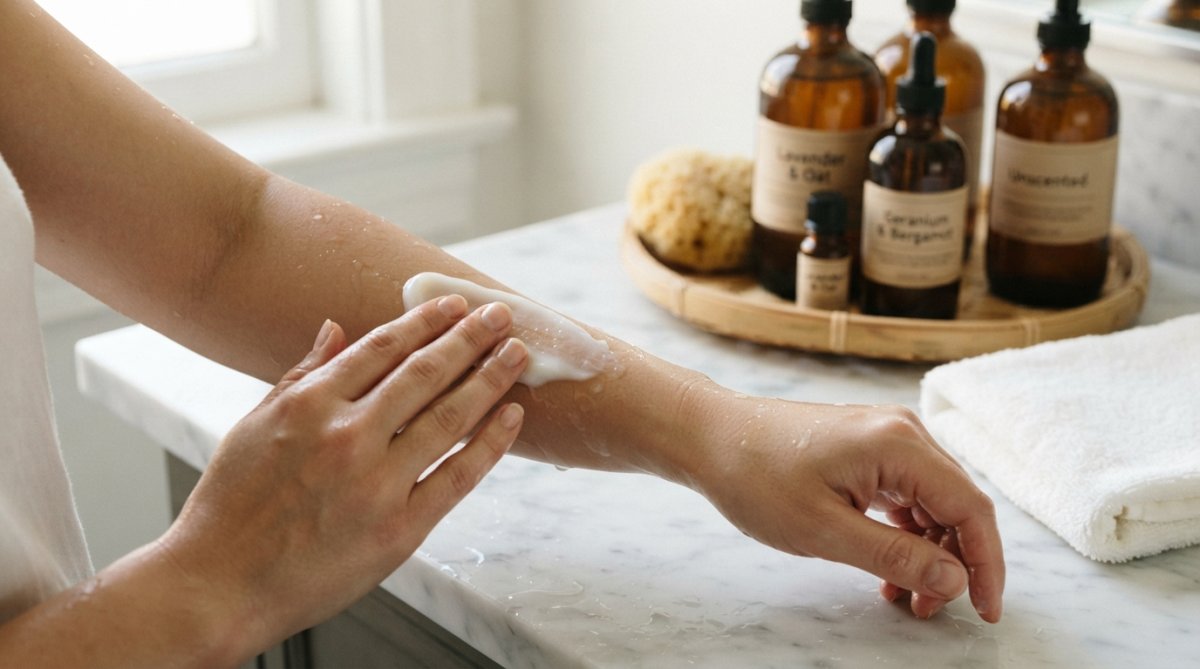
Natural body wash formulas replace sulfates with gentler surfactants derived from plant sources. Coconut oil derivatives, saponified oils, and plant-based cleansing agents provide effective cleaning without the aggressive stripping action. These alternatives work more slowly but more gently, allowing your skin's natural defenses to remain intact while dirt and oil are still removed.
For sensitive skin, look for body washes that combine gentle surfactants with emollients like glycerin, shea butter, or plant oils. These ingredients actively restore moisture as you cleanse rather than just avoiding damage. A truly effective natural body wash for sensitive skin does double duty: it cleanses without stripping, and it conditions while it cleans.
Wellaroma's approach to natural body care focuses on essential oil healing solutions specifically designed for sensitive skin. Products like the Rebel Green line offer sulfate free formulas with food-grade ingredients and pure essential oils that clean effectively without triggering the irritation that conventional body washes cause. The key difference is that natural formulas respect your skin's microbiome, the delicate ecosystem of beneficial bacteria that thrives on healthy skin.
Hypoallergenic certification matters when choosing natural body wash for sensitive skin. This means the product has been tested to minimize allergic reactions. Fragrance-free options work better for many people with sensitivity, though carefully selected essential oils can provide therapeutic benefits without triggering reactions that synthetic fragrances often cause.
Essential Oil Body Wash Benefits
Essential oils bring therapeutic properties beyond basic cleansing. Lavender oil soothes irritated skin and promotes relaxation during your shower routine. Peppermint oil invigorates and can help with circulation, making it ideal for morning showers. Tea tree oil offers natural antimicrobial properties, though it should be properly diluted to avoid irritation.
The benefit of essential oil body wash extends beyond skin health to overall wellness. Aromatherapy during your daily shower creates a spa-like experience at home, supporting relaxation and immunity naturally. When you inhale essential oil vapors while showering, they enter your respiratory system and can promote calm or energy depending on the oil selected.
Essential oil body wash benefits are most pronounced when oils are properly diluted and sourced from reputable suppliers. Wellaroma specializes in essential oil healing solutions that balance therapeutic potency with safety. The dilution process matters significantly, improperly diluted oils can irritate even healthy skin, which is why working with brands experienced in essential oil formulation ensures you get the benefits without the risks.
Sulfate Free vs. Traditional Soap: What's the Difference
Traditional soap and sulfate free body soap work through fundamentally different mechanisms. True soap is made through saponification, combining oils with an alkali to create a cleanser. This process produces a gentler product because the chemical reaction transforms oils into cleansing molecules rather than adding synthetic surfactants.
Sulfate free body soap often uses saponified oils or plant-derived surfactants that mimic soap's gentle action without the traditional soap-making process. The result is a product that cleanses effectively while maintaining your skin's pH balance better than conventional sulfate-based body washes. Lather quality differs too: sulfate free products produce less dramatic bubbles but cleanse just as thoroughly because lather isn't what removes dirt, surfactant action is.
Traditional bar soaps can be drying for some skin types because they're more alkaline (pH 8-10), while sulfate free liquid body washes formulated with plant oils and glycerin tend to be more pH-balanced (pH 5-7). The choice between bar and liquid sulfate free body soap comes down to personal preference and skin type, but both outperform sulfate-containing products for sensitive skin.
Hard Water Performance: A Critical Difference
One of the most overlooked advantages of sulfate free body soap is superior performance in hard water. Hard water contains dissolved minerals, primarily calcium and magnesium ions, that interact differently with various surfactants.
Traditional bar soaps and some sulfate-based body washes react with hard water minerals to form insoluble compounds called soap scum. When calcium or magnesium ions encounter the soap molecule, they bind to it and precipitate out of solution, leaving a film on your skin and in your shower. This film doesn't rinse away easily, leaves skin feeling sticky or chalky, and can trap bacteria and dead skin cells, potentially triggering irritation.
Sulfate free body soaps, particularly those formulated with plant-derived surfactants like cocamidopropyl hydroxysultaine or decyl glucoside, are less prone to hard water precipitation because their molecular structure doesn't bind as readily to mineral ions. This means they rinse cleaner, leave less residue, and perform more consistently whether your water is soft or hard.
If you have hard water (common in areas with limestone or chalk geology), you'll notice the difference immediately: sulfate free products rinse more completely, your skin feels cleaner post-shower, and you need less product to achieve the same cleansing effect.
| Feature | Sulfate Free Body Soap | Traditional Sulfate Body Wash | Traditional Bar Soap |
|---|---|---|---|
| Skin Irritation Risk | Low | High | Moderate |
| Moisture Retention | Excellent | Poor | Good |
| pH Balance | Neutral to Acidic (5-7) | Alkaline (8-10) | Alkaline (8-10) |
| Lather Production | Moderate | Abundant | Moderate |
| Best For | Sensitive Skin | Oily Skin | General Use |
| Hard Water Performance | Excellent | Fair | Poor |
| Hard Water Residue | Minimal | Moderate | High |
Making the Switch: What to Expect
The transition from conventional body wash to sulfate free body soap involves an adjustment period. Your skin has likely adapted to the stripping action of sulfates, which means it's been overproducing oil to compensate. When you switch to a gentler formula, your skin needs time to recalibrate and return to its natural balance.
Frequently Asked Questions
What exactly are sulfates and why are they in body wash?
Sulfates like sodium lauryl sulfate are synthetic detergents that create lather and remove dirt and oils from skin. They're inexpensive and effective, which is why they've been used in body care for decades. However, sulfates strip away the skin's natural oils and moisture barrier, leaving skin dry and irritated. Sulfate free body soap uses gentler surfactants derived from plants or coconut oil that cleanse without this harsh stripping effect.
How can I tell if my body wash contains sulfates?
Check the ingredient label for sodium lauryl sulfate (SLS), sodium laureth sulfate (SLES), or ammonium lauryl sulfate. These will appear near the beginning of the ingredient list since they're typically the main active ingredients. Look for products labeled 'sulfate free' or those listing plant-derived surfactants like decyl glucoside or coco-glucosides instead. Reading ingredient labels is the most reliable way to identify sulfates in skincare.
Is sulfate free body soap actually better for eczema and sensitive skin?
Yes, for most people with sensitive skin or eczema. Sulfates trigger irritation by damaging the skin's lipid layer and disrupting the skin microbiome. Natural body wash for sensitive skin formulated without sulfates preserves moisture and reduces inflammation. Products with essential oils, glycerin, and plant-derived emollients support skin hydration and barrier repair. Many people with chronic sensitivity see improvement within 2-3 weeks of switching to sulfate free formulas.
Do sulfate free soaps clean as well as traditional body washes?
Yes, they clean effectively, though the lather may be lighter. Sulfate free body soap uses alternative surfactants that remove dirt and oil without the excessive foam. You may notice less lather at first, but this doesn't mean less cleaning power. Plant-derived surfactants and natural cleansing agents work by different chemistry, delivering gentle cleansing that doesn't strip your skin. Most users find they actually feel cleaner and less itchy after switching.

Leave a comment