


Benefits of Using Essential Oil Rollers
Table of Contents
- What Essential Oil Rollers Are and How They Work
- How to Use Essential Oil Rollers for Maximum Benefit
- Where to Apply Essential Oil Roller for Targeted Relief
- Essential Oil Roller Dilution: Safety and Best Practices
- Stress Relief, Sleep, and Mood Support
- Creating Essential Oil Roller Recipes at Home
- Why Essential Oil Rollers Beat Other Aromatherapy Formats
- Frequently Asked Questions
Last Updated: October 17, 2026
What Essential Oil Rollers Are and How They Work
An essential oil roller is a small glass bottle with a rolling ball applicator designed to dispense diluted essential oils directly onto the skin. The roller ball lets you apply oils precisely to specific areas without touching the liquid directly.
The mechanism is straightforward: roll the ball across your skin and the oils transfer onto the application area. The roller's convenience and the oils' absorption make this format ideal for on-the-go wellness, and many people find the tactile ritual, the gentle rolling motion and immediate scent, calming before the oils even begin working.
Essential oil rollers blend two key components: concentrated essential oils and carrier oils like coconut oil. The carrier oil dilutes the essential oil to safe concentrations for skin contact; without proper dilution, pure essential oils can irritate or sensitize skin.
Portability sets rollers apart from other aromatherapy formats. A roller fits in a pocket, purse, or gym bag, so you can apply it at your desk, in your car, or anywhere stress or discomfort surfaces, targeted relief without the setup diffusers require.
How to Use Essential Oil Rollers for Maximum Benefit
Using an essential oil roller correctly ensures you get the most from the blend and avoid wasting product. The process takes seconds, but intention matters.
Step 1: Prepare your skin. Make sure the area where you'll apply the roller is clean and dry. Damp skin can dilute the oils and reduce their effectiveness. Pat the area dry if needed.
Step 2: Roll with gentle pressure. Hold the roller at a slight angle and roll it across the target area 2-3 times. Let the ball glide smoothly; gentle, deliberate motions work better than aggressive rolling.
Step 3: Allow absorption. Give the oils 30-60 seconds to absorb before touching the area or washing your hands, so they penetrate rather than transferring onto clothes or surfaces.
Step 4: Reapply as needed. Most people find that reapplying every 2-4 hours maintains the benefit. Start with one application and observe how your body responds before increasing frequency.
A common mistake is rolling too much product at once. More oil doesn't mean better results; it wastes product and leaves a greasy residue. One or two passes is usually enough.
Where to Apply Essential Oil Roller for Targeted Relief
The most effective application sites are pulse points, areas where blood vessels sit close to the skin surface. These spots warm naturally, which helps the oils absorb and their aroma diffuse.
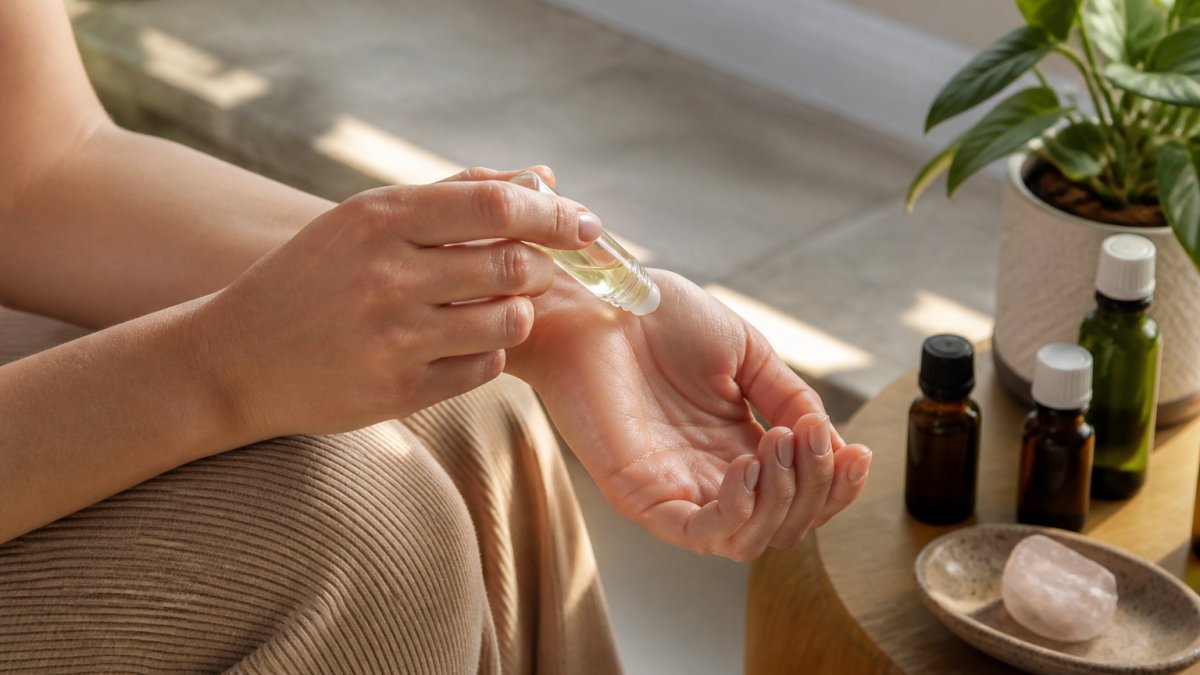
For stress and mood support, apply to your wrists or the inside of your elbows, where you'll catch the scent throughout the day. Many people also apply to the back of the neck or behind the ears for a subtle presence that lasts.
For sleep support, apply to the pulse points on your wrists or the base of your throat 15-30 minutes before bed. Some people dab a small amount on their pillow, though applying directly to skin is more effective.
For targeted relief of minor aches or muscle discomfort, apply directly to the affected area if the skin is unbroken and not sensitive. Always patch test first on a small area to ensure no irritation occurs.
The key principle: pulse points maximize absorption and scent diffusion, while direct application targets specific areas. Combining both often works best.
Essential Oil Roller Dilution: Safety and Best Practices
Dilution is non-negotiable for safe topical use. Pure essential oils are highly concentrated plant extracts that can irritate, sensitize, or even burn skin if applied undiluted (the FDA). A properly diluted essential oil roller keeps the benefits while protecting your skin.
Standard dilution ratios for topical rollers typically range from 2-5% essential oil by volume, with the remainder being carrier oil. The math is simple once you know that 1 ml of essential oil equals roughly 20 drops:
- 2% dilution in a 10 ml roller: about 4 drops of essential oil, topped off with carrier oil
- 3% dilution in a 10 ml roller: about 6 drops of essential oil
- 5% dilution in a 10 ml roller: about 10 drops of essential oil
For a 5 ml roller, halve those drop counts. For a 15 ml roller, multiply by 1.5. A 2% blend is a sensible starting point for daily use on larger areas; 3-5% is better reserved for short-term, targeted application on small areas of intact skin.
Wellaroma's rollers arrive pre-diluted and tested for safe use. If you blend at home, start conservatively: use fewer drops than you think you need, patch test, and wait 24 hours before broader use.
Patch testing is essential, especially with sensitive skin, pregnancy, nursing, or medications. Apply a small amount to your inner arm or behind your ear and wait 24-48 hours; if no redness, itching, or irritation appears, the blend is likely safe. Repeat whenever you switch blends or bottles.
Who needs extra caution:
- Children: Their skin is thinner and absorbs more readily. Use lower dilutions (around 1% or less) and avoid strong oils like peppermint and eucalyptus near the face. Check with a pediatrician before using any blend on a child.
- Pregnancy and nursing: Some oils are traditionally avoided during pregnancy. Consult your healthcare provider before using any essential oil blend.
- Sensitive skin and allergies: Patch test every new blend, and keep a note of which oils caused reactions so you can avoid them in future recipes.
- Medications and medical conditions: If you take prescription medication or manage a chronic condition, ask your provider before adding topical essential oils to your routine.
Photosensitivity matters. Oils like lemon, bergamot, lime, and other cold-pressed citrus varieties can increase skin sensitivity to sunlight (phototoxicity) (A study of the phototoxicity of lemon oil).
Storage and shelf life. Store rollers in a cool, dark place, light and heat degrade essential oils and destabilize the carrier oil. Most homemade rollers stay fresh 3-6 months; citrus-heavy blends degrade faster than resinous or woody ones.
Stress Relief, Sleep, and Mood Support
Essential oil rollers are popular for emotional wellness because inhalation and topical absorption work together: you breathe in the aroma while the oils absorb into your skin, a dual-action approach many find calming.
For stress relief, common blends include lavender, bergamot, and chamomile, traditionally associated with relaxation. Apply to your wrists or behind your ears when tension builds; the ritual of pausing to apply can itself signal your body to slow down.
Sleep support often involves lavender, cedarwood, and vetiver. Apply to pulse points 15-30 minutes before bed; the scent can signal your nervous system to wind down, which is why many keep a roller on the nightstand.
For mood and mental clarity, energizing blends with lemon, peppermint, and rosemary are traditionally linked to alertness and focus. Apply to your wrists or the base of your throat when you need a daytime lift.
Realistic expectations matter here. Essential oil rollers support relaxation and may help create a calming environment, but they're not a substitute for medical treatment of anxiety, depression, or sleep disorders. Think of them as part of a broader self-care routine, not a cure.
Creating Essential Oil Roller Recipes at Home
Making your own essential oil rollers lets you customize blends to your preferences. The process is simple, but precision matters for safety and effectiveness.
What you'll need:
- Empty roller bottles (10ml size is standard)
- Essential oils of your choice
- Carrier oil (coconut, jojoba, or fractionated coconut oil work well)
- A pipette or dropper for measuring
- Labels for your finished rollers
Basic recipe for a 10ml roller (2% dilution):
- 2 drops of essential oil per 1ml of carrier oil
- For a full 10ml bottle: 20 drops total of essential oil, 10ml of carrier oil
- Adjust the ratio to 3-4 drops per 1ml if you want a stronger scent (3-4% dilution)
Step-by-step:
- Pour carrier oil into the roller bottle until it's about halfway full
- Add your essential oil drops slowly, counting as you go
- Top off with more carrier oil until the bottle is nearly full
- Screw on the roller ball and cap
- Shake gently to blend
- Label with the blend name and date created
Popular home blend ideas:
- Calm blend: 6 drops lavender, 4 drops chamomile, 10 drops carrier oil
- Energy blend: 8 drops lemon, 4 drops peppermint, 10 drops carrier oil
- Sleep blend: 7 drops lavender, 3 drops cedarwood, 10 drops carrier oil
Store homemade rollers in a cool, dark place and use within 3-6 months. Essential oils degrade over time, especially when exposed to light and heat.
Why Essential Oil Rollers Beat Other Aromatherapy Formats
Aromatherapy comes in several formats: diffusers, sprays, inhalers, and topical applications like rollers.
Rollers vs. essential oil sprays: Sprays refresh a room quickly but offer no topical absorption benefit, and they tend to be less concentrated and dissipate faster.
Rollers vs. inhalers: Inhalers (small tubes you sniff) deliver strong aroma but offer no topical benefit. They're portable like rollers but less versatile.
Rollers vs. diluted oils in bottles: You could apply diluted oils with your fingers, but rollers are cleaner, more precise, and less messy.
| Format | Best for | Trade-offs |
|---|---|---|
| Roller | Targeted, personal, on-the-go use | Small application area; needs skin contact |
| Diffuser | Room-wide scent, shared spaces | Setup, electricity, affects everyone nearby |
| Spray | Quick room refresh | Less concentrated; no topical benefit |
| Inhaler | Fast, strong aroma on the go | No topical benefit |
| Diluted oil bottle | Custom blends at home | Messier; less precise application |
What to expect from a roller, realistically. Onset and duration vary by oil, dilution, and person.
When a roller is not the right format:
- Scent sensitivity: If you or someone nearby is sensitive to fragrance, a personal roller applied in a closed space can still affect others. Use sparingly and consider an inhaler for the most discreet option.
- Shared spaces: If you want the whole room to benefit, a diffuser is the better tool.
- Large areas: For broad muscle areas, a diluted oil in a bottle may be more practical than a small roller.
- Broken or irritated skin: Never roll over cuts, rashes, or sunburned skin.
Environmental and accessibility notes. Glass roller bottles are refillable, cutting packaging waste versus single-use sprays; wash and dry thoroughly before refilling.
Portability, precision, topical absorption, and aromatic benefit make rollers a practical choice for daily wellness, as long as you match the format to the job.
At Wellaroma, we've designed rollers specifically for this versatility. If you want to start simple, our Custom Roller at $10.00 gives you a blank canvas to build your own blend.
Frequently Asked Questions
What are the main benefits of using essential oil rollers?
Essential oil rollers deliver targeted aromatherapy support for stress relief, relaxation, sleep, energy, and mental clarity. Their portable design makes them convenient for on-the-go use, and direct application to pulse points allows faster absorption. Unlike diffusers or sprays, rollers provide consistent, controlled dosing and work through both skin absorption and inhalation, making them effective for addressing specific wellness needs throughout your day.
Do essential oil rollers need to be diluted before use?
Yes, proper dilution is essential for safety. Essential oils should be mixed with a carrier oil like coconut oil to prevent skin irritation, especially for sensitive skin. A safe dilution ratio is typically 2-3% essential oil to carrier oil. Undiluted essential oils can cause irritation, redness, or allergic reactions. Always perform a patch test on a small area first, and if you have very sensitive skin, start with a lower concentration and gradually increase as your skin tolerates it.
Where should you apply an essential oil roller for best results?
Apply essential oil rollers to pulse points where skin is thin and blood vessels are close to the surface. Key areas include wrists, inner elbows, behind the ears, the base of the throat, and temples. These locations enhance absorption and allow the scent to reach your senses quickly. For targeted relief like headaches or muscle discomfort, apply directly to the affected area. Always avoid the eyes, broken skin, and mucous membranes.
How quickly do essential oil rollers work, and how long do effects last?
Most people notice effects within 5-15 minutes of application through a combination of skin absorption and inhalation. The scent typically lasts 30 minutes to 2 hours depending on the blend, concentration, and individual body chemistry. For sustained support, reapply as needed throughout the day. Results vary by individual and by the specific essential oils used; some blends may take longer to show noticeable effects, so consistency and patience are important.

Leave a comment