


7 Best Natural Body Oils for Sensitive Skin
Table of Contents
- Quick Comparison: 7 Best Natural Body Oils for Sensitive Skin
- How We Evaluated These Body Oils for Sensitive Skin
- 1. Shower Oil: Lavender: Best Calming Pick for Reactive Skin
- 2. Shower Oil: Vanilla Bloom: Best Fragrance-Light Option for Daily Use
- 3. Shower Oil: Grapefruit: Best Lightweight Oil for Humid Climates
- 4. Glossed Smoothing Oil: Best Multi-Purpose Body Oil for Dry Skin
- 5. Shower Oil: Lemon Rosemary: Best Refreshing Blend for Morning Showers
- 6. Shower Oil: Men's Scent Savage: Best Woodsy Option for Sensitive Skin
- 7. Shower Oil: Men's Scent: The Man: Best Warm Spiced Option
- How to Apply Body Oil for Maximum Absorption
- How to Choose the Right Body Oil
- Oils to Avoid for Sensitive Skin
- Layering Body Oil With the Rest of Your Skincare
- Shelf Life and Oxidation: What to Watch For
- Patch Testing: The Step Most People Skip
- Frequently Asked Questions
Last Updated: September 29, 2026
Quick Comparison: 7 Best Natural Body Oils for Sensitive Skin
Finding body oils for sensitive skin that calm rather than irritate comes down to three things: a short ingredient list, a low-comedogenic carrier oil, and no synthetic fragrance. This guide from Wellaroma ranks seven options, all built on jojoba and avocado oil.
Here's the short version before the detail:
| Product | Price | Size | Best For | Scent Profile |
|---|---|---|---|---|
| Shower Oil: Lavender | $35.00 | 10 oz | Calming reactive skin | Soft floral |
| Shower Oil: Vanilla Bloom | $35.00 | 10 oz | Fragrance-light daily use | Warm vanilla |
| Shower Oil: Grapefruit | $35.00 | 10 oz | Humid climates | Bright citrus |
| Glossed Smoothing Oil | $22.00 | 4 oz | Multi-purpose dry skin care | Herbal citrus |
| Shower Oil: Lemon Rosemary | $35.00 | 10 oz | Morning showers | Fresh herbal |
| Shower Oil: Men's Scent Savage | $34.00 | 10 oz | Woodsy scent lovers | Woodsy citrus |
| Shower Oil: Men's Scent: The Man | $34.00 | 10 oz | Warm spicy scent lovers | Spiced woods |
Every oil here shares the same foundation: organic jojoba, avocado, and fractionated coconut oil. The difference between products is scent and texture, not base quality.

How We Evaluated These Body Oils for Sensitive Skin
We scored each oil on carrier oil quality, scent intensity, absorption speed, and skin barrier support. Jojoba tops our list because its structure closely resembles human sebum, so it absorbs without clogging pores.
A common mistake is assuming "natural" means "gentle." Essential oils are potent, and a poorly diluted blend can trigger reactions. Every pick below uses a carrier oil base first, with essential oils blended for daily body use.
We also weighed bottle size, price per ounce, and whether the oil works in the shower or after drying off.
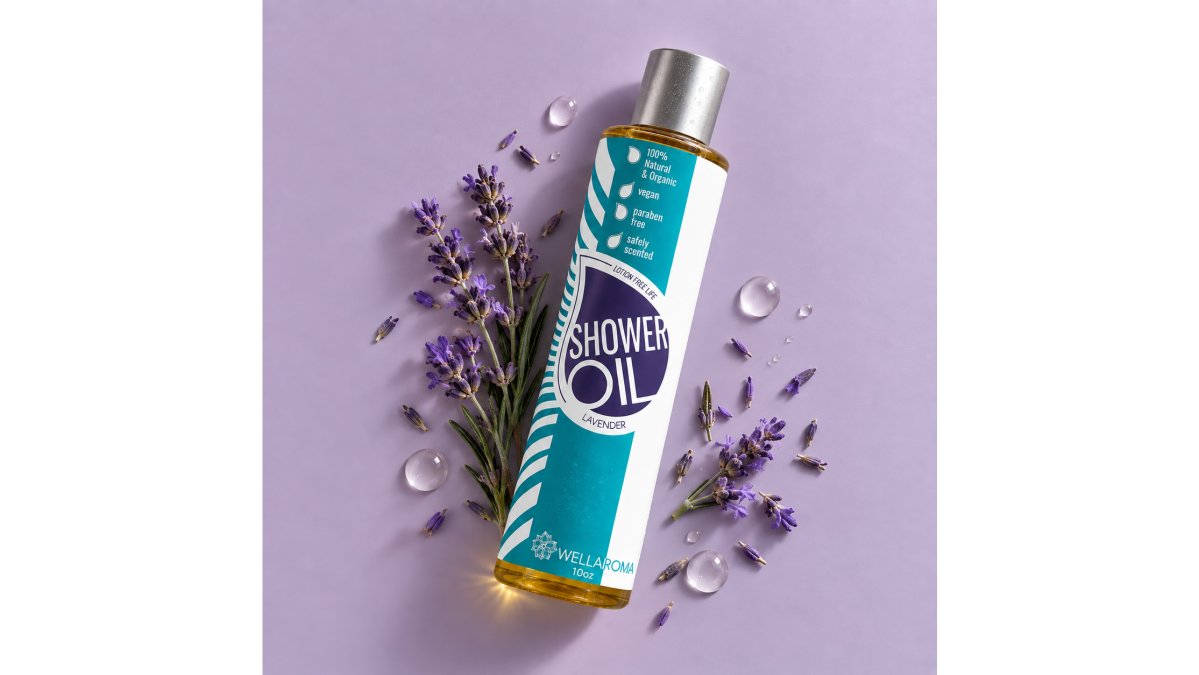
1. Shower Oil: Lavender: Best Calming Pick for Reactive Skin
Lavender soothes, and this shower oil pairs organic jojoba and avocado oil with lavender essential oil and vitamin E for a calm, simple formula without synthetic fragrance.
The application method sets it apart: apply it while your skin is still wet in the shower, then pat dry. Wet skin absorbs oil more readily, and the oil traps surface moisture before it evaporates. Sealing it in with an emollient oil is one of the simplest ways to support a compromised skin barrier.
At $35.00 for 10 oz, it's priced for daily use, and the lavender scent is soft rather than sharp.
Pros: Gentle lavender scent, barrier-supporting jojoba base, in-shower application locks in moisture. Cons: Lavender is still an essential oil, so patch test first if you've reacted to botanicals before.
2. Shower Oil: Vanilla Bloom: Best Fragrance-Light Option for Daily Use
Vanilla Bloom keeps things subtle. Vanilla planifolia oil and ylang ylang read warm and soft rather than perfumed, a middle ground for anyone who finds scented body products overwhelming.


The base is the same trio: organic jojoba, avocado, and fractionated coconut oil. Unlike virgin coconut oil, the fractionated version stays liquid, absorbs quickly, and is far less likely to clog pores.
Best for: daily use on normal-to-dry sensitive skin, and anyone who wants a light scent that won't compete with perfume or cologne.
Pros: Subtle warm scent, fast-absorbing base, 10 oz bottle lasts through months of daily showers. Cons: Ylang ylang can be sensitizing for a small number of people, so a patch test is still the right first step.
3. Shower Oil: Grapefruit: Best Lightweight Oil for Humid Climates
Grapefruit oil feels lighter than the vanilla or lavender blends, making it the pick for warm, humid weather. It combines organic jojoba and avocado oil with vitamin E and organic grapefruit essential oil.
In humid climates, heavy occlusive oils can feel suffocating and trap sweat. A lighter oil that still seals in moisture hits the better balance, and grapefruit's bright citrus scent suits warmer months.
Pros: Lightweight feel, bright citrus scent, vitamin E adds antioxidant support. Cons: Citrus essential oils can increase sun sensitivity for some people.
4. Glossed Smoothing Oil: Best Multi-Purpose Body Oil for Dry Skin
The Glossed Smoothing Oil is built for dry skin that needs extra support and doubles as a massage and smoothing oil. Its ingredient list is the most complex here: avocado oil, organic fractionated coconut oil, vitamin E, plus fennel, frankincense, lemon, grapefruit, and juniper.
5. Shower Oil: Lemon Rosemary: Best Refreshing Blend for Morning Showers
Lemon and rosemary make an energizing pair, the pick for anyone who wants a morning shower that feels like a reset.
6. Shower Oil: Men's Scent Savage: Best Woodsy Option for Sensitive Skin
Sensitive skin isn't a women-only concern, and Savage fills a real gap. The scent blends woodsy notes with subtle citrus: lime, bergamot, lavender, and atlas cedarwood, all in essential oil form. It's balanced rather than overpowering.
7. Shower Oil: Men's Scent: The Man: Best Warm Spiced Option
The Man rounds out the men's lineup with a warmer profile: sandalwood, patchouli, and vanilla. It's the coziest scent in the collection, suited to evening showers or colder months.
How to Apply Body Oil for Maximum Absorption
Maximum absorption comes down to timing: apply body oil to wet skin immediately after showering, before you towel off. Wet skin absorbs oil faster, and the oil seals in moisture that would otherwise evaporate.
The steps are simple:
- Shower as usual and turn the water off.
- While skin is still wet, pour a small amount of oil into your palm. Start with less than you think you need.
- Massage it into your arms, legs, and torso in circular motions.
- Pat dry with a towel rather than rubbing.
- Skip lotion. The oil replaces it.
How to Choose the Right Body Oil
Choosing well means matching the oil to your skin's needs, not the loudest marketing claim. Start with the carrier oil: jojoba and avocado appear across every pick because both are rich in barrier-supporting fatty acids, and jojoba is well tolerated by most sensitive skin.
Oils to Avoid for Sensitive Skin
Some oils that work well for others cause trouble for reactive skin. The usual culprits are synthetic fragrance, a leading irritation trigger, and concentrated citrus or spice essential oils applied without dilution.
Layering Body Oil With the Rest of Your Skincare
Order matters when you layer products. Apply thinner water-based products first and oil-based products last, because oil creates a seal that blocks anything applied after it from absorbing.
Shelf Life and Oxidation: What to Watch For
Natural oils oxidize over time, and oxidized oil can irritate sensitive skin. Heat, light, and air speed this up, so store bottles away from direct sunlight and keep caps closed between uses.
Patch Testing: The Step Most People Skip
A patch test takes 24 hours and prevents most reactions. Apply a small amount to your inner forearm, leave it uncovered, and wait a full day. If you see redness, itching, or swelling, don't use it on larger areas.
Frequently Asked Questions
Which body oil is good for sensitive skin?
Oils high in linoleic acid and low on the comedogenic scale work best, such as jojoba, avocado, and fractionated coconut oil. Wellaroma's Shower Oil: Lavender blends all three with vitamin E, and its short ingredient list keeps the risk of a reaction low. Avoid heavy essential oil blends and synthetic fragrance until you have patch tested. Apply to damp skin after showering so the oil seals in moisture instead of sitting on the surface.
What are the best carrier oils for sensitive skin?
Jojoba, avocado, and fractionated coconut oil are the three workhorses for reactive skin. Jojoba mirrors the skin's own sebum, avocado brings oleic acid and vitamin E for moisture retention, and fractionated coconut oil stays light and absorbs quickly without a greasy film. All three appear in Wellaroma's shower oil line, so you can compare how each blend feels on your skin before committing to a full routine.
How do I choose a non-comedogenic body oil for sensitive skin?
Check the comedogenic rating before you buy. Oils rated 0 to 2, including jojoba, fractionated coconut, and avocado, are unlikely to clog pores. Ratings of 3 or higher, like unrefined coconut or wheat germ, are better saved for the body rather than the face. Also read the full ingredient list: fewer ingredients means fewer chances for irritation, and a fragrance-free or lightly scented formula is safer for daily use on eczema-prone skin.
How often should you apply body oil to sensitive skin?
Once a day is enough for most people, ideally within three minutes of stepping out of the shower while skin is still damp. If your skin feels tight or flaky by evening, add a second application to the driest areas like elbows, knees, and shins. Wellaroma's shower oils are designed for daily in-shower use, so you can skip the separate lotion step entirely. Stop using any oil that causes itching, redness, or bumps and patch test a new one on your inner arm first.
Are natural body oils safe for eczema-prone skin?
Many are, but the formula matters more than the label. Look for short ingredient lists built on jojoba, avocado, or fractionated coconut oil, and avoid citrus-heavy or spice-heavy blends during a flare. Patch test on your inner forearm for 24 hours before applying to larger areas. If you are pregnant, nursing, or managing a diagnosed skin condition, check with your physician before adding a new oil to your routine.

Leave a comment